
article = “””
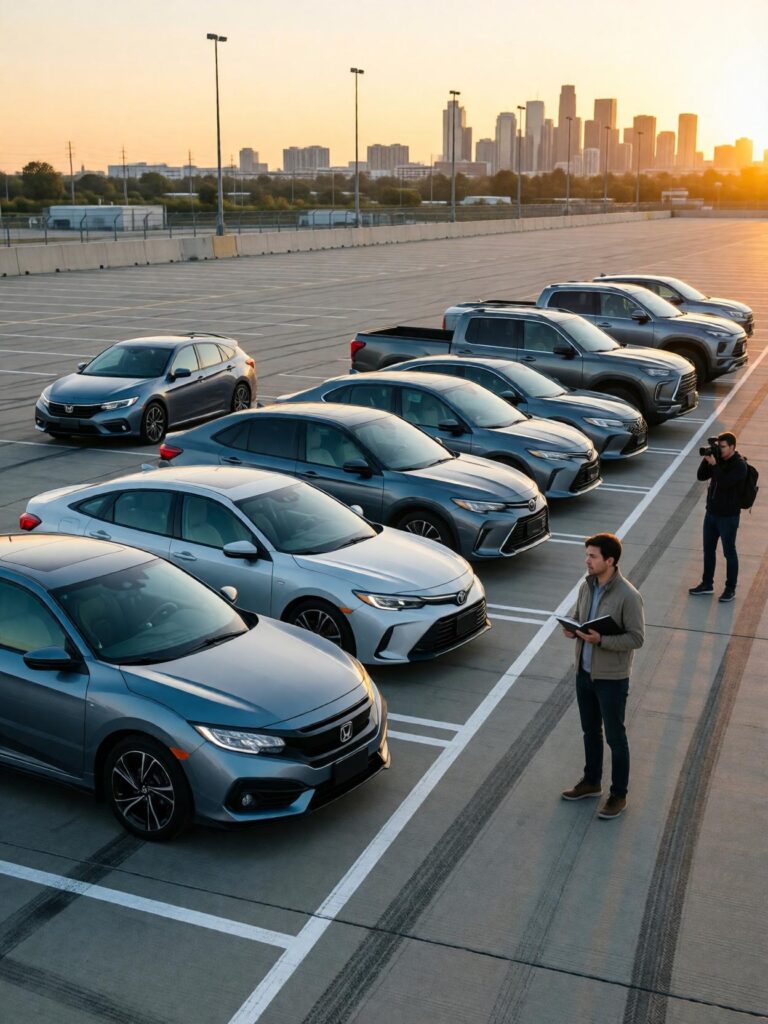
Hybrids, practical SUVs and proven trucks dominate this year’s most compelling choices for buyers seeking value, safety and everyday usability.
The car market in 2026 is not short of spectacle. Electric flagships promise silent acceleration, luxury SUVs compete on screen size and software, and pickup trucks continue to grow in capability and price. Yet for most buyers, the best vehicle is still the one that makes daily life easier without creating financial regret. This year’s strongest choices are not necessarily the flashiest. They are the models that combine reliability, safety, efficiency, comfort, resale value and real-world usefulness.
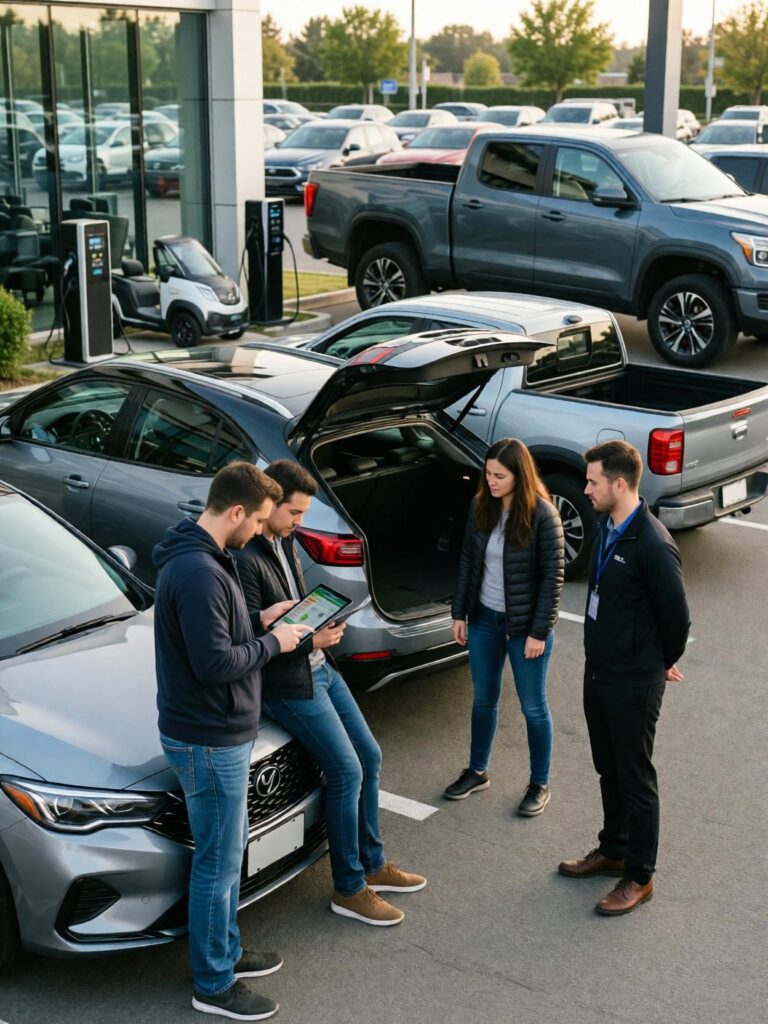
A clear trend runs through the best-buy field: electrification has become mainstream. Hybrid systems are no longer niche technology reserved for early adopters. They are now central to some of the most trusted family sedans, compact SUVs and pickups on the market. Fully electric vehicles are also maturing, but the strongest recommendations remain those that pair range, charging access and practicality with a price that makes sense beyond technology enthusiasm.
The Honda Civic stands out as the most convincing compact car for 2026. It has long been one of the safest recommendations in the small-car class because it does nearly everything well. The latest Civic keeps that formula intact with efficient powertrains, a clean cabin layout, responsive handling and the kind of everyday comfort that makes it feel more mature than its size suggests. The hybrid version gives the Civic an especially strong case, offering better fuel economy and stronger acceleration than many buyers expect from an affordable compact. For students, commuters and small families, it remains one of the most balanced new cars on sale.
The Toyota Camry earns its place because it has successfully adapted to a changing market without losing its identity. Now sold as a hybrid, the Camry delivers the familiar strengths that built its reputation: durability, low running costs, a roomy cabin and broad dealer support. What makes the 2026 Camry more interesting is that efficiency no longer comes at the expense of performance. It is smooth, quiet and surprisingly capable in everyday driving. For buyers who want one sedan to serve for a decade, the Camry remains a benchmark.
The Subaru Crosstrek is the small SUV for people who want practicality without moving into a larger, heavier and more expensive vehicle. Its appeal lies in its honesty. It is easy to see out of, easy to park and secure in poor weather, helped by Subaru’s standard all-wheel-drive formula. It also offers the kind of light adventure ability that many urban crossovers advertise but do not always deliver. The Crosstrek is not a luxury vehicle and does not try to be one. Its strength is that it gives drivers confidence on rough roads, in rain and in snow while staying manageable in daily traffic.
The Subaru Forester is one of the most sensible compact SUVs of the year. It does not chase aggressive styling or unnecessary complexity. Instead, it focuses on visibility, space, safety and comfort. The Forester’s upright shape makes it easy to place on the road, while its cabin gives families useful room without stretching into midsize-SUV pricing. With an available hybrid powertrain, it becomes even more relevant for buyers who want lower fuel use but are not ready for a fully electric vehicle. Among compact SUVs, few feel as purpose-built for real families and real roads.
The Toyota Grand Highlander is the three-row SUV that best answers a common family problem: the need for genuine space without the wastefulness of a full-size SUV. It gives passengers more usable room than many midsize crossovers and offers hybrid efficiency that makes it easier to justify as a daily driver. Large families, ride-share drivers and road-trip households will appreciate the comfortable ride and practical layout. It is not a cheap vehicle, but it gives buyers a strong argument that they are paying for space they will actually use.
The Lexus NX is the right luxury compact SUV for buyers who value refinement more than badge drama. It offers a polished interior, supportive seats and a quiet ride, but its deeper appeal is the Lexus reputation for long-term dependability. The availability of hybrid and plug-in hybrid versions makes the NX especially competitive in a segment where many rivals emphasize performance or design over ownership costs. For buyers moving into a premium vehicle for the first time, the NX is one of the safer and more rational ways to do it.
The Ford Maverick remains one of the smartest trucks on the market because it rejects the idea that every pickup must be huge. Its compact footprint makes it easier to park and easier to use in cities, while its bed still provides genuine utility for homeowners, small businesses and weekend projects. The hybrid version strengthens the Maverick’s case by delivering strong fuel economy in a vehicle that still behaves like a truck when needed. It is not designed to replace a heavy-duty workhorse, but that is precisely why it works for so many people.
The BMW X5 is the luxury midsize SUV that justifies its price better than many rivals. It combines a high-quality cabin, strong road manners, comfortable seating and a level of refinement that makes long-distance driving feel effortless. BMW has also improved its reliability reputation in recent years, making the X5 less of an emotional gamble than some premium competitors. With available electrified powertrains, it can be both powerful and relatively efficient. For buyers who want luxury, practicality and driver confidence in one package, the X5 remains one of the most complete vehicles in its class.
The Tesla Model Y stays on the list because it remains one of the most practical electric vehicles for mainstream buyers. Its biggest advantage is not only range or acceleration, but the charging ecosystem that supports it. Easy access to fast charging continues to be one of the most important factors in EV ownership, and Tesla’s network remains a major reason many buyers feel comfortable choosing the Model Y. Its cabin controls will not suit everyone, and shoppers should treat advanced driver-assistance claims with caution. Even so, as an electric family crossover, it remains difficult to ignore.
The Ford F-150 closes the list as the full-size pickup that best balances tradition and modernization. It offers the capability expected from America’s best-known truck nameplate while giving buyers a wide range of configurations, including hybrid power. For contractors, rural households and drivers who tow, the F-150 remains a highly adaptable tool. Its appeal is not just power, but the breadth of choices across cab styles, beds, engines and technology packages. In a truck market where prices can climb quickly, buyers still need discipline at the order sheet, but the F-150’s core strengths remain intact.
Taken together, these 10 vehicles show where the market is heading. The best choices in 2026 are not defined by one technology or body style. They include sedans, SUVs, pickups, hybrids, plug-in hybrids and fully electric vehicles. What connects them is a practical promise: they solve common problems without asking buyers to accept major compromises.
For shoppers, the lesson is simple. The smartest purchase is not always the newest model, the most powerful version or the one with the largest screen. It is the vehicle that fits the way people actually live: commuting, carrying children, loading tools, taking road trips, paying fuel bills and dealing with maintenance years after the excitement of delivery day has faded. By that standard, the Civic, Camry, Crosstrek, Forester, Grand Highlander, Lexus NX, Maverick, BMW X5, Model Y and F-150 are among the clearest standouts of 2026.
“””
