As live music turns into a premium cultural event, fans are paying more for scarcity, spectacle and memory — even as regulators question whether the ticketing system is fair.
The modern concert ticket is no longer just an entry pass. For many fans, it has become a claim on identity, nostalgia, community and a night that may never happen the same way again. That is why, across major cities, tickets can sell out within minutes even when prices shock the people buying them.
Live music has entered a paradoxical age. Fans complain that concerts are becoming too expensive, but stadiums remain full. Social media fills with anger over ticket queues, resale prices, hidden fees and dynamic pricing, yet the same platforms also amplify the urgency to attend. The complaint and the purchase now exist side by side. A ticket can feel unaffordable and irresistible at the same time.
The numbers help explain why the industry sees strength rather than crisis. Live Nation, the world’s largest concert promoter, said 2024 was live music’s biggest year yet, with more than 150 million fans attending over 50,000 shows in more than 45 countries. The company said 2025 was shaping up to be even bigger, supported by a deep global concert pipeline and more stadium shows. Pollstar’s year-end analysis of 2025 found that the top 100 worldwide touring artists averaged more than $2.5 million per show, while average ticket sales per night reached a record high.
Behind those figures is a deeper cultural shift. After years in which streaming made recorded music cheap, abundant and instantly available, the live show has become the scarce product. A song can be played endlessly. A concert happens once, in one place, with one crowd. That scarcity has become the heart of its value.
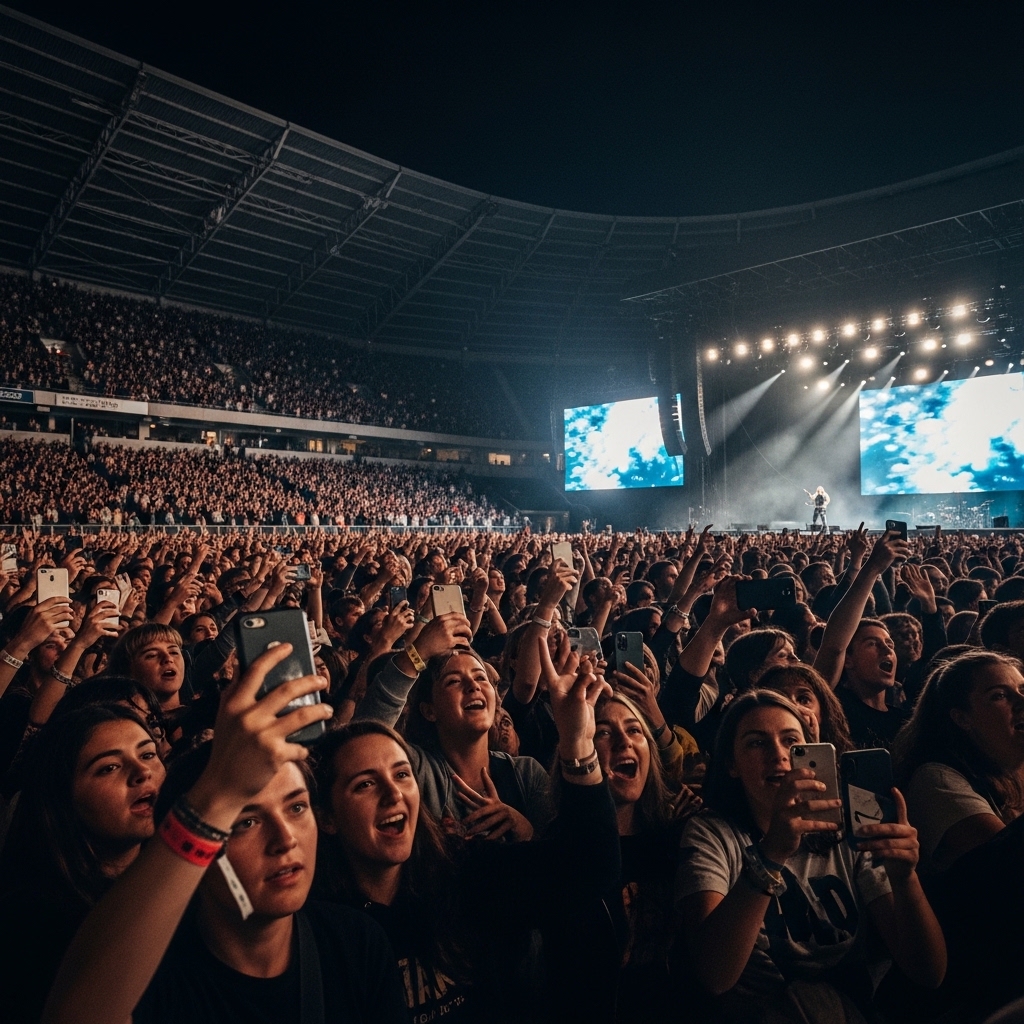
For younger fans, the concert is also a social event designed for memory and display. The night begins long before the first song: planning outfits, filming the journey, meeting friends, posting from the queue, recording the chorus, collecting merchandise and reliving the event online afterward. The ticket buys not only music, but participation in a public moment. Missing it can feel like exclusion from a cultural conversation.
For older fans, the pull is often nostalgia. Legacy acts and reunion tours can command high prices because they offer something close to emotional time travel. Fans who grew up with a band may be willing to pay hundreds of dollars for what could be a final chance to hear those songs live. In that market, rational budgeting competes with mortality, memory and the fear of regret.
The industry has learned to package both impulses. Concerts are no longer built only around sound. They are immersive productions with giant screens, elaborate staging, choreographed lighting, wristband effects, cinematic interludes and venue-specific experiences. Las Vegas’ Sphere has pushed this logic further, turning concerts and residencies into technologically spectacular events where architecture itself becomes part of the show. High production costs are real, but so is the pricing power created by spectacle.
Artists also depend more heavily on touring than in earlier eras. Streaming has made music distribution global, but royalty economics can be difficult, especially for acts below superstar level. Touring, merchandise, sponsorships and VIP packages have become central revenue sources. For major artists, a global tour is not simply promotion for an album. It is the business model.
That does not mean fans are wrong to feel squeezed. Ticket prices often rise through several layers before the final purchase is complete. There is the face value, then service fees, facility fees, processing charges and sometimes delivery fees. In many markets, dynamic pricing can lift prices when demand is intense. On resale platforms, tickets may appear at several times their original price. The result is a system in which the price a fan expects at the beginning of the purchase can differ sharply from the price at checkout.
This has produced political and legal pressure. In the United States, the Justice Department and several state attorneys general sued Live Nation and Ticketmaster in 2024, accusing them of monopolistic practices that harmed fans and artists. Live Nation has rejected the claims. Consumer groups in Britain and elsewhere have also criticized dynamic pricing and ticket resale practices, especially after high-profile sales for major acts left fans facing unexpectedly high prices. In Australia, the government moved to restrict dynamic pricing and hidden fees after public backlash over ticketing and other consumer practices.
The controversy is not only about high prices. Luxury goods are expensive by definition, and people are free to buy them. The sharper issue is transparency and power. Fans want to know the real price before they commit hours in a digital queue. Artists want to know whether tickets are reaching supporters rather than bots and speculators. Regulators want to know whether market concentration allows ticketing companies to impose terms that would not survive in a more competitive system.
The concert economy is also becoming more unequal. A wealthy fan can buy premium seating, VIP access, travel packages and resale tickets without much hesitation. A working-class fan may need to choose between the show and rent, groceries or debt repayment. Families face an even steeper calculation when each ticket must be multiplied by two, three or four. What was once a relatively accessible form of mass entertainment can begin to resemble a luxury purchase.
Yet fans continue to buy because concerts occupy a rare emotional category. They are not consumed like ordinary products. They are anticipated, experienced and remembered. People justify the cost by calling it a once-in-a-lifetime event. In many cases, they are not exaggerating. A tour may not return. A band may break up. A singer may age out of the performance. A friend group may never be together in the same city again.
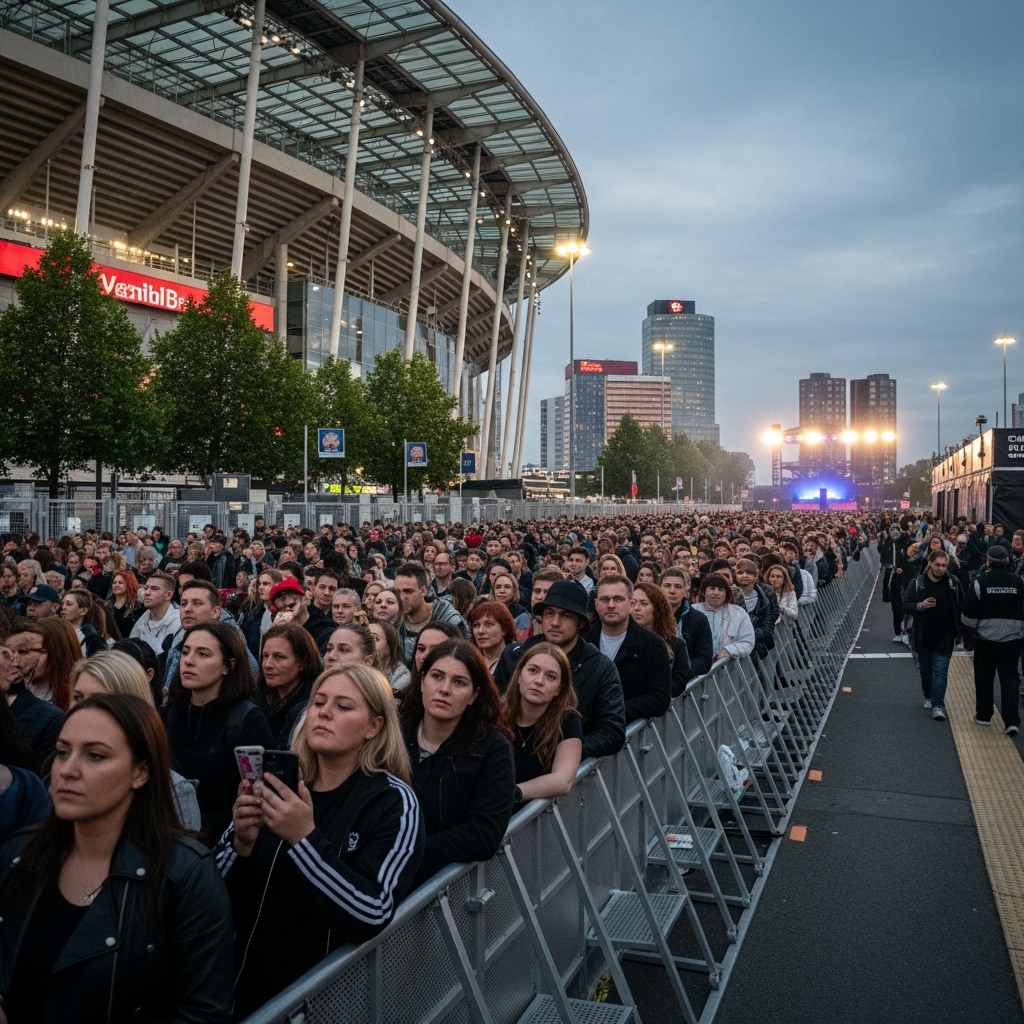
The psychology of scarcity is intensified by digital ticketing systems. Waiting rooms, countdown clocks, limited presales and queue positions create tension before any music is heard. When a fan finally reaches the purchase screen, the decision often happens under pressure. The fear of losing the ticket can overpower the discomfort of the price. A fan may think not only, “Can I afford this?” but also, “Will I ever get another chance?”
Social media then reinforces the cycle. Videos from sold-out shows make the absent viewer feel the scale of what they missed. Clips of surprise guests, emotional speeches or rare songs become advertisements for the next tour date. Even criticism of high prices can function as promotion by confirming that the event is important enough to fight over.
This does not mean the boom will last forever. Concert spending is vulnerable to economic pressure. If wages stagnate, debt rises or travel becomes more expensive, fans may become more selective. Smaller artists already face a difficult environment, with touring costs rising for transport, crew, accommodation, insurance and production. The sellout stadium economy at the top can obscure how fragile live music remains for many performers and venues.
There are signs that audiences are becoming more strategic. Some fans skip multiple mid-priced events to afford one major show. Others wait until the last minute for resale prices to fall, choose obstructed-view seats, travel to cheaper cities or reject VIP packages. The demand is strong, but it is not limitless. Even passionate fans are learning to calculate.
The future of concertgoing may split into tiers. At the top will be premium spectacles: stadium tours, residencies, immersive venues and global superstars commanding high prices. Below that will be local scenes, independent venues, festivals, clubs and community concerts that preserve live music as a more accessible public experience. The risk is that the middle becomes harder to sustain, squeezed between luxury spectacle and low-margin grassroots performance.
For artists, the challenge is moral as well as commercial. Many say they want accessible tickets, but they operate inside a system built to extract maximum value from limited supply. Some use paperless tickets, fan registration, resale caps or staggered pricing to reduce speculation. Others embrace premium models. The choices are complicated because tours are expensive and artists often support large teams of workers. Still, pricing has become part of the relationship between performer and audience.
For fans, the decision remains intensely personal. A ticket may be financially irrational and emotionally priceless. It may represent joy after a hard year, a gift to a parent, a reunion with friends, a child’s first show or a final chance to hear the songs that shaped a life. Economists can describe demand. Regulators can examine market power. But neither fully captures the moment when thousands of people sing the same line in the dark.
Concerts are becoming luxury experiences because they combine scarcity, spectacle and emotion in a world where digital abundance has made almost everything else reproducible. The more music becomes available everywhere, the more valuable it becomes to be physically present somewhere.
That is why expensive tickets still sell out. Fans are not only buying a seat. They are buying proof that they were there.