
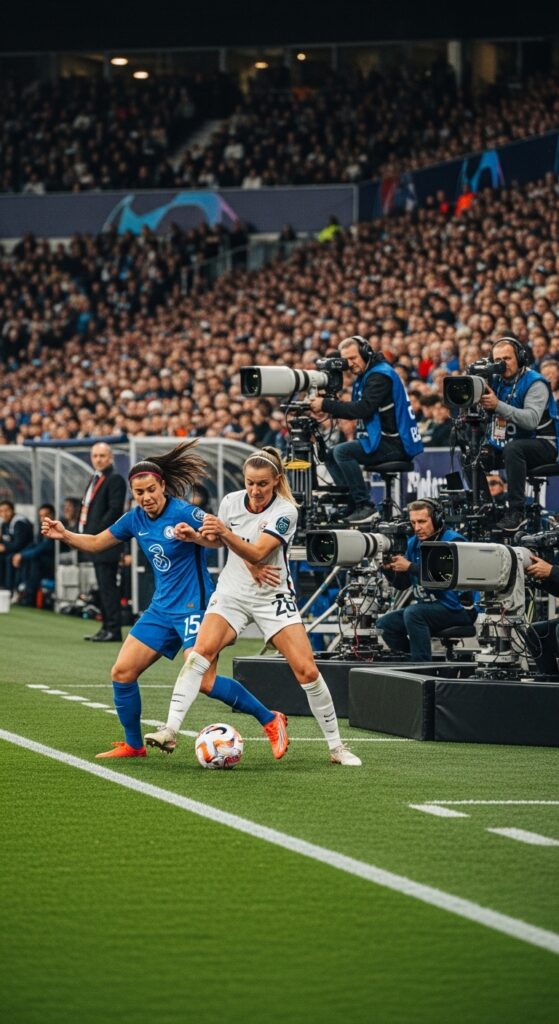
Rising revenue, larger audiences and new competitions are turning women’s sport into one of the most important growth stories in global athletics.
Women’s sport is no longer asking whether it deserves investment. It is demonstrating what happens when investment finally arrives. Across football, basketball, cricket, tennis, rugby and other competitions, audiences are growing, sponsors are paying attention and athletes are gaining a stronger public voice.
Deloitte has projected that global revenues in elite women’s sport will reach at least $3 billion in 2026, up from $2.4 billion in 2025. The forecast reflects commercial, broadcast and matchday revenue, and shows how quickly the sector has moved from underfunded promise to measurable market power.
Football and basketball are expected to generate the largest shares of that growth. New leagues, expanded competitions and stronger media deals are giving athletes more platforms and fans more regular access. Visibility matters because sports habits are built through repetition. A fan cannot follow what is not available to watch.
The rise is not accidental. It follows years of pressure from athletes, supporters, journalists and advocates who argued that women’s competitions were undervalued because they were underexposed. When games receive proper promotion, good venues and reliable broadcast coverage, audiences respond.
Sponsorship is changing as well. Brands see women’s sport not only as a social cause but as a commercial opportunity with engaged fans and strong cultural meaning. Many supporters view women’s competitions as more accessible, community-oriented and values-driven than some established men’s leagues. That identity can be powerful if it is protected.
Yet growth brings new risks. As more money enters the sector, women’s sport must avoid copying the worst parts of men’s sport: excessive ticket prices, exploitative schedules, weak governance and disregard for athlete welfare. The goal should not be simply to become a smaller version of the men’s industry. It should be to build something stronger.
Pay and conditions remain uneven. Star players in leading leagues may secure major contracts, but many athletes still work with limited salaries, poor facilities, inadequate medical care and uncertain career paths. Investment must reach beyond headline events to youth systems, coaching, refereeing, travel, maternity support and player safety.
Media coverage remains critical. Women’s sport needs consistent journalism, not only celebratory features during major tournaments. Tactical analysis, investigative reporting, transfer coverage and regular storytelling all help build serious fan cultures. Treating women’s sport as sport, rather than novelty, is essential.
The global picture is diverse. Some countries have strong traditions in women’s tennis, football, basketball or cricket. Others still face cultural barriers to female participation. International success can inspire girls, but only if local communities provide safe fields, coaches and family support.
Social media has helped athletes bypass traditional gatekeepers. Players can speak directly to fans about training, equality, injuries, motherhood, mental health and activism. This has built strong personal brands, but it also exposes athletes to abuse. Leagues and platforms must take digital safety seriously.
The next phase will test whether growth is sustainable. Revenue projections are encouraging, but institutions need long-term planning. Expansion should be matched by scheduling discipline, competitive balance and investment in development pathways.
Women’s sport has moved beyond the stage of proving demand. The demand is visible. The task now is to build systems worthy of it.”””
