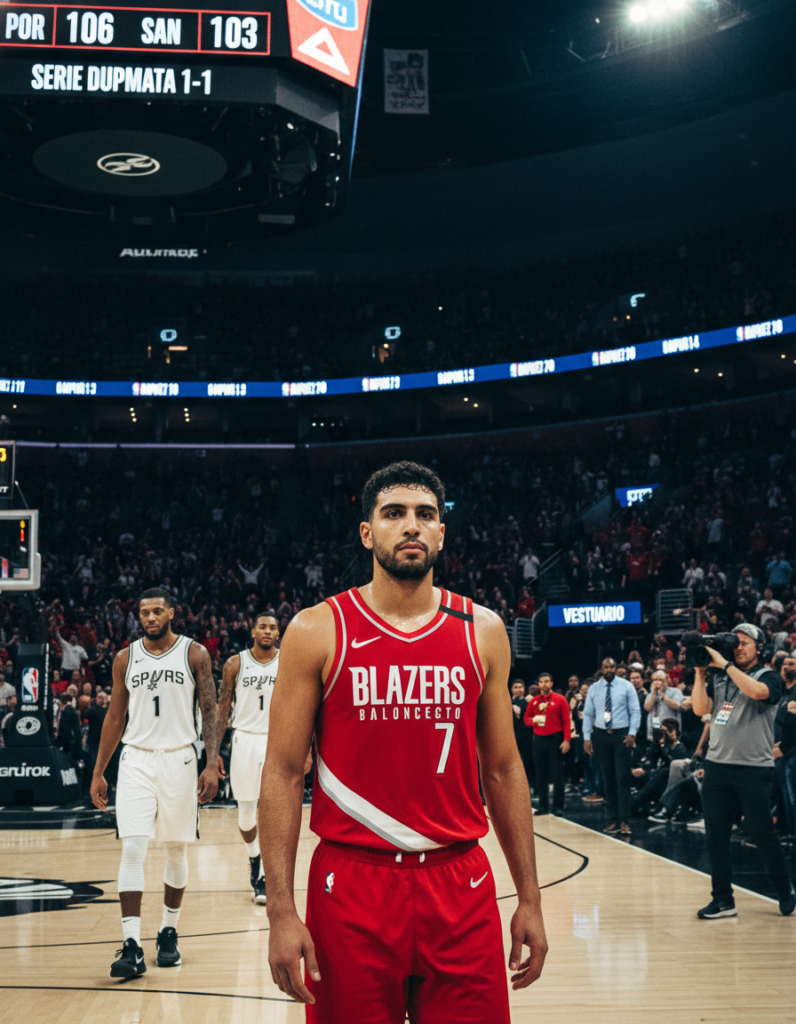
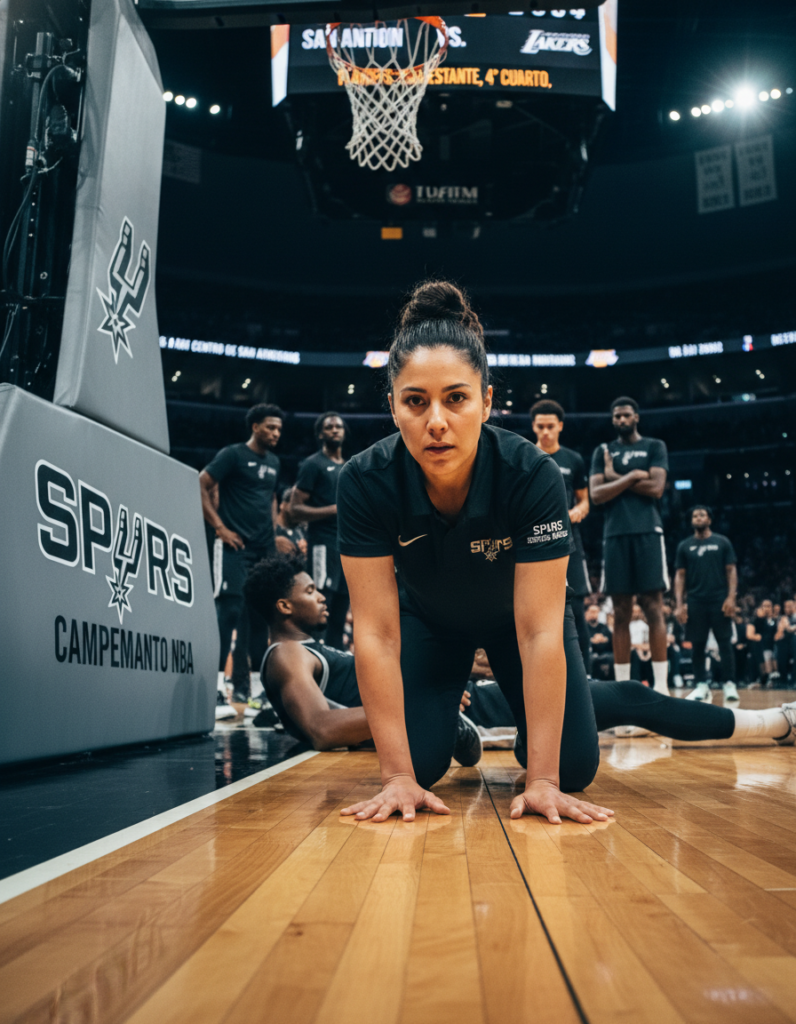
San Antonio appeared in control before Victor Wembanyama exited with a concussion, and now a first-round matchup that once looked tilted toward the Spurs has been thrown wide open.
The 2026 NBA playoffs have already delivered the usual ingredients of spring basketball: tense finishes, emotional swings and the steady elevation of every possession into something larger than itself. But in San Antonio on Tuesday night, the defining moment of the Spurs’ 106-103 loss to the Portland Trail Blazers was not the final shot or the closing defensive stop. It was the sight of Victor Wembanyama leaving the floor after a frightening fall, a development that transformed not only Game 2, but potentially the trajectory of the entire first-round series.
Portland’s victory evened the Western Conference matchup at 1-1 and shifted the immediate pressure back onto San Antonio. Yet the result alone does not fully capture the significance of the night. What changed the mood inside the arena, and what now hangs over the series, is the uncertainty surrounding Wembanyama after the Spurs star was diagnosed with a concussion and entered the NBA’s concussion protocol following a face-first fall in the second quarter.
Before that moment, the game had begun to settle into a familiar postseason rhythm. San Antonio, playing with the confidence of a higher seed and feeding off its home crowd, looked poised to seize firm control of the series after taking Game 1. Wembanyama’s presence shaped everything, even in limited minutes. He altered shots, occupied Portland’s defense and gave the Spurs the kind of two-way gravitational pull few teams in the league can match. Even when he is not scoring in bunches, the geometry of the floor changes around him.
That is why his exit reverberated beyond the medical concern, serious as that is. It forced a tactical rewrite in real time. The Spurs had to reassemble both their offense and their defensive structure without the player around whom so much of their identity revolves. Portland, meanwhile, recognized that the emotional shock of losing a star could create a crack in San Antonio’s composure, and the Trail Blazers took advantage.
Scoot Henderson led Portland with 31 points and was central to the comeback, pushing the tempo when possible and attacking at moments when San Antonio’s defense no longer looked as secure. The Trail Blazers did not simply inherit the game because Wembanyama was unavailable. They still had to execute, still had to withstand a hostile road environment, and still had to overturn a double-digit deficit against a disciplined opponent. But Wembanyama’s absence changed the balance of the contest enough for Portland to believe the opening was real.
That belief became decisive in the fourth quarter. San Antonio had built a 14-point lead early in the period and, for long stretches, still seemed capable of grinding out the win through guard play, disciplined half-court possessions and enough collective effort on the glass. Instead, the Spurs’ offense stalled. Their margin for error narrowed possession by possession. Without Wembanyama as a release valve, rim threat and defensive eraser, San Antonio looked more conventional and therefore more vulnerable.
In playoff basketball, the line between composure and panic is often no more than two empty trips and one defensive breakdown. Portland sensed that the game had become smaller, more manageable. Henderson kept attacking. The Blazers found enough stops. San Antonio, suddenly operating without the structural advantages its franchise cornerstone normally provides, could not reestablish control.
The injury itself was as unsettling as its consequences were immediate. Wembanyama went down hard after contact on a drive, with his jaw striking the floor. He appeared dazed, and the arena’s tension shifted instantly from competitive noise to anxious silence. There are injuries that alter a game statistically, and there are injuries that change its emotional atmosphere. This was both. By the time the Spurs confirmed that Wembanyama would not return and had entered concussion protocol, the conversation had already moved beyond one result to a larger question: what now happens to San Antonio’s playoff hopes if he is unavailable or limited?
That uncertainty matters because no player in this series exerts more influence on both ends. Wembanyama is not merely San Antonio’s leading star; he is the organizing principle behind how the Spurs defend the paint, challenge perimeter decisions and create matchup problems offensively. Portland can game-plan around individual scorers and secondary creators. Planning around Wembanyama is different because he distorts an opponent’s preferred style. He punishes small lineups, discourages drives, expands the defensive radius of every possession and gives the Spurs a bailout option when actions break down.
Take him out, and San Antonio remains talented, but not inevitable. De’Aaron Fox still offers pace, pressure and shot creation. Devin Vassell can score in varied ways. The Spurs have enough depth to remain competitive. But without Wembanyama, the burden shifts from one transformational star to a collection of good players who must suddenly play near-perfect basketball under playoff pressure. That is a much harder formula to sustain over a series.
For Portland, the emotional significance of the comeback could be almost as important as the tactical implications. A young team or a lower-seeded challenger often needs proof before it can truly believe a series is there to be won. Tuesday night provided that proof. The Trail Blazers saw that they could survive adversity, rally on the road and exploit a narrow window when the favorite looked shaken. That kind of experience can recalibrate a team’s self-image very quickly.
The series now moves with the feel of something fundamentally altered. Had San Antonio protected home court and taken a 2-0 lead, the Spurs would have traveled with control and with time on their side, even if Wembanyama’s status remained unsettled. Instead, Portland leaves with momentum, the split it needed, and the knowledge that the next chapter may be shaped as much by medical updates as by coaching decisions.
That creates an uncomfortable reality for the Spurs. In the playoffs, every injury becomes strategic, but concussions carry a special level of unpredictability. Recovery timelines are not always linear. The league’s protocol is necessarily cautious, and clearance depends on symptoms and medical progression rather than competitive urgency. San Antonio cannot simply will its star back onto the floor because the series demands it. That means the team must prepare for multiple scenarios, all while Portland prepares to press its advantage.
The broader lesson from Game 2 is as old as the postseason itself: championship ambitions can be redirected in a single instant. The Spurs still have the talent to win this series, and it would be premature to define the matchup solely through one injury update. But it would be equally unrealistic to pretend nothing has changed. Something has, and everyone in the building felt it the moment Wembanyama did not get up normally.
For the NBA, this is what makes playoff drama so compelling and so cruel. A series can pivot not because one team discovers a perfect scheme, but because circumstances force both sides into a new reality. Portland now sees opportunity. San Antonio sees uncertainty. And hanging over everything is the status of the player who, more than anyone else, determines the shape of this matchup.
Game 2 will go into the record as a 106-103 Portland win that leveled the series. In truth, it may be remembered for something more consequential: the night a first-round battle stopped being about seeding and adjustments and started revolving around the health of Victor Wembanyama.