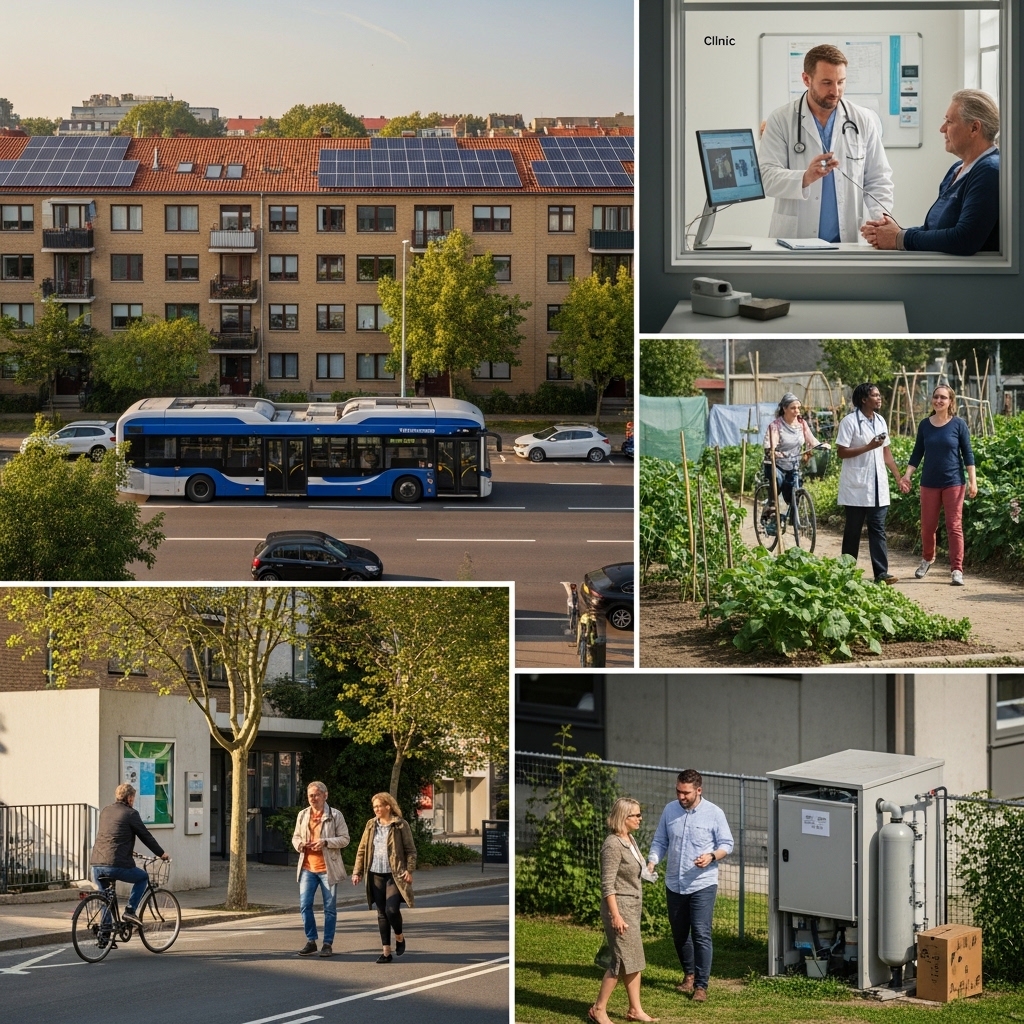
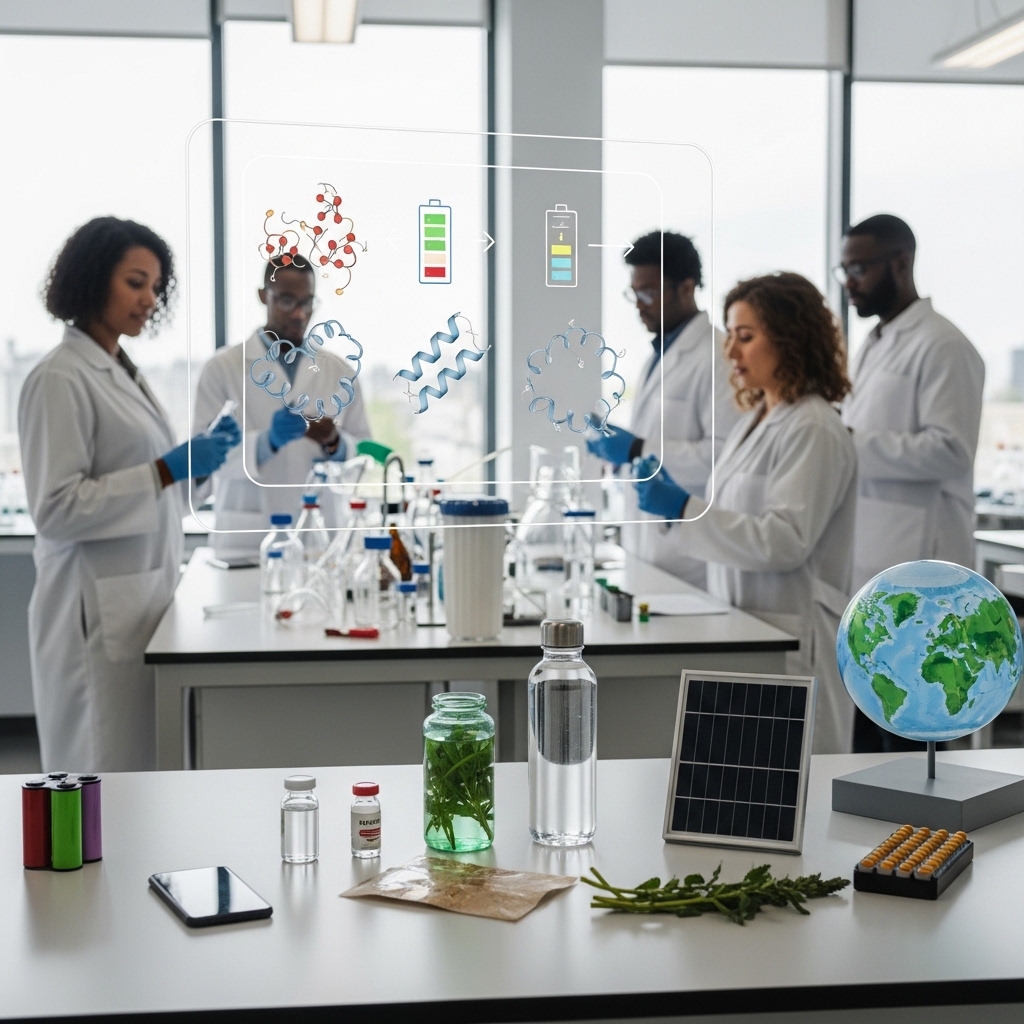
From smarter medicines and cleaner energy to AI-assisted research and materials that pull water from dry air, recent scientific advances are moving closer to ordinary households, workplaces and hospitals.
For many people, science appears in daily life only when something changes: a faster medical test, a cheaper battery, a new weather warning, a safer food package or a phone app that explains a health result. Yet behind those ordinary moments is a long chain of research that often begins in laboratories, universities and field stations years before it reaches the public. This year, several areas of science are advancing in ways that could shape how people live, work, travel, eat and care for their health.
The first major shift is the growing use of artificial intelligence in scientific discovery. AI is not replacing scientists, but it is helping them search through huge amounts of information more quickly than humans could do alone. In biology, AI systems can predict the shapes of proteins, design possible new molecules and suggest which experiments are most likely to succeed. That matters because proteins are the tiny working machines of life. They help cells communicate, fight infections, digest food and repair damage. When scientists understand proteins better, they can design better medicines, vaccines and diagnostic tools.
The practical effect may be felt first in drug development. Traditional medicine discovery is slow and expensive. Researchers often test thousands of compounds before finding one that might work. AI can narrow that search by identifying promising candidates earlier. This does not mean a computer can instantly create a safe drug. Human scientists still have to test medicines in cells, animals and clinical trials. Regulators still have to review safety and effectiveness. But AI can shorten the path from idea to experiment, which could eventually mean faster treatments for cancer, rare diseases, infections and immune disorders.
Another area moving toward everyday life is personalized medicine. The basic idea is simple: instead of treating every patient with the same standard approach, doctors use genetic, lifestyle and biological information to choose treatments more precisely. This is already happening in some cancer care, where genetic testing of tumors can help doctors select targeted drugs. The next step is making these tools cheaper and more widely available. In the future, a routine blood test may help identify whether a person is at higher risk for certain diseases, whether a drug is likely to work or whether a lower dose could reduce side effects.
Genetic medicine is also becoming more practical. Gene-editing tools are being refined to correct or silence harmful genetic changes. These techniques are still highly specialized and not yet ordinary medical care for most people. But their direction is important. Diseases that were once considered lifelong and untreatable may become manageable or, in some cases, potentially curable. The biggest questions are no longer only scientific. They are also ethical and economic: who will get access, how much treatments will cost and how societies will decide which uses are acceptable.
Energy science is another field with daily consequences. Batteries are improving, and that matters far beyond electric cars. Better batteries can store solar and wind power when the sun is not shining and the wind is not blowing. They can make homes more resilient during blackouts, reduce pressure on electricity grids and support cleaner public transport. Researchers are working on batteries that charge faster, last longer, use fewer rare materials and are less likely to overheat. Some progress is incremental rather than dramatic, but even small improvements can have large effects when multiplied across millions of vehicles, phones, homes and power systems.
Solar power is also becoming more efficient and more flexible. Scientists are testing new materials that can capture sunlight more effectively or be layered onto existing solar panels. One promising class of materials, known as perovskites, could someday make solar cells lighter and cheaper. The challenge is durability: panels must survive heat, rain, dust and years of sunlight. If researchers solve that problem at scale, solar technology could appear in more places, from building walls and windows to portable chargers and rural clinics.
Climate science is becoming more local and useful. In the past, many people heard about climate change mainly through global averages and long-term forecasts. Now researchers are developing tools that can show more specific risks: which neighborhoods are most exposed to flooding, which crops are vulnerable to heat, which cities need more shade and which hospitals may face dangerous heat waves. These tools can help governments plan roads, drainage systems, emergency alerts and public health responses. For ordinary families, the effect may be seen in better weather warnings, safer buildings and more realistic insurance decisions.
Water technology is gaining attention as droughts, floods and aging infrastructure put pressure on supplies. Scientists are developing materials that can filter pollutants, remove salt with less energy or capture moisture from the air. Some of the most interesting work involves porous materials that act like tiny molecular sponges. They can trap water vapor, carbon dioxide or other chemicals depending on how they are designed. The idea of pulling drinking water from dry air may sound futuristic, but prototypes are already showing how such systems could help disaster zones, remote communities and water-stressed regions. The technology must still prove that it can work cheaply and reliably outside the laboratory.
Food science is also changing. Researchers are developing crops that can better tolerate heat, drought, salt and disease. This matters because farmers are facing more unpredictable weather. A crop that survives a hot week or uses water more efficiently can protect food supplies and incomes. Scientists are also studying soil microbes, which help plants absorb nutrients and resist stress. In the long term, farms may rely less on chemical inputs and more on biological knowledge. Consumers may not notice the science directly, but they could see its effects in food prices, availability and nutrition.
Another everyday frontier is the science of aging. Researchers are trying to understand why some people remain mentally sharp and physically active much longer than others. Studies of immune function, metabolism, brain health and cellular repair are revealing that aging is not a single process. It is many processes interacting over time. This does not mean a simple anti-aging pill is around the corner. But it could lead to better ways to prevent frailty, detect dementia earlier, protect muscles and extend the number of years people live in good health. For aging societies, that may be as important as curing any single disease.
Materials science is quietly shaping the future of homes, clothing and infrastructure. Scientists are designing stronger, lighter and smarter materials, including self-healing coatings, advanced hydrogels, carbon-capturing surfaces and fabrics that can monitor body signals. A self-healing road material could reduce maintenance costs. A cooling paint could lower indoor temperatures without extra air conditioning. A medical bandage that senses infection could alert patients before a wound becomes dangerous. These developments may not arrive all at once, but they show how chemistry and engineering can turn invisible molecular design into practical tools.
Space science may seem distant from daily life, but it also produces useful technology and knowledge. Satellites help track storms, measure sea levels, monitor crops, guide navigation and detect wildfires. More powerful telescopes and space missions improve understanding of the universe, but they also drive advances in cameras, sensors, communications and data processing. The benefit is not always immediate, yet space research often returns to Earth in the form of better instruments and better information.
The most important lesson from these discoveries is that science usually changes daily life gradually. A breakthrough announcement does not mean a product will appear next week. Between a laboratory result and a household tool are many steps: testing, manufacturing, regulation, cost reduction and public trust. Some ideas fail. Some work only in limited settings. Others become so common that people forget they were once considered extraordinary.
Still, the direction is clear. The discoveries most likely to affect daily life are those that make health care earlier and more precise, energy cleaner and more reliable, food systems more resilient, water easier to secure and information easier to understand. The challenge for societies is to make sure these benefits do not remain limited to wealthy patients, large companies or major cities. Scientific progress changes the world most meaningfully when it reaches ordinary people.
In the years ahead, the question will not only be what scientists can discover. It will be how quickly, safely and fairly those discoveries can move from the lab bench into the routines of everyday life.