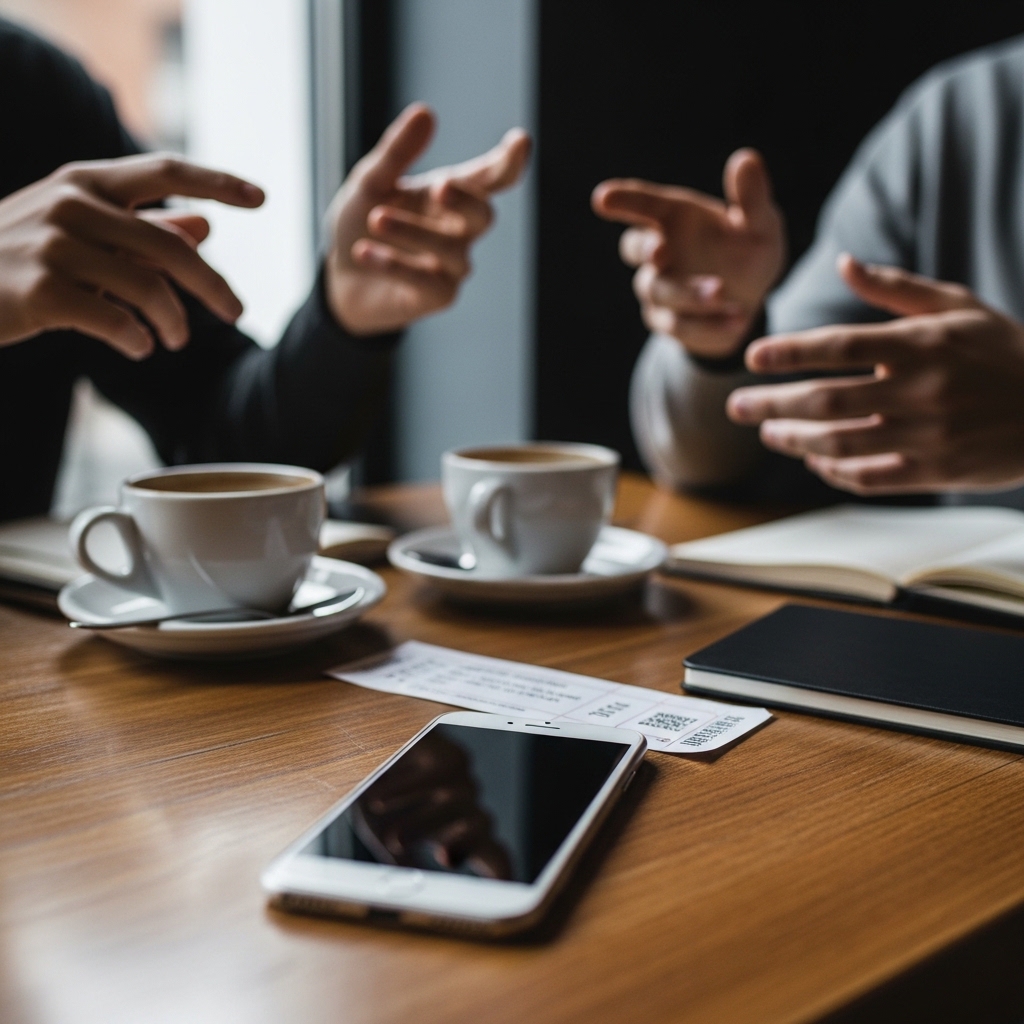
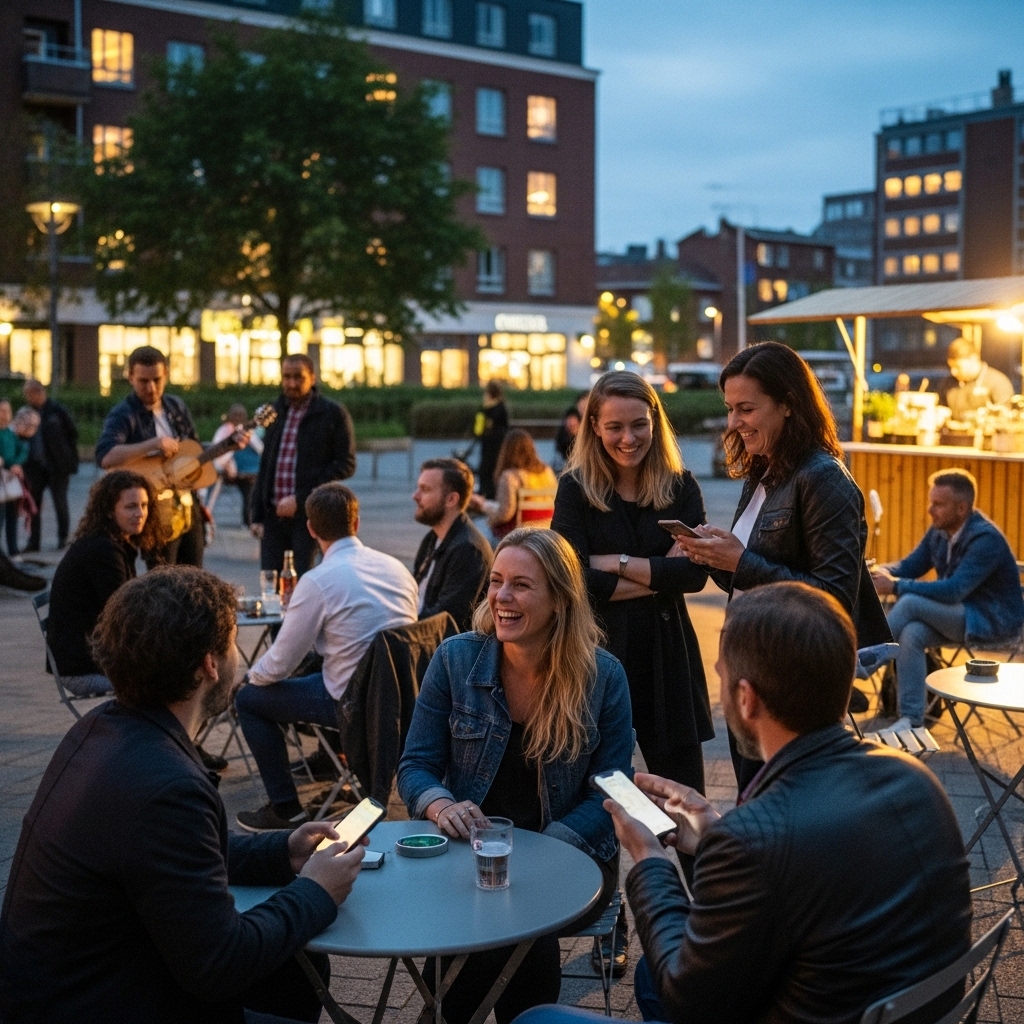
After years of remote work, streaming, social media and algorithmic entertainment, people are rediscovering the value of concerts, travel, sports, classes, markets and face-to-face community.
The return of real-life experience is not a rejection of the internet. It is a correction. After a decade in which daily life moved steadily onto screens, accelerated by the pandemic and normalized by remote work, delivery apps, video meetings and social platforms, people are showing a renewed appetite for events that require presence: live music, amateur sports, group travel, cooking classes, outdoor clubs, theater, festivals, bookstores, markets, wellness retreats and even simple dinners without phones on the table.
This shift is visible in the crowds. Concerts are selling out. Sports venues are full. Restaurants and cafés are being redesigned as social spaces rather than just places to consume food. Travel companies are marketing connection, not only destinations. Gyms and studios are building communities around running clubs, padel courts, yoga sessions and group challenges. Brands that once raced to create virtual experiences are now investing again in pop-ups, workshops and tactile retail. The phrase “in real life,” once mostly a distinction from online identity, has become a consumer promise.
The change reflects a deeper fatigue. Digital convenience made life easier, but it also made it flatter. The same device became office, cinema, mall, bank, classroom, dating app, newsstand and social square. For many people, especially younger adults who grew up online, the result has been not liberation but overload. Notifications compete with sleep. Social media delivers connection and comparison at the same time. Remote work saves commuting hours but can dissolve the boundaries between public and private life. Entertainment is abundant, yet often solitary.
Recent consumer research points to this tension. McKinsey’s 2025 consumer work describes pandemic-era behavior changes that continue to shape how people spend time and money, while travel industry analysis from Amadeus identifies “connections in real life” as a defining trend, with travelers seeking spontaneous encounters and meaningful offline bonds. Other surveys have found strong signs of digital fatigue among younger generations, including a 2025 Harris Poll and Quad survey cited by eMarketer in which large majorities of Gen Z and millennial adults said they often wished they could disconnect from devices more easily.
The live entertainment industry has become one of the clearest beneficiaries. A 2025 market forecast by MarketsandMarkets projected the global live entertainment market at more than $200 billion in 2025, with continued growth through 2030. In France, official cultural data reported by Le Monde showed live performance attendance rising in 2024, with 65.4 million spectators and higher revenue than the previous year. These numbers suggest that even in a world saturated with streaming, people still place a premium on being in the same room, arena or field as other people.
The appeal is not only the performance. A concert is music, but it is also anticipation, travel, clothing choices, noise, crowds, imperfect sound, shared emotion and memory. A football match is sport, but it is also ritual, loyalty and collective suspense. A pottery class is not the most efficient way to obtain a bowl; it is a reason to use one’s hands, talk to strangers and make something that cannot be swiped away. The value of offline experience lies partly in its resistance to frictionless consumption.
That resistance now feels refreshing. Online life is optimized for speed, personalization and endless choice. Real life is slower, less controllable and more embodied. It includes waiting, weather, mistakes, awkward introductions and physical effort. Those features were once seen as inconveniences. Increasingly, they are part of the attraction. People are paying for experiences that give them texture.
The trend is especially powerful among consumers who have become skeptical of purely digital status. For years, social platforms turned experiences into content. A meal, trip or concert often seemed valuable because it could be posted. That logic has not disappeared; phones still rise at nearly every major event. But the cultural mood is changing. More people are asking whether documentation has replaced participation. Some venues and artists have experimented with phone-free shows. Restaurants have promoted “no-phone” dinners. Wellness retreats advertise digital detoxes. Travel brands sell disconnection as a luxury.
The offline revival also has economic roots. In many cities, the cost of housing has made private space smaller or more shared, increasing the importance of public and semi-public social spaces. Young adults may delay home ownership or major purchases, but still spend on experiences that create identity and community. Economists sometimes call this the experience economy, but the current wave is more emotional than the term suggests. Consumers are not only buying memories; they are seeking relief from isolation.
Loneliness is part of the story. Public health researchers and insurers have repeatedly warned that social isolation carries real mental and physical costs. The Cigna Group’s 2025 Loneliness in America report described loneliness as a widespread issue affecting workers, caregivers, parents and older adults, with consequences for mental health and productivity. Offline activities do not automatically solve loneliness, but they create the conditions in which casual belonging can form: the running group that meets every Tuesday, the local quiz night, the ceramics studio, the amateur sports league, the neighborhood market.
This is why the comeback of real-life experience is not limited to luxury festivals or expensive travel. Some of the strongest examples are ordinary. Park workouts, book clubs, community gardens, dance classes, board-game cafés, food tours, repair workshops and social sports all meet a similar need. They are structured enough to reduce awkwardness but open enough to create connection. They give people a reason to appear somewhere at a specific time, with others.
Businesses are adapting quickly. Retailers that once feared e-commerce would make stores obsolete are rethinking shops as places of discovery, service and entertainment. Beauty brands offer consultations. Sneaker stores host launches and community runs. Cafés host language exchanges. Hotels organize local walks and cooking sessions. Even technology companies use physical events to build loyalty that cannot be achieved through a screen alone. The modern store, venue or club is no longer just a distribution point. It is a stage.
But the return of offline life also raises questions about access. Not every real-life experience is affordable. Concert ticket prices, travel costs and private fitness memberships can turn connection into another luxury category. If the best offline spaces are gated by price, the people most in need of community may be excluded. Public parks, libraries, community centers, affordable sports courts, cultural subsidies and pedestrian-friendly streets will determine whether the offline revival becomes a broad social benefit or a premium lifestyle product.
There is also a risk of turning “real life” into another performance. The same platforms that contributed to digital fatigue now help popularize offline experiences. A café becomes famous because it photographs well. A hiking trail becomes crowded because it went viral. A book club becomes content. The boundary between living and posting remains fragile. The challenge for individuals is not simply to go offline, but to recover attention while offline.
Still, the direction is clear. People are not abandoning digital tools; they are renegotiating their place. The most successful experiences now often blend online discovery with offline fulfillment. A person finds a running club on Instagram, books a class through an app, meets friends at a market, then uses a group chat to keep the connection alive. The screen becomes a doorway rather than the destination.
That may be the healthiest version of the trend. Digital life is not going away, nor should it. It enables work, learning, creativity, access and relationships across distance. But the past few years have exposed its limits. Human beings still need sound that vibrates in the chest, sunlight on the skin, eye contact, shared laughter, physical skill, public rituals and places that cannot be paused.
The comeback of real-life experience is therefore less a nostalgic return than a modern adjustment. People have learned what online life can do. Now they are remembering what it cannot replace.