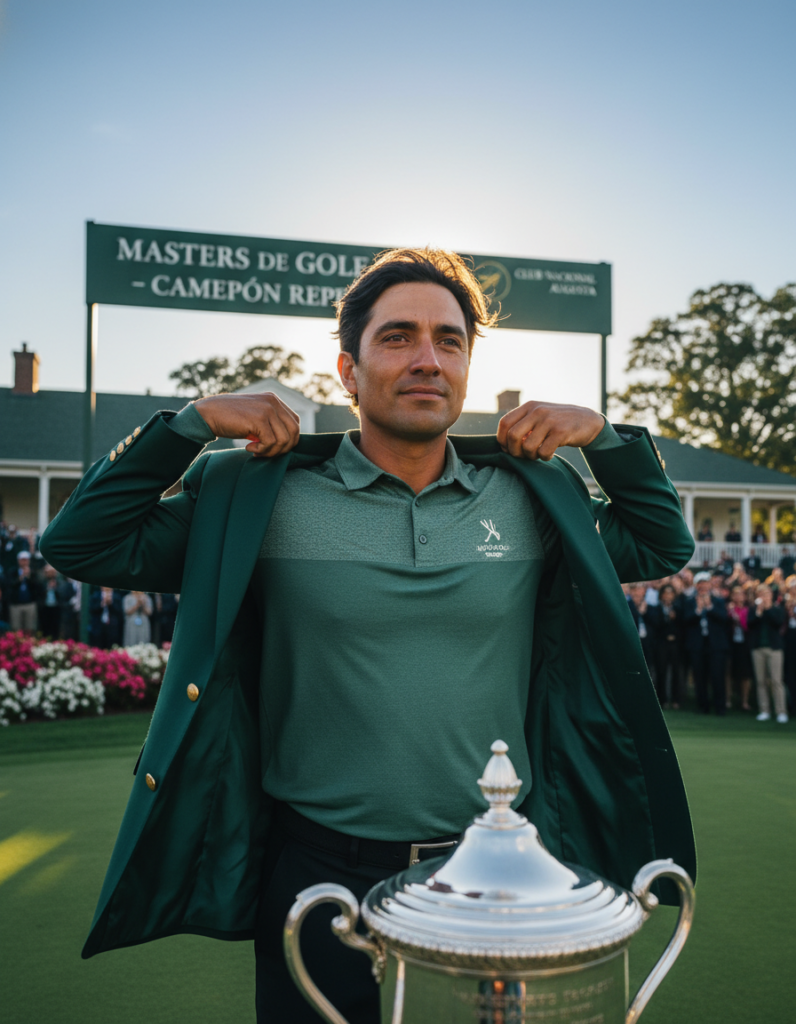
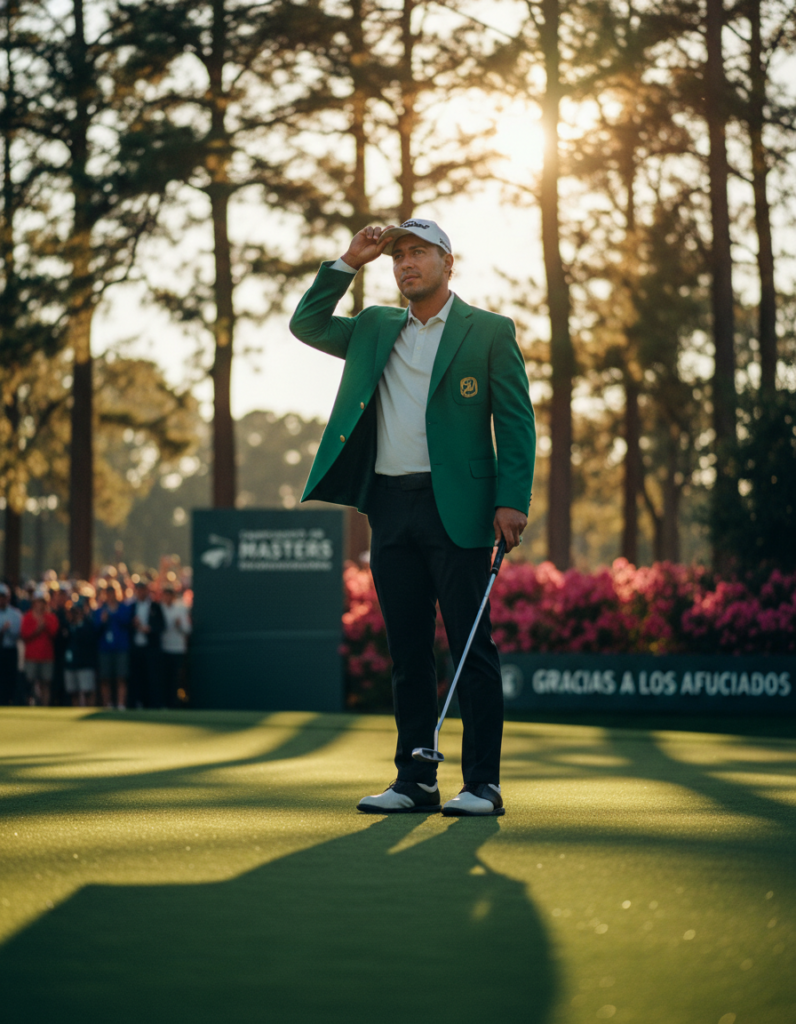
With a second straight green jacket secured at Augusta National, McIlroy became only the fourth man to win consecutive Masters titles, reinforcing his place among the defining figures of the modern game.
Rory McIlroy added another landmark chapter to his career on Sunday by winning the 2026 Masters Tournament, successfully defending the title he captured a year earlier and entering one of the most exclusive groups in golf history. With the victory at Augusta National, McIlroy became just the fourth player to win the Masters in consecutive years, a feat that underscored both his command of the course and his renewed authority in men’s golf at a pivotal point in the season.
The achievement carried significance beyond another major title. McIlroy had already reshaped the narrative of his career when he finally won the Masters in 2025, ending years of scrutiny over his repeated attempts to complete the career Grand Slam at Augusta. By returning in 2026 and winning again, he replaced the language of relief with the language of sustained dominance. What had once seemed like the tournament that haunted him now looked increasingly like one of the stages on which he is most complete.
McIlroy’s victory came at a time when men’s golf has been searching for defining storylines capable of cutting through a fragmented competitive landscape. In recent years, the sport’s calendar has often been discussed through the lens of rival tours, scheduling pressures and the broader commercial struggle over the future of elite golf. Against that backdrop, major championships still provide the clearest measure of legacy. McIlroy’s repeat victory at the Masters did more than add another trophy. It delivered one of the strongest sporting statements of the year so far.
The Masters has always carried a distinct weight in golf because of its history, its setting and its resistance to change. Augusta National rewards imagination, control and nerve, and it exposes frailty with unusual clarity. To win there once is enough to secure a permanent place in the sport’s memory. To win there in consecutive years is something else altogether. It requires a player not only to master the course, but also to return carrying expectation and survive it.
That is what makes McIlroy’s accomplishment so notable. Defending any major championship is difficult. Defending the Masters may be more psychologically demanding still, because the champion comes back to the same terrain, the same sightlines and the same rituals, only with heightened scrutiny and a different burden. Every shot is viewed through the lens of whether he can do it again. McIlroy, who spent so many years being measured against what he had not yet achieved at Augusta, this time was measured against history itself.
He met that challenge with the type of control and resilience that have often defined the best phases of his career. For much of the last decade, McIlroy has remained one of the most gifted players in golf without always converting that talent into the fullest possible major record. His swing, power and shot-making have long placed him among the sport’s elite, but the gap between his extraordinary ability and his major tally had invited persistent questions. Those questions have now been muted by results that demand a different framing.
Instead of asking why McIlroy had not added more majors, golf is once again asking how far he can extend this run. Consecutive Masters titles immediately elevate the conversation. Such wins are never the product of sentiment or nostalgia. They are evidence that a player has found a level of technical reliability, emotional steadiness and strategic precision that can endure pressure at the highest level.
The timing also matters. In April 2026, the men’s game had already seen strong performances and familiar names in contention, but McIlroy’s repeat triumph at Augusta stood apart because it combined history with present-tense authority. This was not merely a ceremonial revisiting of an established champion. It was a current statement from a player still capable of shaping the season rather than reflecting on it.
That is particularly important in a sport where eras are often defined not by rankings alone, but by repeated success in the majors. McIlroy has long belonged to the generation expected to carry men’s golf after Tiger Woods’ peak years. In commercial terms, competitive terms and cultural terms, he has been one of the central figures of that transition. Yet career narratives in golf are rarely settled by popularity or consistency alone. They are settled by wins at the biggest tournaments, on the most scrutinized Sundays, under the heaviest pressure.
By winning the Masters again, McIlroy added something that statistics alone cannot fully express. He demonstrated that his Augusta breakthrough in 2025 was not an isolated emotional release, but the start of a more forceful new phase. There is a difference between finally winning a tournament after years of trying and returning immediately to prove the result was repeatable. The first can feel redemptive. The second feels definitive.
For fans of the sport, the result also revived one of the most compelling traditions in golf: the idea that certain champions can build an enduring relationship with a major championship and its venue. Augusta has long produced that kind of mythology. Some golfers find it impenetrable; others seem eventually to understand it in a deeper way. McIlroy now appears to belong firmly in the latter category. The slopes, the risk-reward choices, the demand for committed iron play and the patience required over four rounds all now look like elements he has learned to navigate with unusual clarity.
His repeat title may also influence the rest of the season. Major victories tend to alter the emotional balance of the calendar, not just for the champion but for everyone around him. Rivals know they are chasing a player whose confidence has been reinforced in the sport’s most pressurized environment. Media attention intensifies. Public expectation changes. The conversation before the next major is no longer about whether McIlroy can rediscover his best form, but whether anyone can keep him from adding to this run.
That does not mean the remainder of 2026 will automatically belong to him. Men’s golf remains deep with elite talent, and major championships are designed to punish even minor lapses. But the force of this win lies precisely in how hard it is to assume continuity in golf. There are few guarantees, even for the greatest players. That McIlroy secured another Masters under those conditions only increases the significance of the moment.
In historical terms, joining the small group of back-to-back Masters champions places him in company that extends beyond his own era. In contemporary terms, it gives the sport one of its most consequential milestones of the year to date. The victory speaks to longevity, adaptability and the value of persistence in a career that has been watched and analyzed from every angle.
For McIlroy himself, the image is a powerful one: the player who once arrived at Augusta shadowed by unfinished business now leaves it with a second straight title and a firmer hold on golfing history. In a sport that rarely allows easy endings or simple narratives, that transformation is striking. The Masters was once the stage of his greatest unanswered question. In 2026, it became the site of one of his clearest answers.