
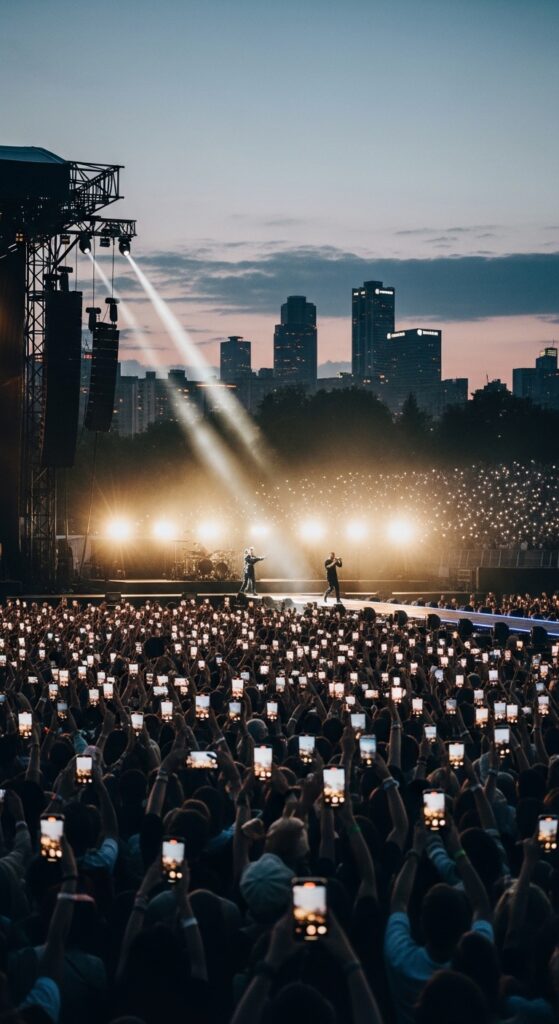
Concerts, festivals, sports and fan events are thriving as audiences seek shared experiences that cannot be fully replicated on screens.
In an age of endless digital content, live entertainment has become more valuable, not less. Concerts, festivals, theater, sports events and fan conventions offer something streaming cannot fully provide: the feeling of being present with other people at the same moment.
This demand has helped make live events one of the strongest areas of entertainment. Major tours can dominate cultural conversation and generate revenue across tickets, merchandise, sponsorships, travel and local spending. A stadium concert is no longer just a performance. It is an economic event.
The appeal is emotional. Audiences spend much of their daily life online, moving between feeds, videos and messages. A live event interrupts that pattern. It asks people to gather, wait, react and remember together. The scarcity of the experience is part of its value. A recording can be replayed. A specific night cannot.
Artists and entertainers have adapted. Concert production has become more cinematic, with elaborate staging, screens, choreography and narrative design. Fans expect not only songs but spectacle. Festivals sell identity and community as much as lineups. Sports leagues combine competition with entertainment, music, food and digital engagement.
The economics are powerful but uneven. Top-tier artists can command high ticket prices and sell out major venues. Smaller performers face rising costs for travel, crew, insurance and promotion. Venues are recovering from past disruptions but must manage staffing, security and competition for audience spending.
Ticket pricing has become controversial. Dynamic pricing, service fees and resale markets have frustrated fans who feel locked out of events they love. Governments in some markets are examining ticketing practices more closely. The tension reflects a broader issue: live entertainment is culturally important, but it is becoming expensive.
Technology is both a competitor and a partner. Livestreamed concerts and virtual events can reach global audiences, especially fans who cannot travel. But they rarely replace the atmosphere of physical presence. Instead, they extend the event’s reach. A concert can happen in one city while clips spread instantly around the world.
Film and television companies also recognize the value of live experiences. Fan conventions, immersive exhibitions and themed attractions turn entertainment brands into physical destinations. A successful franchise can live on screens, in games, in merchandise and in real-world spaces.
Cities compete for major events because they bring visitors and visibility. Concerts and festivals can fill hotels, restaurants and transportation networks. But large events also create pressure on residents, policing and infrastructure. The benefits are real, but they must be managed carefully.
Live entertainment’s growth shows that digital abundance has not eliminated the human desire for gathering. In fact, it may have strengthened it. The more entertainment becomes available everywhere, the more people value moments that feel unique.
The future of live entertainment will depend on access, affordability and trust. Fans will continue to pay for unforgettable experiences, but they will also demand fairness. Artists will seek scale, but they must preserve intimacy. Companies will use technology, but the core product remains human presence.
In a world of screens, the live event has become a luxury, a ritual and a reminder that entertainment is still most powerful when people experience it together.”””
