In a world defined by war, disasters and inequality, some of the most consequential forms of courage are being carried out not by famous leaders, but by neighbors, teachers, nurses, drivers and volunteers who choose to act when others cannot.
The extraordinary rarely announces itself with dramatic music. More often, it begins with a knock on a door, a meal cooked in a crowded kitchen, a stranger pulled from floodwater, a classroom opened after work, or a phone call made when silence would have been easier. Around the world, ordinary people are doing work that rarely makes them wealthy, powerful or famous. Yet their choices can alter the lives of families, neighborhoods and sometimes entire communities.
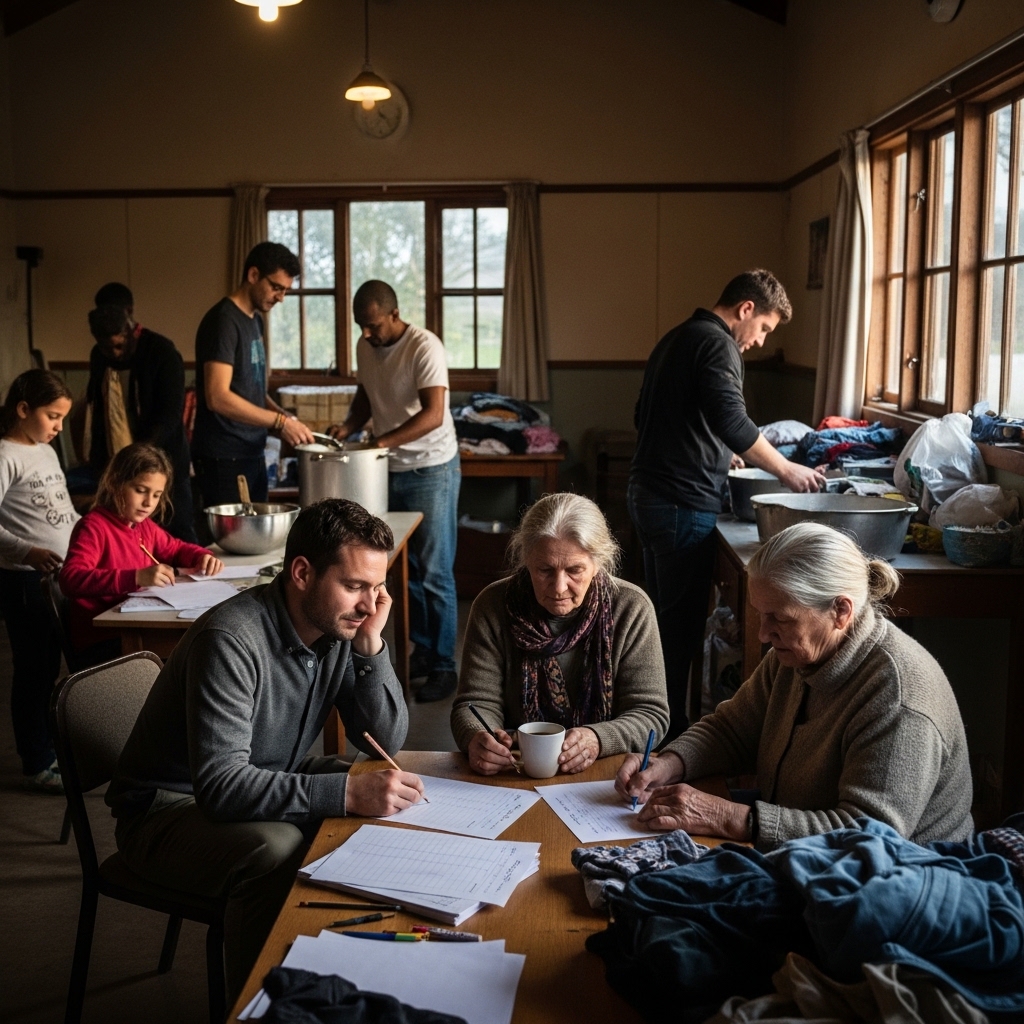
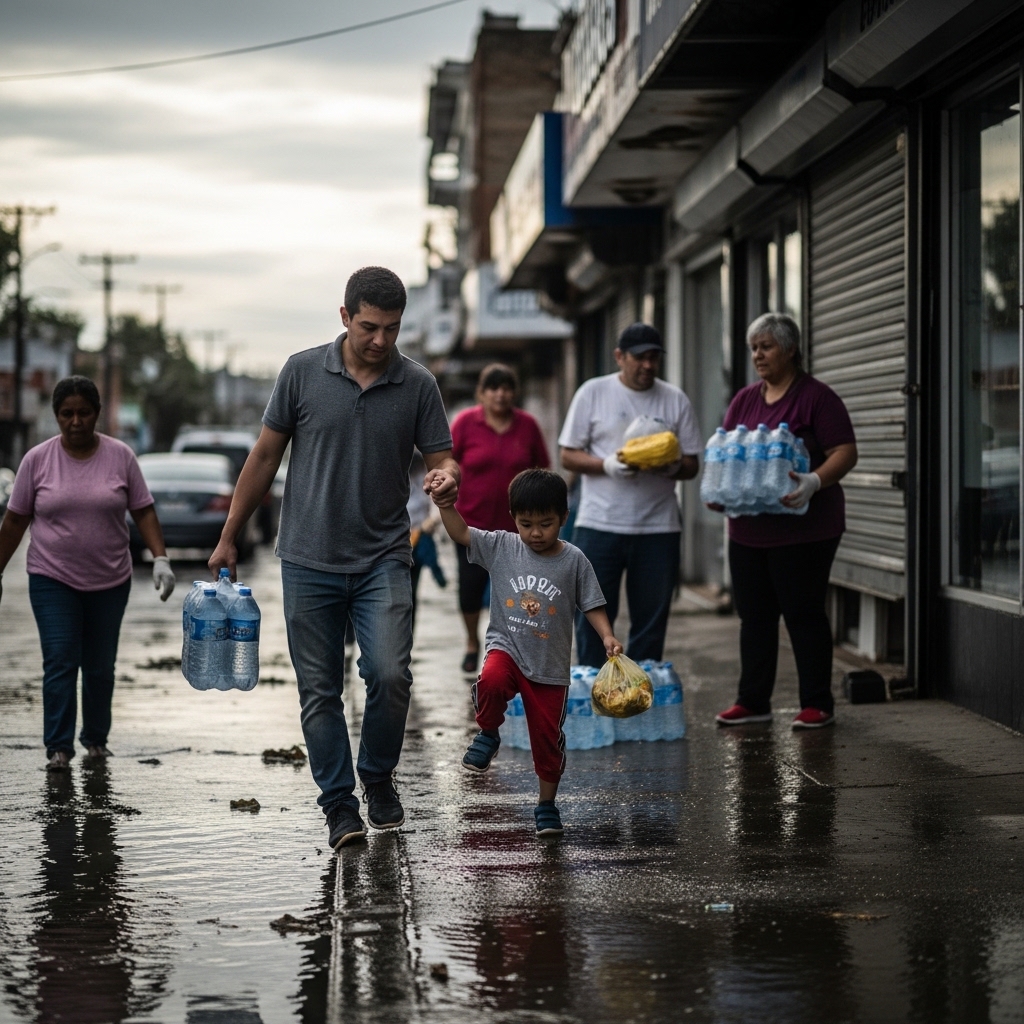
They are not always trained rescuers or public figures. Some are retirees who organize food deliveries. Some are young people tutoring children after school. Some are shopkeepers who turn their stores into relief points after a storm. Some are nurses who remain in hospitals through bombardment, drivers who ferry the sick across dangerous roads, or neighbors who pool their savings to bury the dead with dignity. Their acts are often small in scale when measured against the crises they face. But to the person reached in the decisive moment, they can mean survival.
The story of ordinary courage has become more urgent because the world is asking more of ordinary people. Conflict, climate disasters, economic pressure and mass displacement have stretched formal institutions. The United Nations Office for the Coordination of Humanitarian Affairs estimated that 305 million people would need humanitarian assistance in 2025. That figure is almost impossible to imagine as individual lives. It becomes clearer in the image of one woman waiting outside a clinic, one child missing school, one family sleeping under plastic sheeting, one elderly man unable to carry water.
Large humanitarian organizations remain essential, but in many emergencies the first responders are not international workers. They are people already there. They know the roads, the languages, the risks and the families. They know which grandmother is alone, which bridge is unsafe, which child has not eaten. Their knowledge is local, immediate and often irreplaceable.
In Sudan, where war has devastated cities, displaced millions and pushed communities toward famine, local volunteer networks known as Emergency Response Rooms have become a lifeline in areas where many international aid operations struggle to reach. These groups have helped run community kitchens, distribute medicine, support clinics and organize evacuations. Their members are not protected from the dangers around them. They operate amid shelling, arrest risks, shortages and fear. Yet the power of their work comes from its basic premise: if official systems collapse, the community must not collapse with them.
That principle appears in different forms across the world. After floods, it is the neighbor with a boat. After wildfires, it is the family that opens a spare bedroom. After an earthquake, it is the shop owner who gives out bottled water before any reimbursement is discussed. In refugee settlements, it is often another refugee who becomes translator, teacher, mediator and guide for those who arrive later. The person helping may be carrying trauma of their own.
There is a danger in romanticizing such courage. Ordinary people should not have to replace governments, hospitals, emergency services or international institutions. A volunteer risking his life to deliver medicine is inspiring, but also a sign that systems have failed to protect both patient and rescuer. A teacher buying supplies for her students with her own salary shows dedication, but also exposes neglect. Human kindness can fill gaps in an emergency; it should not become an excuse for permanent abandonment.
Still, the human impulse to help remains one of the most reliable forces in public life. It cuts across ideology, geography and class. Many people who act heroically do not describe themselves as heroes. They say they did what anyone should have done. That humility is part of the pattern. The larger the act, the more ordinary its explanation often sounds.
A bus driver who stops to help an injured pedestrian may later say he was simply passing by. A teenager who raises money for a classmate’s surgery may say she only wanted her friend to return to school. A doctor volunteering in a remote clinic may say the community needed care. A farmer sheltering displaced families may say he had space in the barn. These explanations can sound modest, but they reveal a profound moral instinct: responsibility begins where we stand.
Extraordinary acts also depend on repetition. A single rescue can be heroic. But much of the world’s quiet heroism is not a single dramatic moment. It is the daily discipline of showing up. It is the volunteer who cooks every morning, the mentor who answers every call, the caregiver who lifts the same patient from bed, the community organizer who attends another meeting after another disappointment. Endurance may be less cinematic than rescue, but it is often more transformative.
In many cities, ordinary people have built informal systems of care where official systems are too slow or too distant. Mutual aid groups deliver groceries to the elderly. Migrant workers help new arrivals navigate paperwork. Parents organize transport so children can attend school safely. Local activists document environmental damage in neighborhoods that have long been ignored. These efforts often begin without offices, titles or funding. They begin with a group chat, a kitchen table, a list of names and the decision that waiting is no longer acceptable.
Technology has changed the reach of such action. A small campaign can raise money across borders within hours. A missing-person alert can travel through social media faster than a printed notice. Volunteers can map needs, coordinate rides, translate documents and verify information through mobile phones. But technology does not create compassion by itself. It amplifies what people choose to do. A phone can send an appeal; someone still has to answer it.
The recognition of ordinary people can be complicated. Awards, profiles and public ceremonies can bring funding and protection. They can also simplify lives that are messy, difficult and unfinished. The best human-interest stories do not turn people into saints. They allow them to remain human: tired, afraid, uncertain, sometimes angry, sometimes overwhelmed. Courage is not the absence of fear. It is action taken while fear remains present.
For every widely celebrated rescuer, there are thousands whose names are never recorded. Their work disappears into the lives they helped preserve. A child who learns to read because a neighbor tutored him may never appear in a headline. A family that survives winter because strangers delivered blankets may never meet all the donors. A patient who reaches a hospital because a driver accepted the risk may never know what that journey cost. Much of goodness leaves no monument.
Yet societies are shaped by these invisible decisions. Trust is built when people see that they will not be left alone. Communities recover faster when residents believe someone will knock after the storm. Children grow differently when they encounter adults who act with responsibility beyond obligation. The moral climate of a place is not determined only by laws and leaders. It is also determined by what ordinary people decide they owe one another.
There is no single profile of the person who does extraordinary things. They may be young or old, religious or secular, wealthy or poor, educated or self-taught. Some act from faith, others from memory, anger, duty or love. Some begin after surviving hardship themselves. Others are moved by witnessing suffering they cannot ignore. What links them is not personality, but a refusal to treat another person’s crisis as someone else’s problem.
The world often measures importance by visibility. It counts followers, wealth, office, rank and fame. But many of the acts that hold societies together happen far from cameras. They occur in hospital corridors, flooded streets, schoolyards, crowded apartments, border towns and kitchens where food is stretched to feed one more person. These acts do not always change history in the way speeches or elections do. They change the human experience of history for those who must live through it.
Ordinary people doing extraordinary things remind us that heroism is not a separate category of person. It is a possibility within ordinary life. It appears when someone chooses inconvenience over indifference, risk over retreat, persistence over despair. It may not solve every crisis. It may not defeat every injustice. But it can keep a person alive, restore dignity, and prove that compassion remains a practical force.
In the end, the extraordinary is not always the size of the act. It is the decision to act at all.