
As chronic disease and medical costs rise, governments are rediscovering an old lesson: the cheapest crisis is often the one that never happens.
Modern medicine can do extraordinary things. It can replace joints, transplant organs, target cancers and keep premature babies alive. Yet the future of health may depend less on the most advanced hospital technology than on preventing illness before it reaches the hospital door.
Prevention has returned to the center of public health because the burden of disease has changed. Many of the world’s leading causes of death are linked to long-term risks: tobacco use, unhealthy diets, air pollution, harmful alcohol use, physical inactivity and untreated high blood pressure. These risks do not produce headlines like outbreaks, but they quietly fill clinics, emergency rooms and cemeteries.
The World Health Organization identifies noncommunicable diseases as long-duration conditions that include cardiovascular disease, cancers, chronic respiratory diseases and diabetes. They are not spread from person to person, yet they account for most global deaths. Many can be delayed or prevented through public policy, early diagnosis and sustained primary care.
The challenge is that prevention requires investment before disaster becomes visible. A government receives less political credit for a heart attack that never happens than for a new hospital wing. A public health campaign may take years to show results. Yet the economic argument is strong. Preventing disease can reduce long-term treatment costs and protect families from medical debt.
Tobacco control is one of the clearest examples. Higher taxes, advertising restrictions, smoke-free public spaces and warning labels have helped reduce smoking in many countries. But tobacco companies continue to seek new markets and promote new nicotine products. Public health officials must now address both traditional cigarettes and newer devices that appeal to young users.
Food policy is another battleground. Cheap, calorie-dense processed foods are widely available, while healthier diets may be expensive or inaccessible. Governments are experimenting with front-of-package warning labels, sugar taxes, school meal reforms and restrictions on marketing to children. These measures can be controversial because they affect powerful industries and personal habits.
Physical activity is shaped by design as much as discipline. People are more likely to walk or cycle when cities are safe, shaded and connected. Public health therefore depends on urban planning, transport policy and public space. A sidewalk, park or bike lane can be a health intervention.
Vaccination remains one of the most successful forms of prevention, but confidence has become more fragile in some communities. Misinformation, political polarization and distrust of institutions can weaken immunization programs. Public health agencies are learning that scientific evidence alone is not enough. Communication must be local, respectful and consistent.
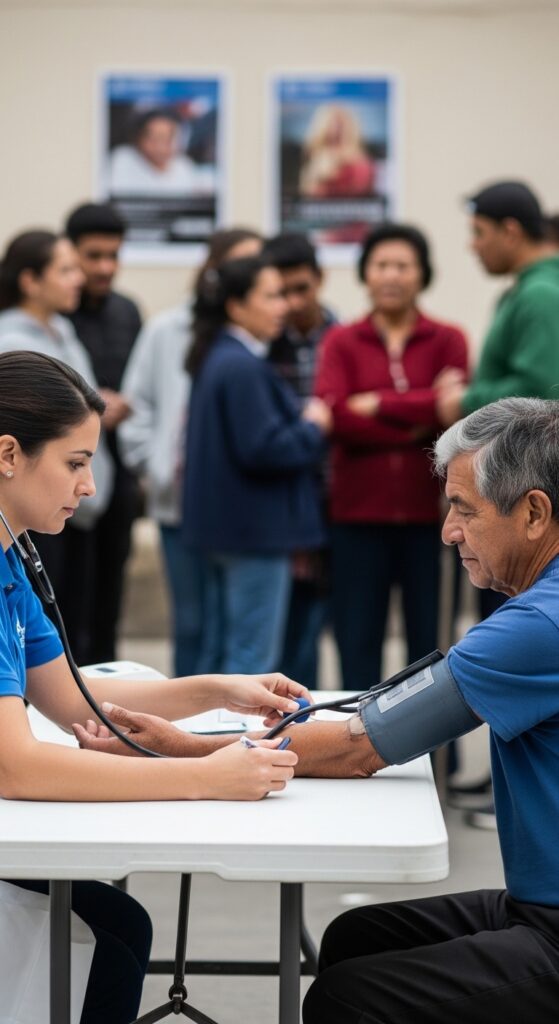
Screening and early diagnosis are essential, but they must be used wisely. Detecting high blood pressure, diabetes, cervical cancer or tuberculosis early can save lives. But screening programs require follow-up, treatment access and quality control. A test without care can create anxiety rather than health.
Prevention also means preparing for emergencies. Clean water systems, disease surveillance, safe food regulation, infection control and emergency stockpiles rarely attract attention until they fail. The COVID-19 pandemic showed the cost of weak preparedness. It also showed that public health capacity cannot be built overnight.
Equity is central. Wealthier people often benefit first from prevention because they have better information, safer neighborhoods and easier access to care. Public health must reach those at highest risk, including low-income communities, rural populations and people exposed to pollution or unsafe work.
Prevention is not about blaming individuals for illness. It is about shaping environments that make healthy choices possible. A person cannot choose clean air in a polluted city or safe exercise in a dangerous neighborhood. Health is personal, but it is also political.
The future of medicine will still need hospitals, specialists and advanced treatments. But no health system can treat its way out of preventable disease. The strongest systems will be those that invest before illness becomes inevitable.”””
