As artificial intelligence moves from the cloud into household devices, the connected home is becoming more predictive, more personal and more controversial.
The smart home is entering a new phase. It is no longer defined simply by an app that turns on a lamp, a camera that sends an alert, or a refrigerator that displays a grocery list. The next generation of connected homes is being built around devices that do something more ambitious: they observe daily routines, detect patterns and adjust themselves before a command is given.
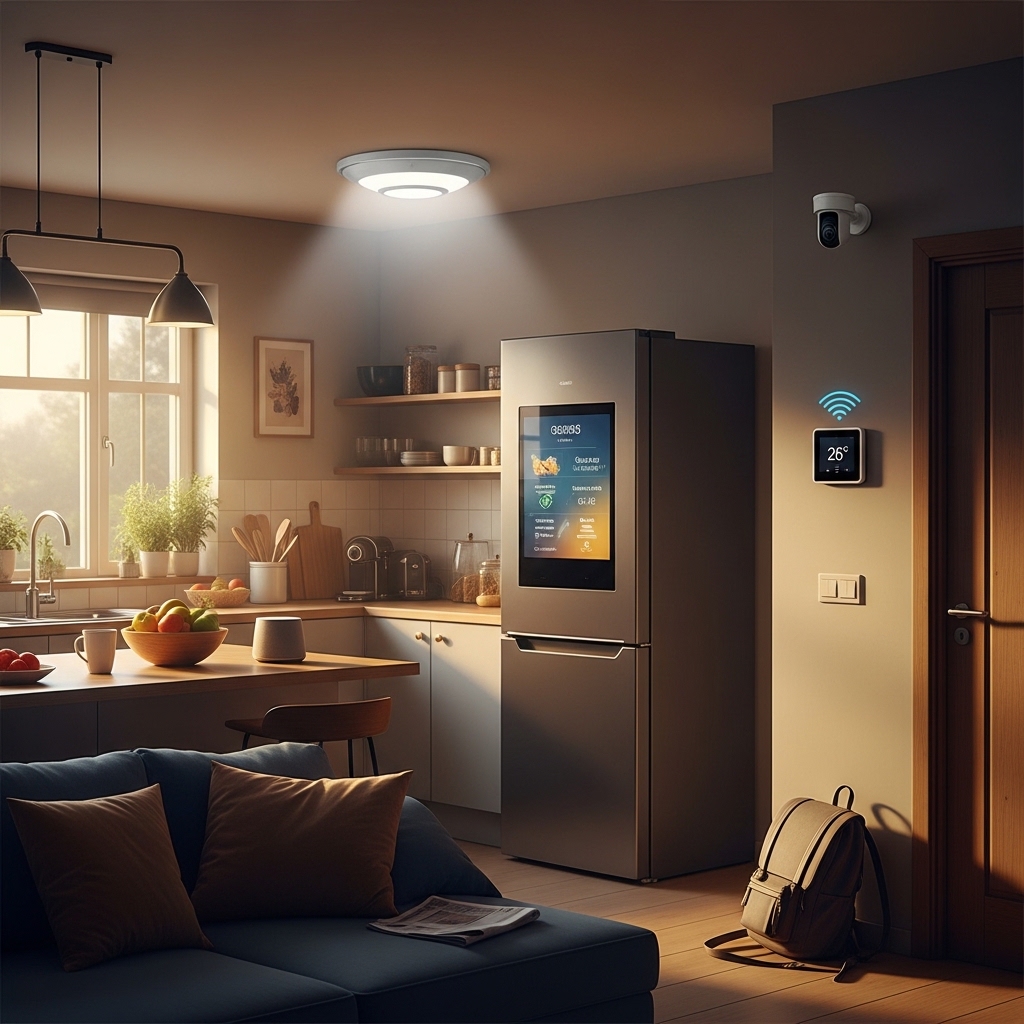
In this emerging model, the light over a kitchen counter may learn that it should brighten at 6:30 a.m. on weekdays but remain dim on Sundays. A refrigerator may recognize that milk tends to run out before the weekend. A security camera may distinguish between a family member, a delivery worker and an unfamiliar visitor at the gate. The promise is a home that feels less like a collection of gadgets and more like a quiet assistant embedded into the walls, appliances and everyday rhythms of domestic life.
The shift is being driven by several forces at once: cheaper sensors, more powerful chips, better machine-learning models and a maturing effort to make devices from different brands work together. For years, the smart home was fragmented. A homeowner might buy a smart bulb that worked with one app, a thermostat tied to another platform and a camera that required its own subscription. The result was often less convenient than advertised.
Interoperability standards such as Matter, backed by major technology companies and the Connectivity Standards Alliance, are intended to reduce that friction. Newer versions of the standard have expanded support for more device categories and improved setup, security and energy-management features. The goal is simple but difficult: a certified product should connect more easily across major ecosystems, whether the user prefers Apple Home, Google Home, Amazon Alexa, Samsung SmartThings or another platform.
But the more important change is intelligence at the edge. In earlier smart-home systems, much of the processing was handled in remote data centers. A doorbell camera might send video to the cloud for analysis. A voice assistant might depend on a server to understand basic commands. That approach enabled rapid progress, but it also raised concerns about latency, reliability and privacy. If the internet connection failed, some devices became less useful. If sensitive data left the house, consumers had to trust companies to protect it.
Newer devices increasingly perform at least part of the analysis locally. A camera can identify motion or recognize familiar faces on the device itself. A thermostat can adjust to household patterns without constantly uploading every reading. A lighting system can respond to occupancy, daylight and past behavior with minimal delay. Local processing does not eliminate privacy risks, but it can reduce the amount of raw personal data sent outside the home.
The refrigerator is one of the clearest examples of how ordinary appliances are being reimagined. Early “smart fridges” were often criticized as expensive screens attached to conventional cooling systems. The newer vision is more practical. Internal cameras, weight sensors and software can help track what is inside. Over time, the appliance may learn which items are consumed frequently, suggest recipes based on available food, warn when products are near expiration and adjust cooling zones according to usage.
For manufacturers, that kind of intelligence creates new business opportunities, including maintenance services, grocery partnerships and energy optimization. For consumers, the value depends on whether the appliance solves real problems without demanding constant attention. A refrigerator that merely sends too many alerts may be ignored. One that accurately reduces food waste, saves energy and helps a busy family plan meals could become indispensable.
Lighting may be the most visible and least intrusive example of adaptive automation. Traditional smart bulbs allowed users to change color, brightness and schedules through an app or voice command. Learning systems go further by studying occupancy, time of day and behavior. In a child’s bedroom, lights may gradually dim near bedtime. In a hallway, they may illuminate softly at night to avoid waking the house. In a home office, they may adjust color temperature to support concentration during working hours.
The most successful systems will likely be those that remain easy to override. A home that “learns” too aggressively can become annoying. People do not always follow routines. Guests visit. Children change schedules. A resident may want bright lights during a late dinner or darkness during an afternoon nap. The intelligence of the home will be measured not only by prediction but by humility: the ability to adapt without making residents feel controlled.
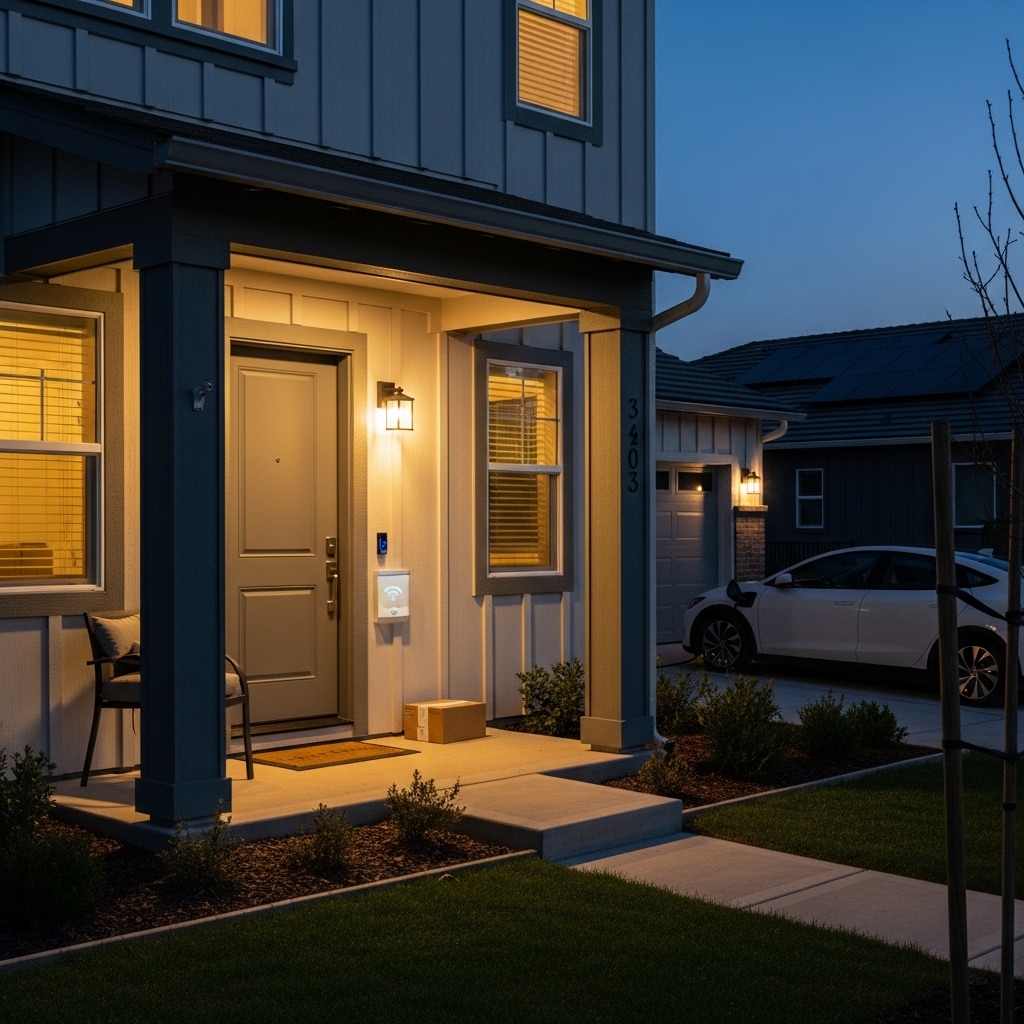
Security cameras raise the highest stakes. They are among the most useful connected devices, but also among the most sensitive. A camera that learns normal household movement can reduce false alarms and identify unusual activity more accurately. It can detect a package, a vehicle, a pet or a person approaching a door. In some systems, familiar-face recognition can prevent repeated alerts when family members come and go.
Yet cameras also turn the home into a site of constant data collection. The history of connected security devices has shown that weak passwords, poor internal controls, excessive employee access and unclear retention policies can expose intimate footage. Regulators have increasingly focused on whether companies adequately protect consumer data and whether they clearly disclose how long devices will receive software support. A smart camera is not just a product bought once; it is a security system that depends on updates for years.
This is where the economics of the smart home become complicated. Many devices are sold at consumer-electronics prices but require long-term software maintenance. A light switch, thermostat or refrigerator may remain in a home for a decade or more. If the company stops issuing updates after a few years, the device could become vulnerable or lose functionality. Consumers are beginning to ask not only what a product can do on the day it is purchased, but how long it will be supported.
Energy management is another major frontier. As electricity prices fluctuate and homes add solar panels, batteries, heat pumps and electric vehicles, the connected home is becoming part of the power grid. Smart thermostats already adjust heating and cooling to reduce consumption. More advanced systems can coordinate appliances, chargers and climate control around peak pricing or local energy supply. A washing machine might run when solar output is high. An EV charger might slow down when household demand spikes.
The potential savings could be significant, especially in regions with dynamic electricity pricing. But energy automation also requires trust. A system that delays charging a car or changes indoor temperature must understand user priorities. The homeowner may accept a warmer living room during peak demand, but not if an elderly relative or infant is at home. Personalization in this context is not a luxury; it is a safety requirement.
The kitchen, the bedroom and the front door are also becoming testing grounds for broader questions about artificial intelligence. Unlike a chatbot or smartphone app, a smart home system operates in physical space. Its decisions affect lighting, sound, temperature, access and surveillance. Errors are felt immediately. A false camera alert can cause fear. A malfunctioning lock can block entry. A poorly tuned thermostat can make a house uncomfortable. The closer AI gets to the body and the home, the less tolerance people have for mistakes.
Designers of next-generation systems are therefore focusing on transparency and control. Users need to know what the home has learned, what data it is using and how to correct it. A useful system might say, in plain language, that it noticed the family usually turns off the downstairs lights after 11 p.m. and ask whether to automate that behavior. A poor system would simply begin making changes with no explanation.
There is also a social dimension. Homes are shared spaces. One person may welcome automation; another may find it intrusive. A parent may want cameras and sensors for safety, while a teenager may see them as surveillance. Domestic workers, guests and visitors may be recorded or analyzed without meaningful consent. As devices become more capable, the household will need its own rules of digital etiquette.
For now, the next-generation smart home remains uneven. High-end products demonstrate what is possible, but many consumers still face confusing setup, inconsistent compatibility, subscription fees and uncertain privacy policies. The industry’s challenge is to make intelligent homes reliable, affordable and understandable. The winning products may not be those with the most features, but those that disappear into daily life.
The future home will not necessarily look futuristic. It may look ordinary: a lamp, a fridge, a doorbell, a thermostat, a washing machine. What changes is the layer of observation and prediction behind them. The central question is no longer whether devices can learn habits. Increasingly, they can. The question is whether they can learn respectfully, securely and usefully enough that people still feel at home.