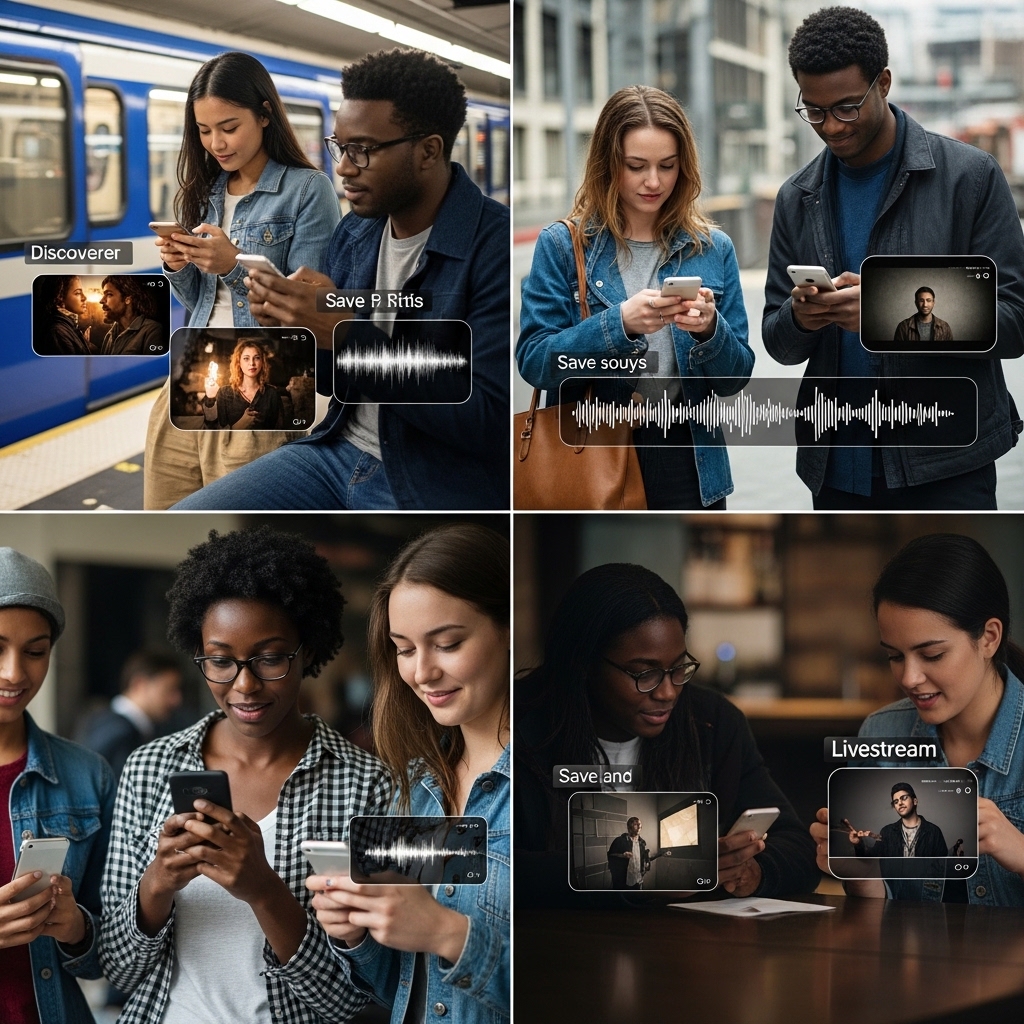
As vertical video becomes the front door to entertainment, audiences are discovering stories, songs and stars through fragments before committing to the full work.
The entertainment industry once believed attention moved in a straight line. A film trailer led to a cinema ticket. A radio single led to an album. A television appearance helped turn an actor, singer or band into a public figure. That pathway still exists, but it is no longer the only route to cultural relevance. Increasingly, audiences encounter entertainment first as a fragment: a 12-second hook, a vertical clip, a reaction video, a fan edit, a meme, a dance challenge, a behind-the-scenes confession or a dramatic scene cut from a longer story.
Short-form content has become the new lobby of global culture. It is where people decide what film to watch, what song to stream and which artist deserves emotional investment. TikTok, YouTube Shorts, Instagram Reels, Snapchat Spotlight and similar formats have not merely created a new marketing channel. They have changed the psychology of discovery.
The most obvious transformation is in film and television. In the past, promotional campaigns were built around official trailers, posters, press tours and reviews. Now, a single scene can travel farther than an entire campaign. A glance between two actors, a comic line, a costume reveal, a plot twist or a moment of heartbreak can be clipped, captioned and repeated until it becomes the reason people search for the full title. Viewers often meet a film through its most shareable emotional unit before they know its genre, director or release date.
Studios have noticed. Streaming platforms and entertainment companies are increasingly experimenting with vertical feeds, clip-based discovery and short-video interfaces inside their own apps. The logic is simple: if audiences are already trained to browse entertainment vertically, the traditional streaming menu can feel static. A thumbnail and title may not compete with a moving clip that instantly shows mood, character and conflict. Short content compresses the decision-making process.
This is changing storytelling itself. Scenes that generate instant reaction now carry commercial value beyond their narrative function. A film or series may succeed partly because it produces moments that can circulate independently: a quote, a song cue, a fashion look, a shocking expression or a danceable sequence. The risk is that creators may feel pressure to design stories as collections of viral moments rather than coherent works. But the opportunity is equally real. A small film without a massive advertising budget can reach millions if one scene becomes emotionally legible in a short clip.
The rise of micro-dramas shows how far the shift has gone. In China and increasingly abroad, serialized vertical dramas often deliver episodes in just a minute or two, using sharp hooks, emotional reversals and cliffhangers designed for mobile viewing. They are not simply shorter television episodes. They are a native form built around speed, melodrama and algorithmic feedback. Their global spread suggests that many viewers are willing to follow stories in small doses if the emotional payoff is immediate.
Music has been changed even more dramatically. For decades, the music industry promoted songs through radio, music television, clubs, charts and playlist placement. Today, a track can break because 15 seconds of it fits a gesture, joke, transition, makeup routine, sports montage or heartbreak post. The “hit” may begin not as a song but as a sound. Millions may recognize the chorus before they know the artist’s name.
This has reshaped songwriting and release strategy. Hooks arrive earlier. Choruses are engineered for repeatability. Bridges, intros and instrumental breaks are judged partly by whether they can support edits. Older songs can suddenly return to the charts after being rediscovered by younger audiences through memes or fan videos. A catalog track once buried deep in an album can become a global moment decades later.
For artists, this is both liberating and exhausting. Short-form platforms can bypass traditional gatekeepers. A singer with no major label, no radio campaign and no expensive video can reach listeners directly. But the same system can reduce musicians to fragments of their own work. Some audiences know a sound but not the person behind it. Some artists feel pressured to become constant content creators, explaining their lives, filming their process and packaging vulnerability into daily posts.
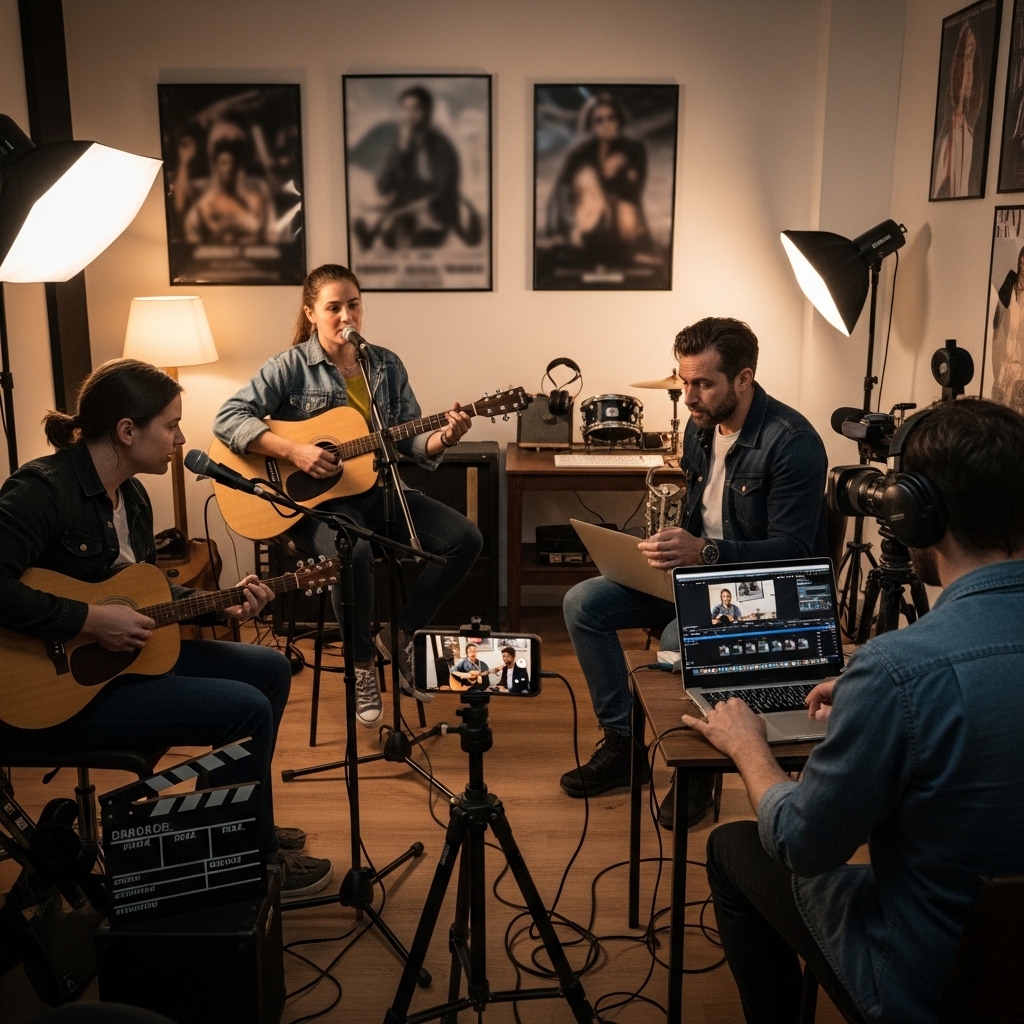
The relationship between fans and artists has also become more intimate and unstable. Short content rewards personality as much as performance. Audiences do not only want polished music videos or red-carpet appearances. They want studio mistakes, tour fatigue, voice-note demos, apartment rehearsals, family stories, skincare routines and honest reactions. The artist becomes a continuous narrative.
This can deepen loyalty. A fan who watches an artist write a song, struggle with a lyric, rehearse a difficult note and celebrate a release may feel invested before the track is even out. The emotional journey becomes part of the product. But it can also blur boundaries. Artists are expected to be available, funny, transparent and responsive. Silence can be misread as decline. Privacy can be interpreted as distance. A musician or actor may no longer compete only on talent, but on the ability to sustain a parasocial relationship at platform speed.
The same transformation is visible in cinema stardom. Actors are not discovered only through performances. They become beloved through interview clips, press-tour banter, fan edits, red-carpet moments and candid backstage videos. A performer’s public image can be shaped less by a full filmography than by a collection of circulating micro-moments. Charisma is now edited, captioned and shared by fans as much as by studios.
Fan culture has become a production force. Viewers cut romantic montages, rank scenes, translate interviews, remix songs, build fictional pairings and create alternative trailers. These fan-made fragments often act as unofficial marketing. They can rescue overlooked work, amplify international releases and introduce artists across language barriers. A Korean drama, Turkish series, Indian film, Latin pop song or African dance track can travel globally through subtitles, edits and reactions long before traditional distribution catches up.
Yet short content also changes attention. The more audiences consume fragments, the more they may expect immediate reward. Slow cinema, long albums and complex storytelling can struggle in environments optimized for instant impact. A quiet scene may be skipped before its meaning unfolds. A song intro may be cut because the hook is easier to monetize. A film may be judged by whether it produces shareable clips rather than by its full emotional architecture.
This does not mean audiences are becoming incapable of depth. The evidence is more complicated. Short-form discovery often leads people to long-form commitment. A 20-second clip can send viewers to a three-hour film, a full concert, a complete album, a podcast interview or a live show. The fragment is not always replacing the whole. Often, it is the doorway.
The challenge for entertainment companies is to respect both speeds. They must create entry points for scrolling audiences without weakening the work that follows. A strong short clip can invite attention, but it cannot substitute for a weak film, a forgettable song or an artist without substance. Virality may open the door, but craft keeps people inside.
For marketers, the old campaign calendar is losing control. Audiences now decide which part of a film, song or artist becomes meaningful. A studio may promote an action sequence, while fans fall in love with a quiet friendship scene. A label may push the chorus, while users choose a background harmony. A publicist may arrange a formal interview, while a casual backstage joke becomes the defining moment. The center of cultural power has shifted from official messaging to participatory interpretation.
This shift is especially important for emerging markets and independent creators. Short content lowers the cost of visibility. A filmmaker can tease atmosphere without buying television ads. A musician can test a melody before release. A dancer, comedian, actor or stylist can build an audience without waiting for institutional approval. But the new system also creates dependence on opaque algorithms. Careers can rise quickly and stall without warning.
The future of entertainment will not be short-form alone. People still go to cinemas, attend concerts, stream albums, watch prestige dramas and follow long careers. What has changed is the first encounter. Increasingly, culture reaches people in pieces before it reaches them as a finished work. The clip becomes the invitation, the meme becomes the memory, the sound becomes the hook, and the artist becomes a daily presence.
For filmmakers, musicians and performers, the lesson is not to shrink ambition. It is to understand that audiences now travel through culture differently. They may fall in love with a song before hearing its title, admire an actor before seeing the film, or watch a series because a stranger’s edit made them feel something in 10 seconds.
Short content has not killed cinema, music or stardom. It has changed the route to them. The screen is smaller, the clip is shorter and the competition is fiercer. But the human impulse remains familiar: people still want stories, rhythm, beauty, identity and connection. The difference is that the first spark now often appears in the palm of a hand, between one swipe and the next.