
As digital tools blur the boundary between office and home, workers and employers are being forced to rethink productivity, health and the meaning of a sustainable career.
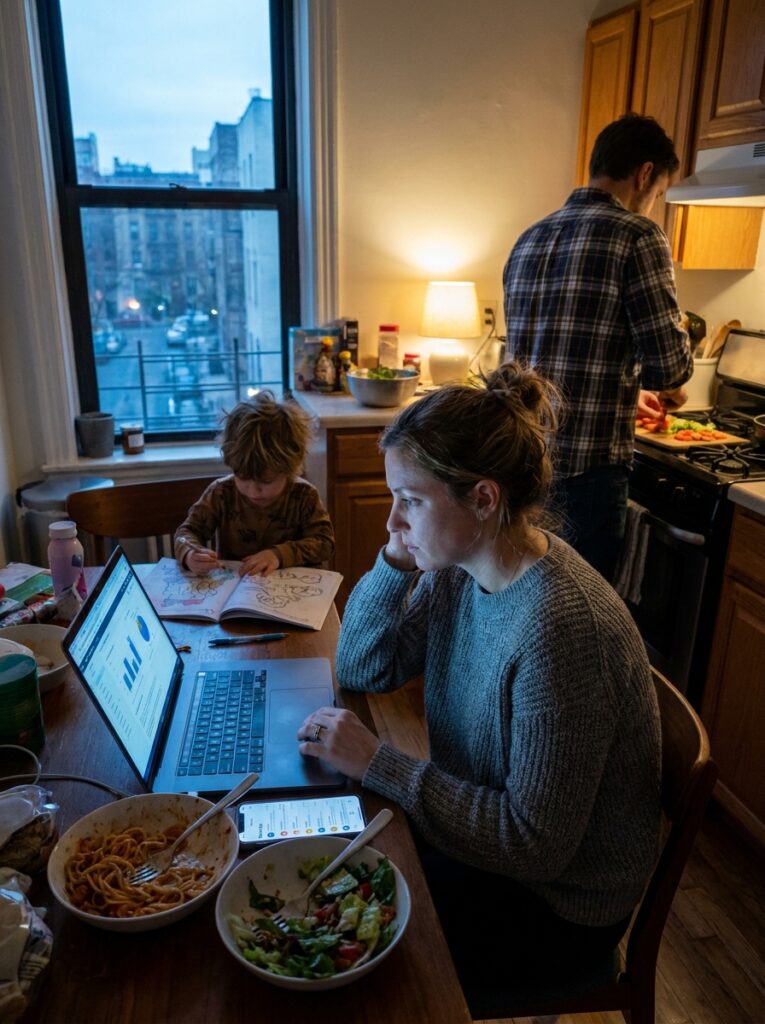
The workday once had clearer edges. People arrived at an office, factory, school, hospital or shop, completed their shifts and returned home with at least some separation between paid labor and private life. That boundary was never perfect, and for many workers it was never equal. But in the digital economy, the line has become more fragile. Emails arrive at dinner. Messages appear during weekends. Meetings cross time zones. Remote work can reduce commuting but extend availability. A laptop on the kitchen table can make home feel like an office that never closes.
The debate over work-life balance has therefore moved from personal preference to public concern. It is no longer only about whether employees can enjoy hobbies or spend time with family. It is about health, productivity, gender equality, talent retention and the future of work itself. Around the world, companies and governments are asking the same question in different ways: how much work is too much, and who gets to decide when the working day ends?
The pressure is visible across income levels and professions. Office workers describe a constant flow of messages. Nurses, drivers, teachers and service employees often face understaffing and unpredictable schedules. Freelancers and platform workers may have flexibility but little security. Managers are expected to respond quickly across markets. Parents and caregivers carry a second shift at home after paid work ends. For many people, imbalance is not caused by poor time management. It is built into the structure of modern employment.
Long hours carry measurable risks. The World Health Organization and the International Labour Organization have linked very long working weeks to higher risks of stroke and ischemic heart disease, estimating that hundreds of thousands of deaths were associated with long working hours in 2016. Their research focused on people working at least 55 hours a week, but the broader warning is relevant to a global culture that often treats exhaustion as evidence of commitment.
The problem is not simply the number of hours. It is also the quality of those hours and the degree of control workers have over them. A predictable 40-hour week with rest periods may feel very different from a fragmented schedule that changes without notice. Remote work can be liberating for one employee and isolating for another. Flexible hours can help a parent attend a school event, but they can also become a trap if flexibility means being available all the time.
This is why work-life balance is increasingly being replaced by a more precise idea: work-life boundaries. Balance suggests a perfect scale, evenly weighted every day. Real life rarely works that way. Some weeks demand more work. Some periods require more attention to children, illness, study, aging parents or rest. Boundaries are more practical. They ask what time is protected, what expectations are clear, and what parts of life should not be permanently absorbed by employment.
Technology is central to this shift. Messaging apps, cloud documents and video calls have made collaboration faster and more global. They have also created a culture in which silence can be mistaken for negligence. A worker who does not answer at night may worry about appearing uncommitted. A manager who sends one late message may unintentionally encourage an entire team to stay alert. The damage often accumulates quietly, through small interruptions that prevent real recovery.
The right to disconnect has emerged as one legal response. In Australia, employees gained the right to refuse unreasonable work contact outside working hours under rules that began for many workers in 2024 and expanded to small business employees in 2025. Similar ideas have been debated or adopted elsewhere. These laws do not eliminate after-hours work in every circumstance. Emergencies, senior roles and specific industries may require exceptions. But they signal a broader principle: private time has economic and human value.
Employers also have strong reasons to care. Burnout can reduce concentration, creativity and loyalty. Workers who feel permanently overloaded may disengage, change jobs or become ill. Recruitment is expensive, institutional knowledge is hard to replace, and poor workplace culture can damage a company’s reputation. In competitive labor markets, work-life balance is not a soft benefit. It is part of the employment contract, even when it is not written down.
The most effective organizations are moving beyond slogans. They are examining workloads, meeting habits, staffing levels, response-time expectations and management behavior. A company cannot solve burnout by offering a meditation app while rewarding constant availability. A manager cannot praise balance while sending weekend assignments as routine. Culture is shaped less by posters than by what gets promoted, tolerated and measured.
Flexible work remains one of the most important tools, but it must be designed carefully. Hybrid schedules can reduce commuting and give employees more control. Remote work can expand opportunities for people with disabilities, caregivers and workers outside major cities. Flexible start and end times can improve daily life. But flexibility without boundaries can increase work intensity. The best systems clarify when people are expected to be reachable, how urgent work is defined, and how teams coordinate without turning every hour into working time.
The home side of the equation is equally important. Work-life balance is not only about leaving work earlier; it is about having enough energy for life after work. Family meals, exercise, sleep, friendships, community, study and solitude are not luxuries. They are the foundation that allows people to return to work with attention and stability. When private life is repeatedly sacrificed, the loss eventually appears inside the workplace as fatigue, conflict or declining performance.
Gender remains a central issue. In many societies, women still carry a larger share of unpaid caregiving and household labor, even while participating fully in paid employment. A workplace that ignores caregiving responsibilities may describe itself as neutral, but its impact is not neutral. Paid leave, predictable scheduling, childcare support and career paths that do not punish caregiving breaks are essential to making balance more than a privilege for those with fewer responsibilities at home.
Younger workers are also changing the conversation. Many entered the labor market during or after the pandemic, when remote work, economic uncertainty and mental health concerns became more visible. They are often described as less loyal or less willing to sacrifice. A more accurate reading may be that they are less convinced by the old bargain: give unlimited time now in exchange for uncertain reward later. Their expectations are pushing employers to define career ambition in ways that do not require permanent exhaustion.
Individuals still have a role to play. Setting boundaries, turning off nonessential notifications, taking breaks, using vacation time, protecting sleep and communicating limits can help. But individual discipline cannot compensate for a workplace designed around overload. A worker cannot meditate away an impossible workload. A parent cannot time-manage away a schedule that changes every week. Balance requires personal habits, but it also requires organizational responsibility.
The future of work is likely to be more flexible, more digital and more global. That makes the need for boundaries more urgent, not less. Artificial intelligence may automate some tasks and speed up others, but faster work does not automatically mean healthier work. Without careful management, efficiency tools can simply raise expectations and compress more labor into the same day.
A sustainable model begins with a simple recognition: workers are not only units of productivity. They are people with bodies, relationships, limits and lives outside their job descriptions. When those lives are protected, work often improves. When they are neglected, both health and performance suffer.
Work-life balance is not a demand for less responsibility. It is a demand for work that can be sustained over a lifetime. In the modern economy, that may become one of the clearest markers of a decent job.
“””
