
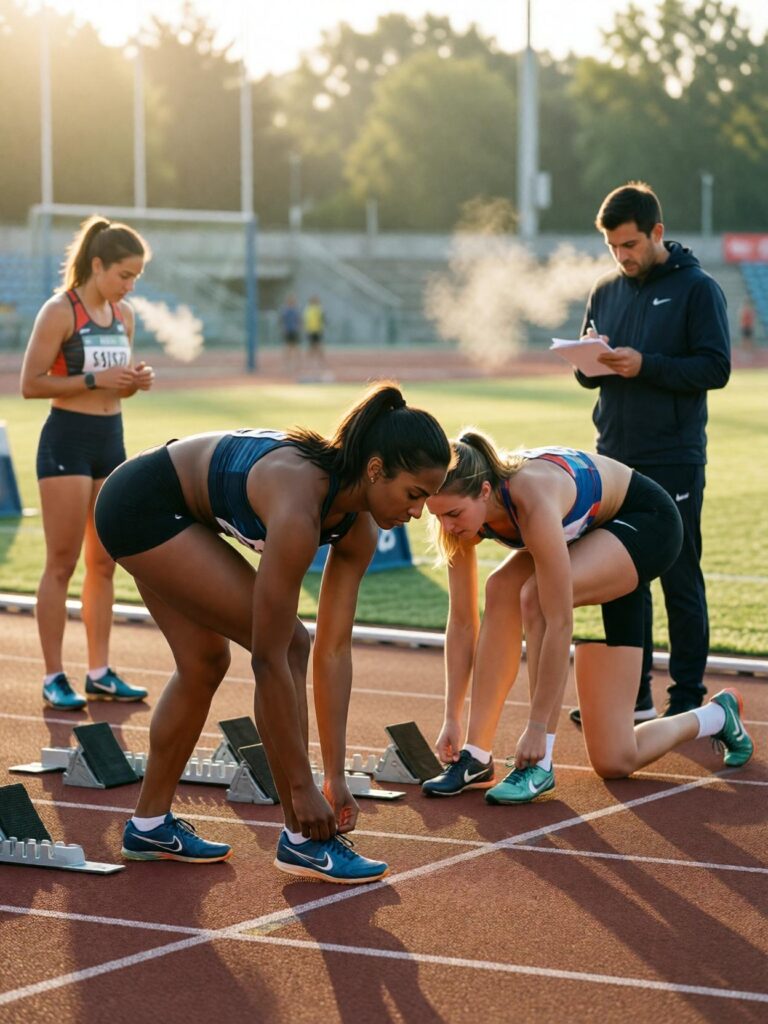
From Olympic podiums to local training grounds, female athletes are proving their excellence while demanding equal recognition, safer systems and a fairer share of the sports economy.
The story of women in sport is often told through moments of triumph: a sprinter crossing the line first, a football team lifting a trophy, a gymnast holding her nerve under impossible pressure, a boxer standing in the ring after years of being told the sport was not for her. These images are powerful because they show achievement. But behind them is a longer and more difficult story about recognition.
For generations, female athletes have had to compete twice. First, they compete against opponents on the field, track, court or in the pool. Then they compete against stereotypes outside it. They have had to prove that they are strong enough, skilled enough, marketable enough and worthy enough to receive the attention, investment and respect long granted to men’s sport as a matter of routine.
The progress is undeniable. Women’s competitions now attract larger audiences, stronger sponsorship, better facilities and more serious media coverage than in previous decades. Major tournaments have shown that fans will watch women’s sport when it is scheduled properly, promoted seriously and broadcast professionally. Young girls now grow up seeing female footballers, tennis players, basketball stars, runners, swimmers, martial artists and cricketers as global figures rather than exceptions.
Paris 2024 marked a symbolic milestone by becoming the first Olympic Games to reach full gender parity on the field of play. That achievement mattered not only because of numbers, but because numbers shape legitimacy. When women are present in equal measure at the world’s largest sporting event, the old argument that elite sport naturally belongs more to men becomes harder to defend.
Yet visibility at the Olympics does not mean equality has been achieved. Many female athletes still train in weaker systems, receive smaller salaries, play in less stable leagues and work with fewer medical, coaching and commercial resources. In some sports, the gap between elite celebration and everyday conditions remains wide. A woman may represent her country on the world stage and still return to a club environment where contracts are short, facilities are limited and financial security is uncertain.
Pay remains one of the clearest measures of inequality. The issue is not only prize money at famous tournaments. It is the entire economic structure around athletes: salaries, sponsorships, appearance fees, insurance, maternity protection, travel standards, equipment and post-career opportunities. A male athlete in a major professional league may be able to focus entirely on performance. A female athlete in the same sport may need a second job, family support or personal fundraising to continue competing.
This financial imbalance affects performance. Training at the highest level requires time, nutrition, recovery, coaching and medical care. When female athletes are underpaid, they do not simply earn less; they are asked to reach elite standards with fewer tools. Inequality is then misread as difference in quality, when in fact it is often the result of unequal investment.
Media coverage is another battleground. Women’s sport has often been treated as seasonal, appearing during Olympics, World Cups or finals, then disappearing from regular coverage. This pattern creates a damaging cycle. Less coverage means fewer sponsors. Fewer sponsors mean weaker leagues. Weaker leagues are then used as evidence that there is not enough demand. But recent audience growth has challenged that logic. When women’s sport is given consistent coverage, audiences can become consistent too.
Recognition also depends on the language used to describe female athletes. Too often, coverage has focused on appearance, relationships, motherhood or personality before performance. Male athletes are more likely to be described through power, tactics, statistics and legacy. Female athletes may still be asked to be inspirational before being allowed to be simply excellent. The demand for recognition includes the right to be analyzed seriously, criticized fairly and celebrated for skill.
The burden is heavier for women who face overlapping discrimination. Athletes of color, athletes with disabilities, LGBTQ+ athletes, women from poorer communities and athletes from countries with limited sports infrastructure often face additional barriers. Some struggle to access safe training environments. Others face abuse online and offline. Some are judged through racialized or sexist stereotypes about their bodies. Equality in sport cannot be limited to the most visible stars. It must reach the athletes with the fewest protections.
Safety is central to this struggle. Women and girls need sporting environments free from harassment, abuse and exploitation. This requires more than public statements. It requires independent reporting channels, trained safeguarding officers, transparent investigations and consequences for those who abuse power. Coaches, doctors, officials and federation leaders hold enormous influence over athletes’ careers. When that power is unchecked, talent can be damaged or driven out altogether.
Maternity protection is another test of whether sport truly values women. An athlete should not have to choose between becoming a mother and keeping her career alive. Some federations and leagues have improved policies, but gaps remain. Contracts, rankings, sponsorships and selection systems must recognize pregnancy and childbirth as part of human life, not as professional failure. A sporting culture that celebrates discipline and resilience should also support athletes through family life.
The fight for recognition begins long before professional competition. Girls need access to safe fields, qualified coaches, school teams, equipment and encouragement. In many places, girls drop out of sport during adolescence because of social pressure, lack of facilities, body image concerns, safety fears or the belief that sport is not a serious path for them. Every lost girl is not only a lost athlete. She may also lose confidence, leadership skills, health benefits and a sense of belonging.
Role models can change that. When young girls see women competing with power and dignity, they gain permission to imagine themselves differently. A girl who watches a female goalkeeper command the penalty area, a weightlifter raise the bar or a marathoner break away from the field sees more than a result. She sees a version of herself that refuses to shrink. Representation does not guarantee opportunity, but it opens the door to ambition.
Men also have a role in this transformation. Equality in sport should not be framed as a women’s issue alone. Male athletes, coaches, journalists, executives and fans can help change the culture by supporting women’s competitions, challenging sexist language, sharing resources and treating female achievement as part of the sporting mainstream. The goal is not to diminish men’s sport. It is to expand the meaning of sport itself.
The commercial case for women’s sport is now stronger than ever. Sponsors and broadcasters are learning that female athletes carry powerful stories, loyal fan bases and high engagement. But commercial growth must be handled carefully. Women’s sport should not be valued only when it becomes profitable. Investment is not a reward for already reaching the top; it is often the condition that allows athletes and leagues to grow.
There is also a risk that only a few marketable stars receive attention while the wider ecosystem remains fragile. True recognition means building leagues, youth pathways, coaching systems, medical support and leadership opportunities. It means women not only playing the game, but also managing clubs, leading federations, owning teams, designing policy and shaping the future of sport.
The demand from female athletes is not complicated. They are asking to be paid fairly, covered seriously, protected properly and respected fully. They are asking for the same assumption given to men: that their competitions matter, their labor has value and their excellence deserves attention.
Sport has always claimed to reward merit. The struggle of women in sport asks whether that promise is real. If talent is present but opportunity is unequal, merit alone cannot decide the outcome. Recognition must be built through policy, investment, visibility and cultural change.
The women competing today are not only chasing medals. They are changing the conditions for those who come next. Every sold-out stadium, every fair contract, every serious broadcast, every girl who joins a team because she saw a woman win, becomes part of that change. Their fight is not simply to be included. It is to be recognized as athletes in the fullest sense: powerful, skilled, professional and impossible to ignore.”””
