THE STREAMING BOOM REMAKES TELEVISION, BUSINESS AND GLOBAL CULTURE
Netflix, Disney+, YouTube and their rivals have turned entertainment into an always-on marketplace, forcing studios, advertisers and audiences into a new era of choice, cost and competition.
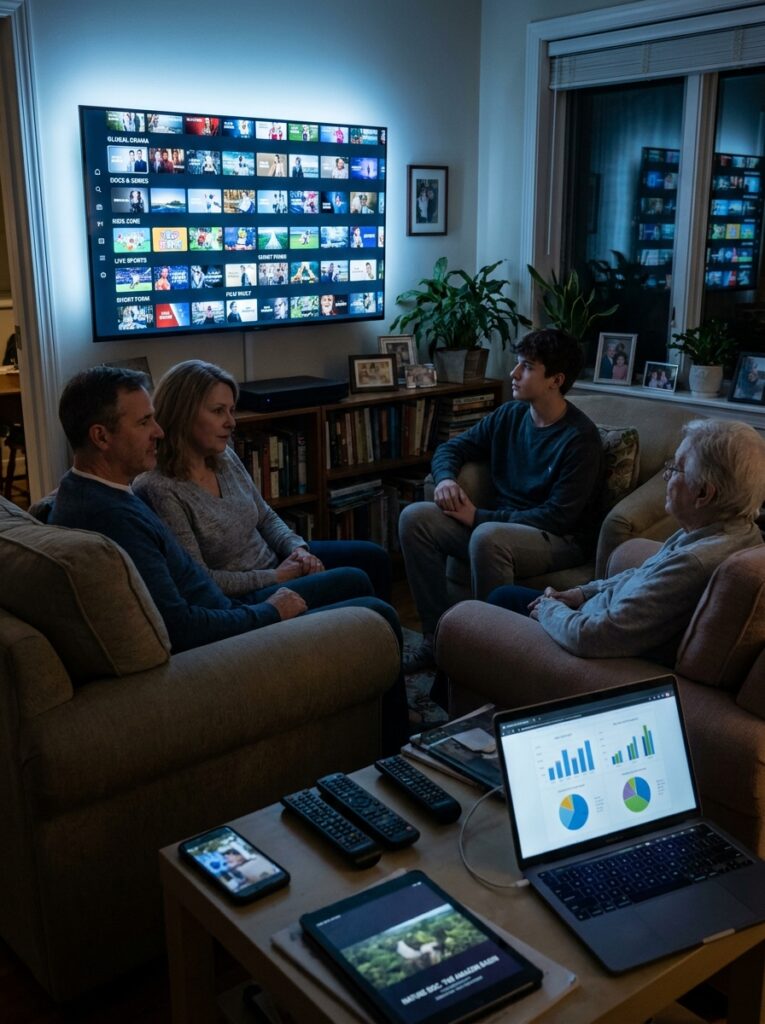
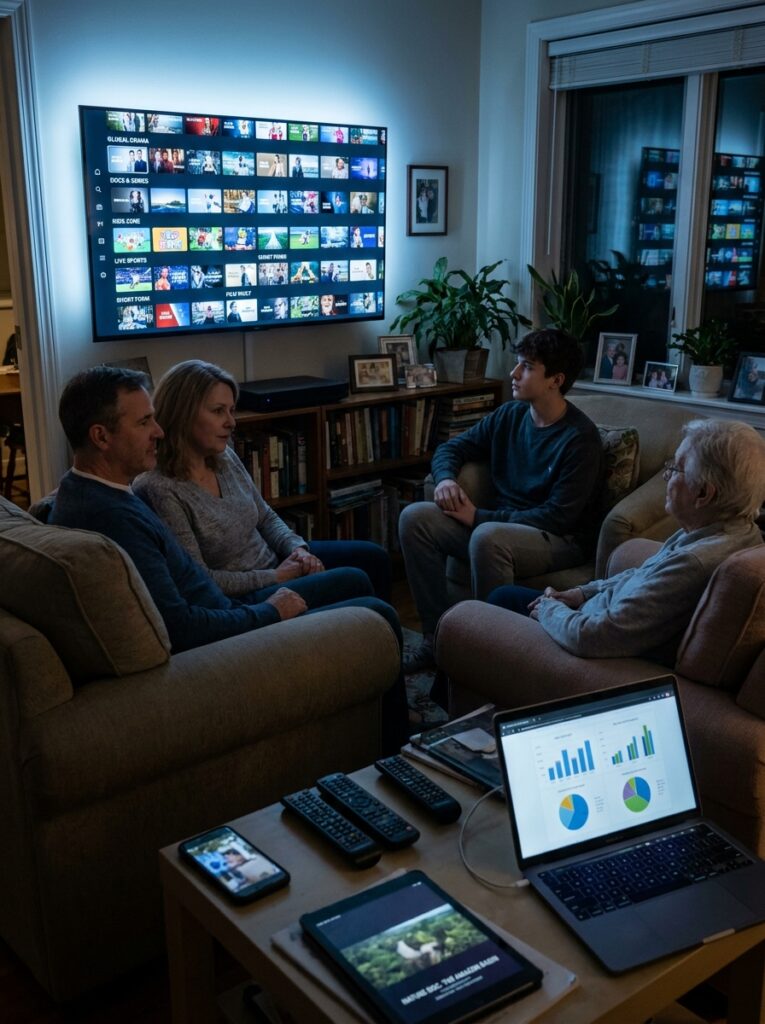
The television set in the living room was once the most predictable screen in the home. Families watched channels, networks scheduled evenings, and advertisers bought attention in blocks measured by prime time. That order has been steadily dismantled by the rapid expansion of streaming platforms, a transformation led by subscription services such as Netflix and Disney+, advertising-driven giants such as YouTube, and a crowded field of competitors that now includes technology companies, legacy studios, sports leagues, telecom groups and free ad-supported channels.
The shift is no longer a matter of consumer preference alone. It has become one of the defining industrial changes in global media. Streaming has changed how films are financed, how television series are released, how children encounter entertainment, how advertisers target households and how old media companies value their libraries. What began as a convenient alternative to cable has become the center of the entertainment economy.
In the United States, the symbolic turning point came in May 2025, when Nielsen reported that streaming accounted for 44.8% of total television usage, edging past broadcast and cable combined for the first time. The number captured a change that had been visible for years: viewers were no longer simply supplementing traditional TV with apps. They were replacing the old system with a menu of services, subscriptions and algorithmic feeds.
Netflix remains the clearest example of the new model’s scale. After years of heavy spending, international expansion and periodic investor anxiety, the company reported 2025 revenue of $45.2 billion and said it had crossed 325 million paid memberships. The company’s strategy has evolved from pure subscription growth toward a broader mix of advertising, live events, games, international productions and tighter control over password sharing. Its ad revenue, still small compared with its subscription base, rose sharply in 2025 and is expected to become a larger part of its business.
Disney followed a different route. Rather than building a streaming identity from scratch, it moved some of the world’s most valuable entertainment franchises — Marvel, Pixar, Star Wars, Disney animation, National Geographic and Hulu programming — into a direct-to-consumer system. The transition was expensive and at times painful, forcing the company to balance its streaming ambitions against the decline of cable networks and the continuing importance of theme parks, theatrical releases and sports. By early fiscal 2026, Disney reported that its subscription video-on-demand business had become profitable, a milestone after years of losses in the race to catch Netflix.
YouTube is the more disruptive force because it does not fit neatly into the older definition of television. It is free for most users, supported mainly by advertising, filled largely by creators rather than studios, and watched across phones, laptops and increasingly television screens. Alphabet said YouTube’s annual revenue from advertising and subscriptions surpassed $60 billion in 2025, putting it in the same conversation as the largest entertainment companies in the world. Nielsen data has also shown YouTube leading media distributors in U.S. television watch time, a sign that creator-led video has moved from the margins of youth culture into the center of household viewing.
The explosion of streaming has given audiences extraordinary choice. A viewer can move in minutes from a Korean drama to an English Premier League highlight, a Disney animated feature, a true-crime documentary, a video podcast, a cooking livestream or an independent creator’s travel vlog. Subtitles, dubbing and recommendation systems have helped programs cross borders at speeds that traditional television rarely allowed. Shows from South Korea, Spain, India, Japan, Brazil and other markets now compete directly with Hollywood productions on global home screens.
But abundance has created its own fatigue. Households that once cut the cable cord to save money now face a growing stack of monthly subscriptions. Price increases, password-sharing restrictions and advertising tiers have changed the emotional bargain between platforms and viewers. Many consumers now subscribe temporarily, cancel after a favorite series ends, rotate among services or rely more heavily on free platforms such as YouTube, Tubi, Pluto TV and The Roku Channel. The streaming market has trained audiences to expect control, but it has also made entertainment budgeting more complicated.
For media companies, the economics remain unforgiving. Producing premium drama, sports coverage and franchise films requires billions of dollars in annual spending. Streaming has global reach, but it also weakens some older revenue streams, including cable affiliate fees, syndication windows and DVD sales. The early assumption that subscriber growth would justify almost any level of spending has faded. Investors now demand profits, not just scale. That pressure has pushed companies to raise prices, bundle services, license content to rivals, reduce weaker productions and explore advertising as a necessary second engine.
Advertising has become one of the most important battlegrounds. Netflix, once famous for avoiding commercials, now sells ad-supported plans. Disney offers ad tiers across its streaming products. Amazon has placed advertising more prominently in Prime Video. YouTube has long operated as a digital advertising powerhouse and is extending that strength to the television screen. For marketers, streaming promises more precise targeting than traditional TV, but it also creates fragmentation. The audience is everywhere, but measuring it consistently remains difficult.
Sports may determine the next phase. Live games are among the few types of programming that still gather large audiences at the same time. Streamers have moved aggressively into sports rights, highlights, documentaries and live events because sports reduce churn and bring advertisers dependable attention. Netflix has experimented with live specials and sports-adjacent programming. Disney’s ESPN remains a central sports brand as the company prepares for a more direct streaming future. YouTube TV has built a major presence in live television bundles, including sports packages. The migration of sports from cable to streaming is likely to accelerate the decline of the old pay-TV bundle.
The boom has also changed labor and creativity. Writers, actors, directors and production crews have had to adapt to shorter seasons, data-driven commissioning and global release strategies. Streaming platforms can revive niche genres and finance ambitious international projects, but they can also cancel shows quickly if performance data fails to justify renewal. The creative community has questioned how success is measured, how residuals should be paid and whether algorithms encourage imitation over risk-taking. The 2023 Hollywood strikes exposed many of those tensions and forced the industry to renegotiate parts of the streaming economy.
Regulators are paying attention as well. Governments in Europe, Asia and elsewhere have pushed for local content investment, tax compliance, age protections and stronger rules around online safety. The more streaming resembles essential media infrastructure, the more it attracts scrutiny. Questions about misinformation, children’s exposure, data privacy and market power are especially sharp for platforms that combine entertainment, advertising and algorithmic recommendation at massive scale.
For viewers, the changes are deeply personal. Streaming has made entertainment more intimate, portable and customizable. It has also weakened the shared calendar that once made television a collective national experience. A blockbuster series can still dominate conversation, but audiences often watch at different times, in different languages and on different devices. The water-cooler moment has not disappeared; it has been redistributed across group chats, reaction videos, fan edits and social feeds.
The streaming boom is therefore not just a technology story. It is a story about power shifting from schedules to software, from channels to platforms, from national broadcasters to global libraries, and from studio executives to a complicated mix of algorithms, creators and subscribers. Netflix proved that a global subscription entertainment company could be built outside the old studio system. Disney showed that legacy intellectual property could be reorganized for the direct-to-consumer age. YouTube demonstrated that the most powerful television platform might not look like television at all.
The next era is unlikely to be defined by unlimited growth. It will be defined by consolidation, pricing discipline, advertising sophistication and the fight for daily habits. Some platforms will merge, bundle or retreat. Others will lean into live events, sports, gaming, shopping or creator tools. Audiences will keep choosing convenience, but they will also keep pushing back against rising costs and excessive fragmentation.
Television has not died. It has been absorbed into a wider streaming universe where every screen is a storefront, every program is data, and every viewer is both audience and target. The winners will be the companies that can offer enough value to remain part of daily life without making viewers feel trapped by the very abundance they once celebrated.