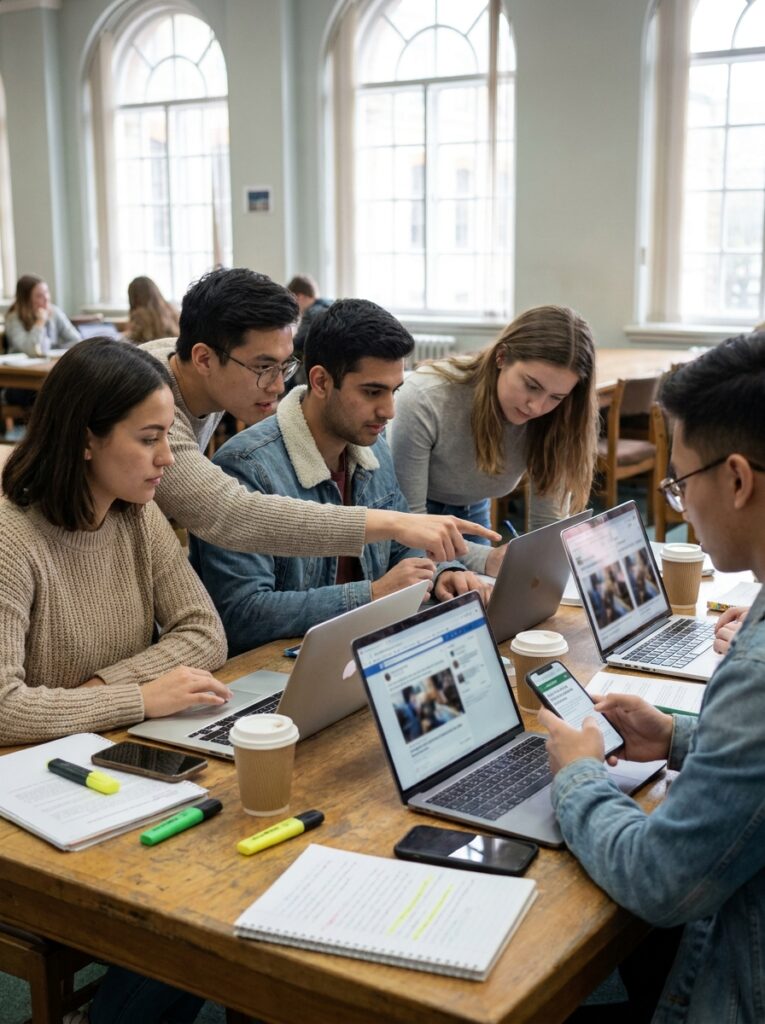
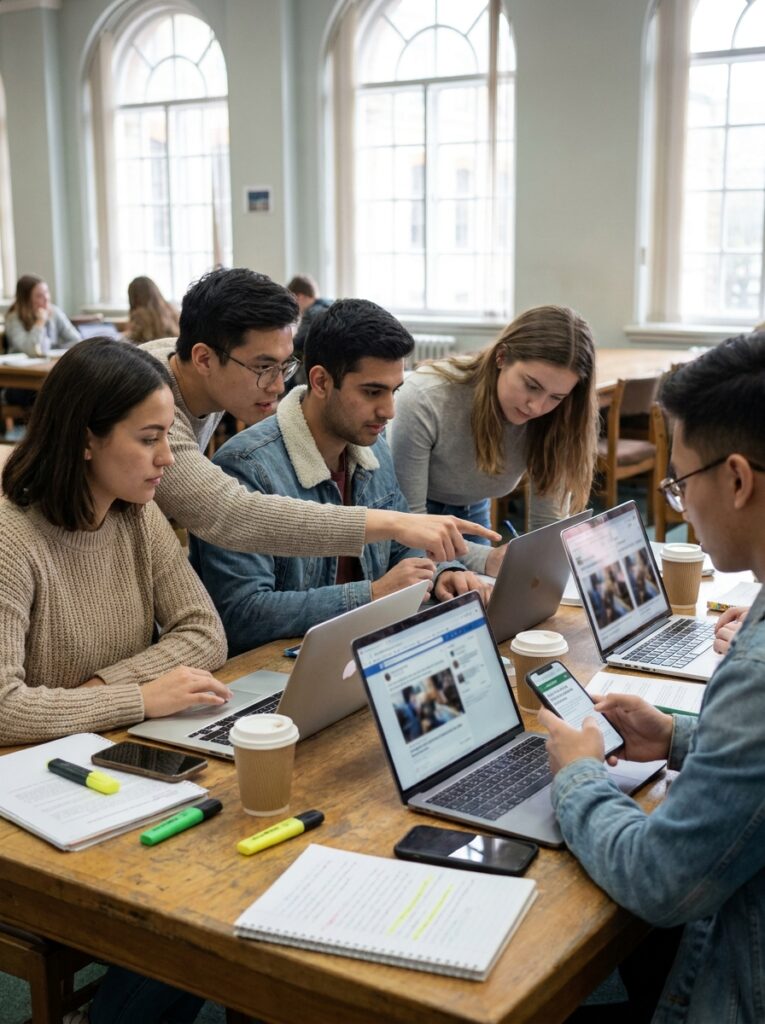
As social media becomes a primary gateway to news, young users are learning that digital fluency must include skepticism, verification and the discipline to pause before sharing.
False information has always existed, but the digital age has given it speed, scale and emotional power. A rumor that once moved through a neighborhood can now cross continents in minutes. A manipulated image can reach millions before journalists, officials or fact-checkers have time to respond. A misleading video can be stripped of context, reposted by influencers and turned into a political weapon, a public health risk or a personal attack. For young people who live much of their social and informational lives online, fake news is not an abstract civic problem. It is part of the daily environment.
The phrase “fake news” is often used loosely, sometimes to describe any report a person dislikes. A more accurate vocabulary separates misinformation, which is false or misleading content shared without necessarily intending harm, from disinformation, which is false content spread deliberately to deceive. There is also malinformation, where genuine information is used out of context to harm someone. These distinctions matter because the solutions are different. A confused friend sharing an old photo requires correction. A coordinated network spreading fabricated claims requires investigation and accountability.
Social media has changed the way false information spreads because platforms reward engagement. Posts that provoke anger, fear, pride or shock often travel faster than careful explanations. A dramatic claim can attract comments before it is verified. A conspiracy theory can feel more exciting than a correction. A headline that confirms what users already believe can be shared without being read. Algorithms do not always know whether a claim is true; they often know only that people are reacting to it. In that system, emotion can become a distribution engine.
Young people are especially exposed because social media is not just where they consume information. It is where they form identity, maintain friendships, follow celebrities, learn trends and participate in public conversation. News appears beside entertainment, jokes, advertising, personal posts and influencer commentary. A clip about war may follow a comedy video. A health claim may appear between makeup tutorials. A political rumor may be delivered by a creator whose usual content is music, sport or lifestyle. The boundaries that once separated journalism, opinion, marketing and rumor have become harder to see.
This does not mean young people are careless. Many are highly aware that online information can be manipulated. They have grown up with filters, edits, memes and viral hoaxes. But awareness is not the same as protection. The speed of online life encourages instant reaction. Friends expect quick responses. Platforms encourage sharing while interest is high. Social pressure can make silence feel like indifference. In breaking news, the desire to be first can overpower the responsibility to be right.
Artificial intelligence has added another layer of difficulty. AI tools can generate realistic images, synthetic voices, fake screenshots and convincing text at low cost. Deepfakes do not have to be perfect to cause harm. A misleading image only needs to create doubt long enough to influence a debate, damage a reputation or confuse the public. Even when a fake is later exposed, the original impression may remain. In the AI era, the question is no longer only whether a post looks real. It is whether its source, timing, evidence and context can be verified.
The first habit young people need is to pause. The most dangerous moment is often the first emotional reaction. If a post makes someone furious, frightened or eager to prove a point, that is precisely the time to slow down. A simple delay before sharing can stop misinformation from gaining another link in the chain. Verification begins not with technical tools, but with self-control. The user must ask: Who wants me to feel this strongly, and why?
The second habit is checking the source. A credible report should have a clear publisher, author, date, evidence and correction process. Anonymous accounts, copied screenshots and pages with no transparent ownership deserve caution. A large follower count does not guarantee accuracy. A professional-looking website does not guarantee journalism. Young users should learn to leave the platform and search for the source elsewhere. What do other reliable outlets say about it? Has the account previously spread false claims? Is the source an expert, a witness, a commentator or someone repeating another post?
The third habit is lateral reading. Instead of staying inside one page and judging it by design or confidence, users should open new tabs and compare what independent sources say. Professional fact-checkers often do this quickly. They search the organization behind a claim, look for original documents, compare coverage and identify whether the claim has already been investigated. This approach is more effective than reading only the “About” page of a suspicious website, because bad actors can describe themselves in trustworthy language.
The fourth habit is tracing media back to its origin. Images and videos are among the most powerful forms of misinformation because people tend to trust what they see. But a real photo can be used to describe a false event. An old video can be presented as new. A clip can be edited to remove what happened before or after. Reverse image search, video keyframe search and checking the earliest known upload can reveal whether a post is recycled or misrepresented. If a dramatic video appears without location, date or source, skepticism is justified.
The fifth habit is looking for evidence, not just assertion. A post that says “doctors are hiding this,” “the media will not report this,” or “share before it is deleted” should raise suspicion. These phrases often pressure users to act before thinking. Strong claims require strong evidence: documents, data, named experts, verifiable witnesses and multiple independent reports. Screenshots alone are weak evidence because they are easy to alter. A quote without a link to the original speech, report or interview should not be treated as confirmed.
The sixth habit is understanding the role of context. Misleading information is not always entirely false. A statistic may be real but outdated. A quote may be accurate but taken from a different situation. A crime story may be used to create a false impression about a whole community. A scientific study may be exaggerated beyond what the researchers found. Context includes time, place, scale, source, method and comparison. Without context, even facts can mislead.
Schools have a major responsibility in teaching these skills. Media literacy should not be treated as an optional lesson after exams. It is a core civic skill, like reading, writing and basic mathematics. Students should learn how algorithms shape feeds, how sponsored content works, how to identify credible journalism, how to read data and how to verify images. They should also learn that being skeptical does not mean rejecting everything. Healthy skepticism asks for evidence. Cynicism assumes nothing can be trusted. Democracy needs the first, not the second.
Parents also have a role, but lectures are often less effective than shared practice. Instead of simply telling young people not to believe what they see online, adults can ask them to verify a claim together. Where did this come from? Who else is reporting it? Is there a primary source? Could this image be old? What would change our mind? These conversations teach judgment without humiliation. Young people are more likely to build verification habits when adults treat them as capable participants, not passive victims.
Technology companies cannot avoid responsibility. Platform design influences behavior. Recommendation systems can amplify misleading content. Verification labels, source context, friction before resharing, transparent political advertising rules and rapid response to coordinated manipulation can reduce harm. But platform moderation is difficult and contested, especially across languages and political systems. That is why user education, independent journalism and transparent platform governance must work together.
Influencers and content creators now occupy a powerful position in the information ecosystem. Many young people trust creators more than traditional institutions because creators feel personal, accessible and authentic. That trust brings responsibility. A creator who shares breaking news without verification can mislead a large audience, even unintentionally. Creators who discuss politics, health, finance, conflict or public safety should disclose sources, correct errors and distinguish clearly between fact, opinion and speculation.
For young people, the goal is not to become professional journalists. It is to become harder to manipulate. A digitally literate young person does not share a shocking post simply because it is viral. They check whether reputable outlets have confirmed it. They search beyond the platform. They ask whether the image is old. They notice emotional manipulation. They understand that uncertainty is not weakness. Sometimes the most responsible answer is, “I do not know yet.”
The fight against fake news will not be won by one app, one law or one fact-checking label. False information spreads because it serves human needs: belonging, outrage, certainty, entertainment and identity. The response must therefore be cultural as well as technical. Young people need tools, but they also need values: patience, humility, accuracy and responsibility toward others.
In a digital society, sharing is a form of power. Every repost can inform or mislead, calm or inflame, clarify or confuse. The younger generation has inherited an information environment more open and more chaotic than any before it. Their challenge is not only to consume information, but to defend the conditions under which truth can still be found. The first defense is simple: pause, check, compare and only then share.”””