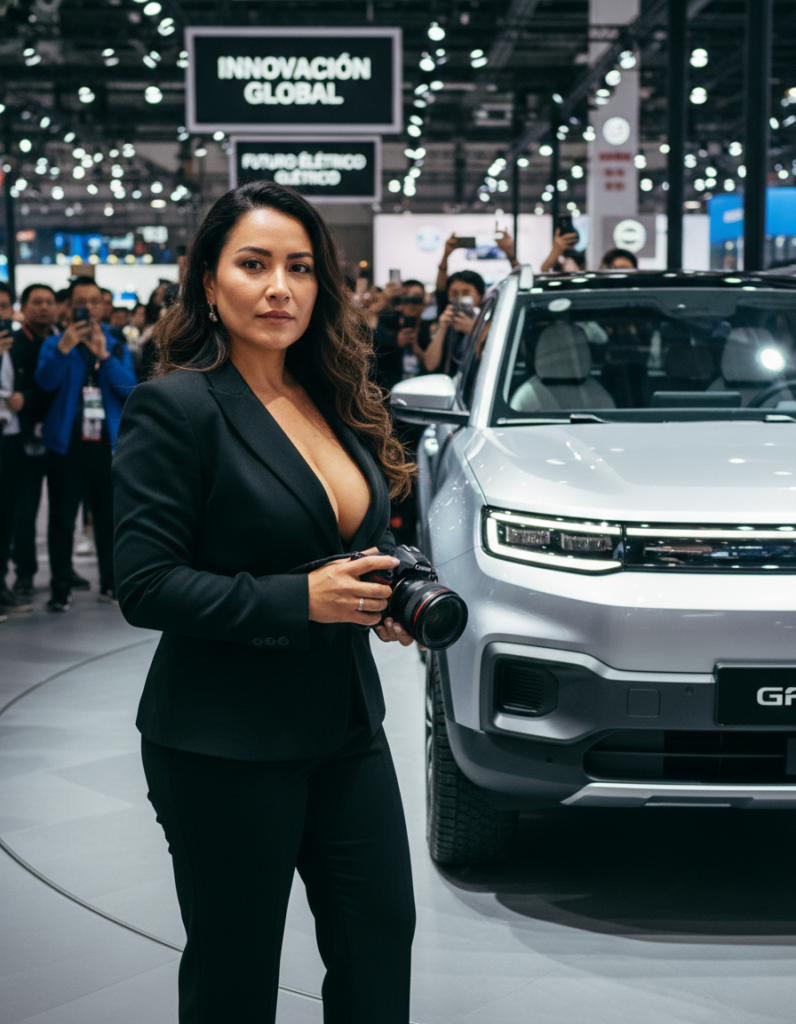
The Jetta X concept, unveiled ahead of Auto China 2026 in Beijing, signals Volkswagen’s push to defend its place in the world’s largest EV market by bringing one of its best-known value badges into the entry-level new-energy segment.
Volkswagen has given one of its most familiar names a distinctly Chinese future.
At its Auto China 2026 preview in Beijing, the German automaker introduced the Jetta X concept, a rugged-looking electric SUV under the Jetta brand it operates exclusively in China, opening a new chapter for a badge long associated elsewhere with compact sedans rather than battery-powered crossovers. The move is more than a design exercise. It is a signal of how urgently global carmakers are trying to reposition themselves in China’s fast-moving market for affordable electric and electrified vehicles.
Car and Driver reported that the Jetta X made its debut as a China-market concept at the Beijing Auto Show, with Volkswagen using the Jetta name on an all-electric SUV for the first time. Volkswagen Group, in its own presentation around Auto China 2026, described Jetta’s new show car as an important milestone in the brand’s path to electrification and part of its broader “In China, for China” strategy, which aims to develop products faster and more specifically for local buyers.
That strategy matters because China is not just another growth market. It is the center of gravity for the global electric-vehicle business. The International Energy Agency said China accounted for more than half of global electric car sales in 2024, underscoring how success or failure there increasingly shapes the competitive fortunes of both domestic and foreign manufacturers. In practical terms, any automaker hoping to remain globally relevant in EVs needs a convincing answer for China’s consumers, price points and technology expectations.
Volkswagen’s answer is becoming more localized. The company said at its Beijing event that it plans to launch more than 20 electrified models in China in 2026 and is pressing ahead with a product blitz designed around Chinese tastes in software, connectivity, driver assistance and body styles. Within that campaign, Jetta occupies a specific role: entry-level value.
Jetta has been a standalone brand in China since 2019, when Volkswagen and its FAW partnership elevated the name from a model line into a separate marque aimed at younger and budget-conscious customers. The brand’s positioning has always been pragmatic rather than premium — affordable sedans and SUVs with Volkswagen lineage and mainstream appeal. What is changing now is the powertrain and the competitive battlefield.
The Jetta X concept suggests that Volkswagen no longer sees the entry EV market in China as optional territory. It is where the fight is intensifying.
Official details on the vehicle remain limited. Volkswagen and Car and Driver have emphasized the concept’s role as a preview rather than a full production-spec reveal. But the broad outlines are already clear. The Jetta X is a high-riding SUV or crossover with a more upright, outdoorsy stance than the smoother, rounded look common to many urban EVs. Images and early descriptions show slim lighting elements, dark lower-body cladding, squared proportions and a minimalist cabin centered on digital screens. It is styled to look tougher and more adventurous than the average low-cost commuter crossover, even if its likely mission is less about off-road capability than showroom differentiation.
That design choice reflects the reality of China’s car market, where consumers have grown accustomed to rapid model turnover, aggressive styling, tech-heavy interiors and a relentless stream of new-energy offerings from local brands. Foreign automakers are no longer competing simply on heritage, engineering reputation or dealership scale. They are competing on software, speed, features and value — often against Chinese companies that can iterate more quickly and price more aggressively.
Volkswagen’s own messaging acknowledges as much. In Beijing, the group said its new China portfolio had been developed in less than 36 months and highlighted artificial-intelligence functions, locally developed driver-assistance systems and a cadence of model launches meant to make the company more responsive. The Jetta X fits that framework because it extends electrification into a part of the market where margins may be thinner but volume and strategic relevance are high.
That is also why the Jetta badge matters. In the United States and Europe, Jetta is mainly associated with a long-running compact sedan. In China, however, Jetta is a separate brand with value-market ambitions. Reusing the name for an electric SUV is a way to preserve familiarity while repositioning the brand for a different era. It tells consumers that Jetta is not being left behind as the market pivots to new-energy vehicles. It also gives Volkswagen a cheaper, more approachable channel into EV demand than relying entirely on the ID family or higher-priced joint-venture offerings.
The broader commercial context helps explain the urgency. Volkswagen remains one of the biggest foreign carmakers in China, but it has been under pressure from fast-rising local rivals that dominate much of the electric and plug-in hybrid landscape. Chinese brands have become adept at delivering digital features, advanced in-car interfaces and competitive range at prices that have unsettled incumbent manufacturers. Volkswagen’s response has been to localize more deeply, partner more extensively and spread its bets across multiple brands and joint ventures.
Jetta is now part of that response. Volkswagen Group China said recently that, under a business development agreement involving Volkswagen, FAW and local authorities in Chengdu, the Jetta brand will introduce four new-energy vehicles for the entry-level segment by 2028. The first is due this year. That gives the Jetta X concept significance beyond its sheet metal. It is an early marker of a pipeline intended to make Jetta relevant in the mainstream EV fight, not merely as a legacy value brand but as an electrified one.
Even so, caution is warranted. Concept cars are declarations of intent, not proof of market success. Technical specifications, range figures, battery chemistry, pricing and production timing are still the details that will determine whether the eventual Jetta EV can compete in China’s brutally competitive market. And in China, competition is not only fierce but fast. A vehicle that looks timely at one auto show can be overtaken quickly by lower prices, better software or a fresher design six months later.
There is also the question of branding. While the Jetta name carries recognition, it is not automatically obvious that a badge associated with affordable combustion-engine cars will translate into electric desirability. Chinese consumers have shown a willingness to embrace newer domestic marques if they believe those brands offer stronger digital experiences or better value. Volkswagen will need more than familiarity to make Jetta’s EV push work.
Still, the strategic logic is difficult to miss. SUVs remain central to consumer demand. EV adoption in China is already at a scale unmatched elsewhere. And foreign automakers, facing pressure in both volume and relevance, increasingly need locally tailored products that can compete below the premium tier. A rugged, affordable electric Jetta is Volkswagen’s attempt to place a known name directly into that battle.
For the wider industry, the Jetta X concept is another reminder that the next phase of the EV contest will not be decided only by luxury flagships or halo technology. It will be shaped in the mass market, where price, practicality and brand trust intersect. That is especially true in China, where scale can quickly turn a niche experiment into a major strategic platform.
Volkswagen is not alone in moving in that direction. But by attaching the Jetta name to a China-only electric SUV, it is making a clear statement: the company sees the affordable EV segment not as a side project, but as a front line. Whether the Jetta X becomes a strong seller will depend on what follows after the applause of Beijing — the final specs, the sticker price, the software experience and the pace of rollout.
For now, the concept does something important on its own. It shows how one of the world’s largest carmakers is adapting its playbook for the market that matters most in electric mobility. In China, the future of the family car is increasingly electric, increasingly local and increasingly fought over in the mainstream. Volkswagen wants Jetta to be part of that future, not a relic of the gasoline past.