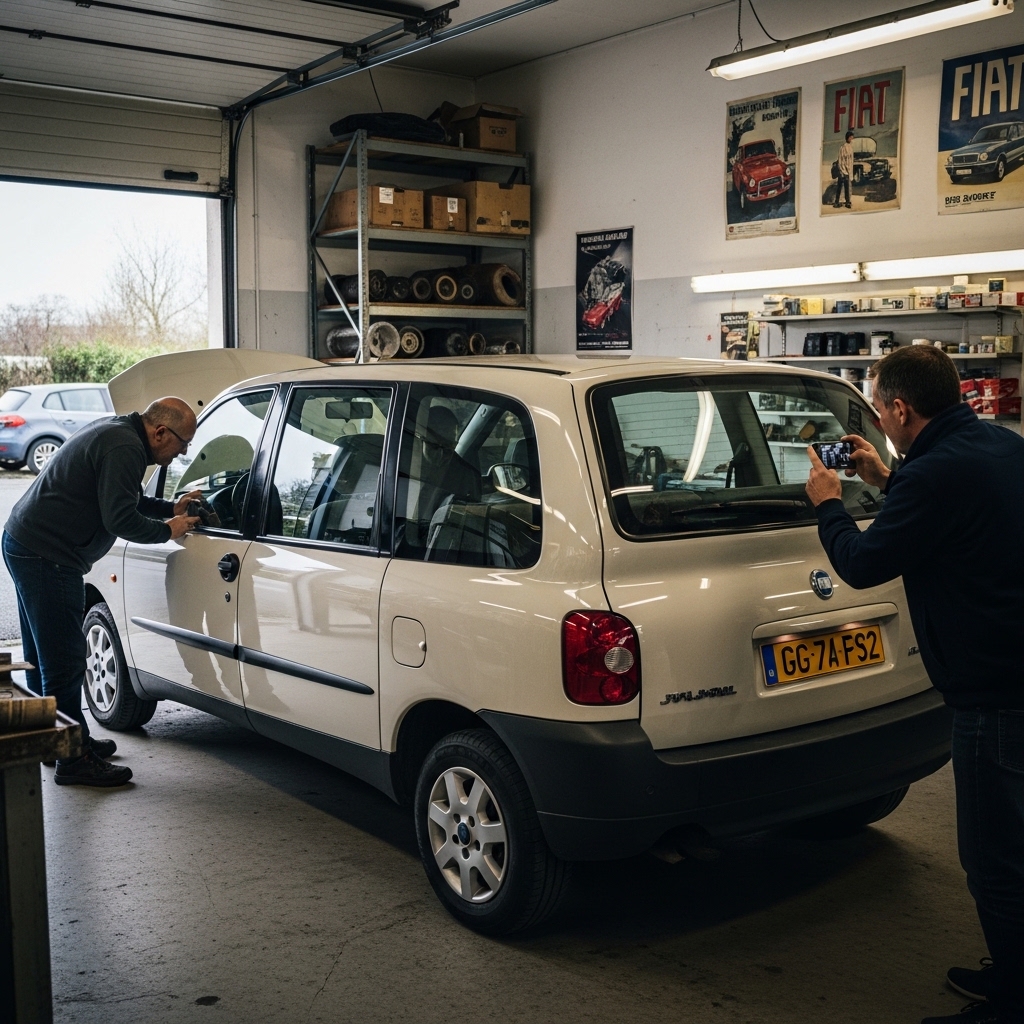
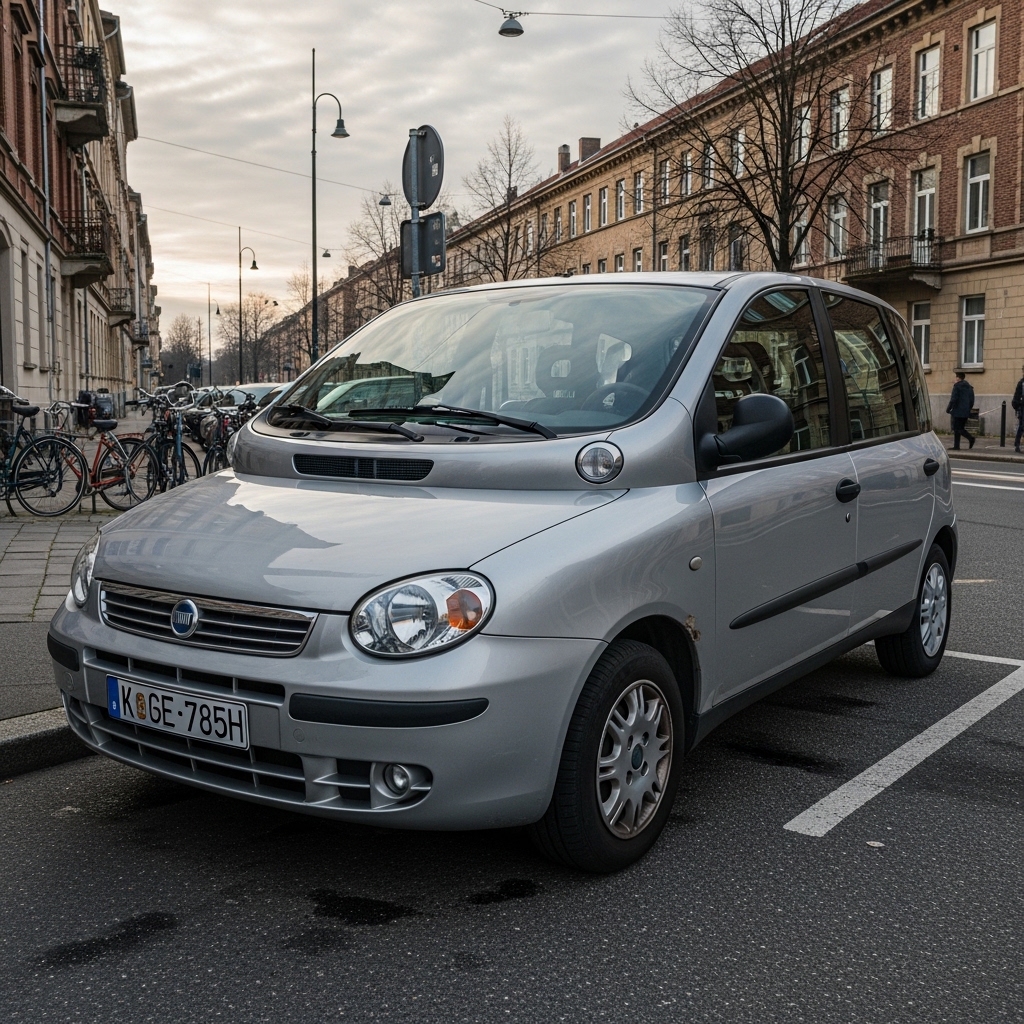
Once mocked as one of the ugliest cars ever built, Fiat’s radical family car is being reappraised as a brave, practical and increasingly collectible design statement.
For years, the Fiat Multipla was treated less like a car than a public joke on wheels. Its two-tier nose, wide body, bug-eyed lighting and strange swollen beltline made it an easy target for television presenters, magazine columnists and drivers who believed a family car should disappear quietly into traffic. The Multipla did the opposite. It arrived with the confidence of a concept car and the social awkwardness of something nobody had asked to see. Yet more than two decades after its debut, the same design that made it notorious is turning it into one of the most fascinating modern classics of the early 21st century.
Launched in the late 1990s, the Multipla was Fiat’s answer to a question many carmakers were still afraid to ask: what if a compact family car were designed from the inside out? The result was a vehicle just under four metres long but wide enough to seat three people in the front and three in the rear. Six proper seats, a low floor, large windows and exceptional visibility made it unusually practical for families, taxi drivers and urban users. It was not conventionally beautiful, but it was honest. Every odd proportion had a purpose.
That purpose was often lost in the laughter. The original Multipla’s face looked like two cars stacked on top of each other. A raised band beneath the windshield carried part of the lighting, while the lower front end appeared almost detached from the cabin. The body was broad and upright, with a glasshouse that seemed closer to architecture than automotive sculpture. Compared with the smoother, more conservative people carriers of its era, the Multipla looked like a visitor from a parallel design culture.
Critics were brutal. It regularly appeared on lists of the world’s ugliest cars, and its name became shorthand for styling failure. In Britain, one of its most difficult markets, the car was ridiculed with particular enthusiasm. But ridicule can flatten complexity. The Multipla was never a careless design. It was the opposite: a carefully reasoned machine whose designers prioritized space, visibility and human comfort over visual politeness. Its exterior looked strange because its interior was revolutionary.
Inside, the Multipla made immediate sense. The dashboard was mounted centrally, freeing up space and improving the feeling of openness. The front middle seat could be folded or used as a table. The rear seats could be moved, folded or removed. The high seating position gave drivers a commanding view of the road, while the broad cabin allowed six adults to sit in a car shorter than many modern hatchbacks. In an era when sport utility vehicles were beginning to dominate family transport, the Multipla offered a different vision: maximum utility without unnecessary size.
That is why the car’s reputation has begun to change. Collectors and younger enthusiasts are increasingly drawn to vehicles that tell a story, and the Multipla tells one loudly. It represents a moment when a major manufacturer allowed a mass-market family car to be genuinely experimental. It also belongs to a disappearing category of practical, compact people movers built before crossovers reshaped the market. What once looked embarrassing now appears bold.
The passage of time has been kind to automotive outsiders. Cars once dismissed as failures often return as cultural artifacts because they reveal more about their era than safer designs do. The Citroën DS, AMC Pacer, Renault Avantime, Nissan Cube and Pontiac Aztek all challenged public taste in different ways. Some were commercial disappointments; others became icons of eccentric thinking. The Multipla fits squarely into that tradition. It was not trying to be elegant in the usual sense. It was trying to solve a problem.
Its reevaluation is also part of a broader shift in collector culture. The classic car market is no longer limited to sports cars, luxury grand tourers and homologation specials. Enthusiasts now seek ordinary cars that once shaped daily life, especially when those cars are rare, unusual or emotionally memorable. A well-preserved Multipla has all three qualities. Many were used hard by families, neglected as values fell, or scrapped when repair costs exceeded resale prices. Survival alone is becoming a form of desirability.
The earliest, pre-facelift examples are the most important to collectors because they preserve the original design in its purest and most controversial form. Fiat softened the Multipla’s face in a 2004 facelift, replacing the strange front end with a more conventional look. The update may have made the car less shocking, but it also removed much of what made it unforgettable. Today, collectors tend to favor the version that frightened buyers the most when new.
The irony is hard to miss. The facelift was intended to make the Multipla easier to sell, yet the original is the one most likely to be remembered. In design history, compromise often ages worse than courage. The first Multipla may never be called conventionally beautiful, but it now has something more valuable: identity. A person can recognize it instantly from across a street, a quality many modern cars struggle to achieve.
That identity has attracted a new online audience. Social media has helped transform the Multipla from an object of mockery into a meme, then from a meme into a cult object. Modified versions, restored examples and absurdly clean survivors circulate widely among car communities that value irony, nostalgia and engineering intelligence. Some enthusiasts admire it sincerely. Others love it because it is so defiantly uncool. Both groups are helping to preserve it.
Mechanically, the Multipla was never exotic. It shared components with other Fiat Group models and was offered with practical petrol, diesel and alternative-fuel variants, including compressed natural gas versions in some markets. That mechanical ordinariness is part of its appeal. Unlike rare supercars that require specialist care and enormous budgets, a Multipla remains approachable. It is a collectible that can still be driven, parked, repaired and used for the job it was designed to do.
The car’s association with serious design institutions has also strengthened its case. Its appearance in discussions of automotive design, including exhibitions that considered the future of mobility, shows that it was never merely a joke. Designers understood what many consumers did not: the Multipla challenged the hierarchy between appearance and function. It asked whether a car should first please the eye or serve the people inside it.
In hindsight, the Multipla anticipated several themes now common in mobility design. It emphasized interior space over exterior length, visibility over aggression, flexibility over status and human use over sculptural vanity. Modern electric vehicles often use flat floors and compact drivetrains to rethink cabin layouts, but the Multipla pursued similar goals with the engineering tools of its time. Its shape may seem bizarre, but its thinking feels current.
That does not mean every Multipla will become valuable. Condition, originality, mileage and rarity still matter. Many surviving examples remain inexpensive compared with established classics. But the direction of interest is clear: the best early cars are no longer just cheap oddities. They are being watched, saved and discussed with a seriousness that would have seemed unlikely when the car was new.
The Multipla’s transformation says as much about culture as it does about cars. Public taste is not fixed. What one generation rejects, another may admire for exactly the same reasons. The features that once made the Multipla unacceptable—its strange face, uncompromising proportions and refusal to blend in—now make it interesting. In a market crowded with increasingly similar vehicles, its weirdness feels almost courageous.
For Fiat, the Multipla remains a complicated legacy. It was clever, practical and award-winning in some circles, yet commercially limited by its appearance. It proved that rational design can fail emotionally if buyers feel embarrassed to be seen in it. But it also proved that emotional judgment changes. A car can lose the showroom battle and still win a place in history.
Today, the Multipla stands as a reminder that ugliness in car design is rarely simple. Sometimes it is bad proportion. Sometimes it is poor detailing. Sometimes it is merely unfamiliarity arriving too early. The Multipla may have been too strange for its moment, but that strangeness has become its protection. Nobody forgets it. Nobody confuses it with anything else.
The car once mocked as one of the ugliest of its age is now being hunted by collectors not despite its looks, but because of them. Its rise is not a reversal of taste so much as a correction of memory. The Fiat Multipla was never just ugly. It was brave, useful, intelligent and deeply original. In the world of collectible cars, those qualities can matter more than beauty.