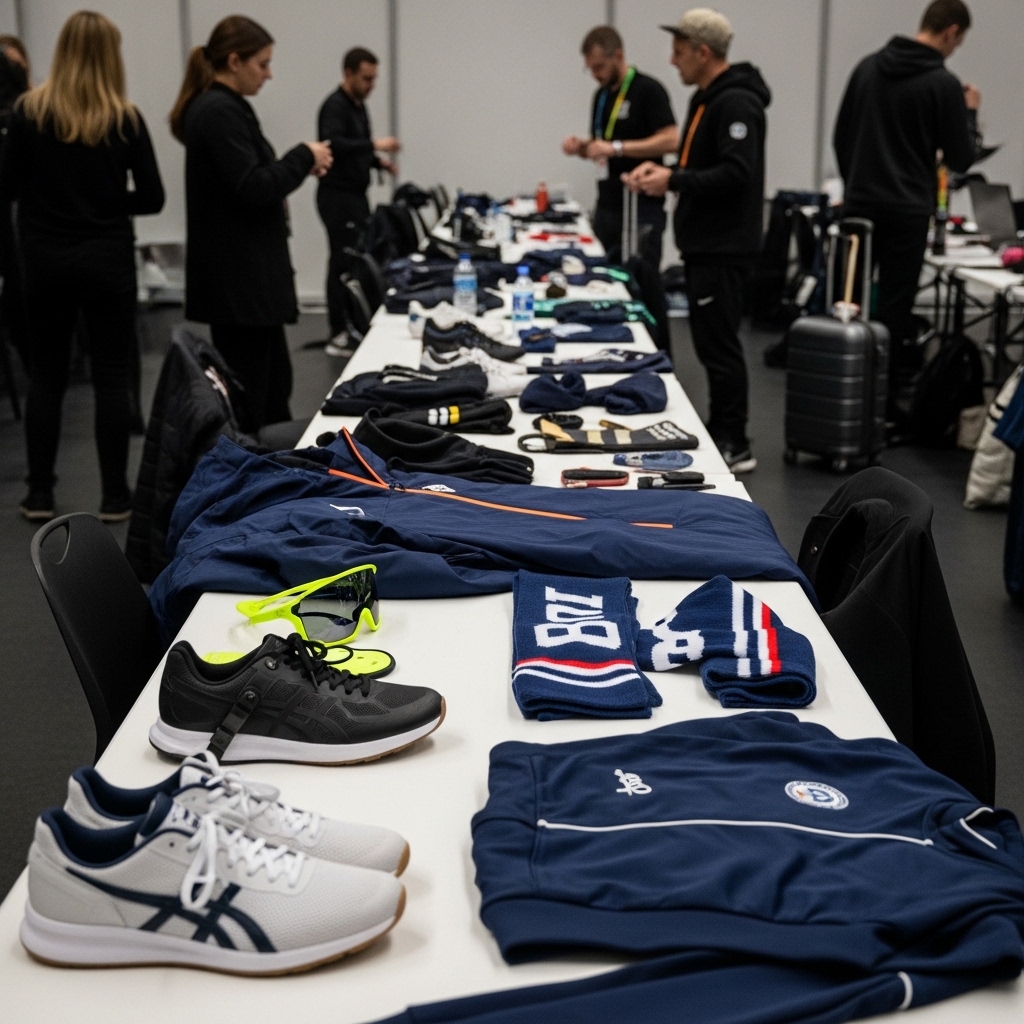
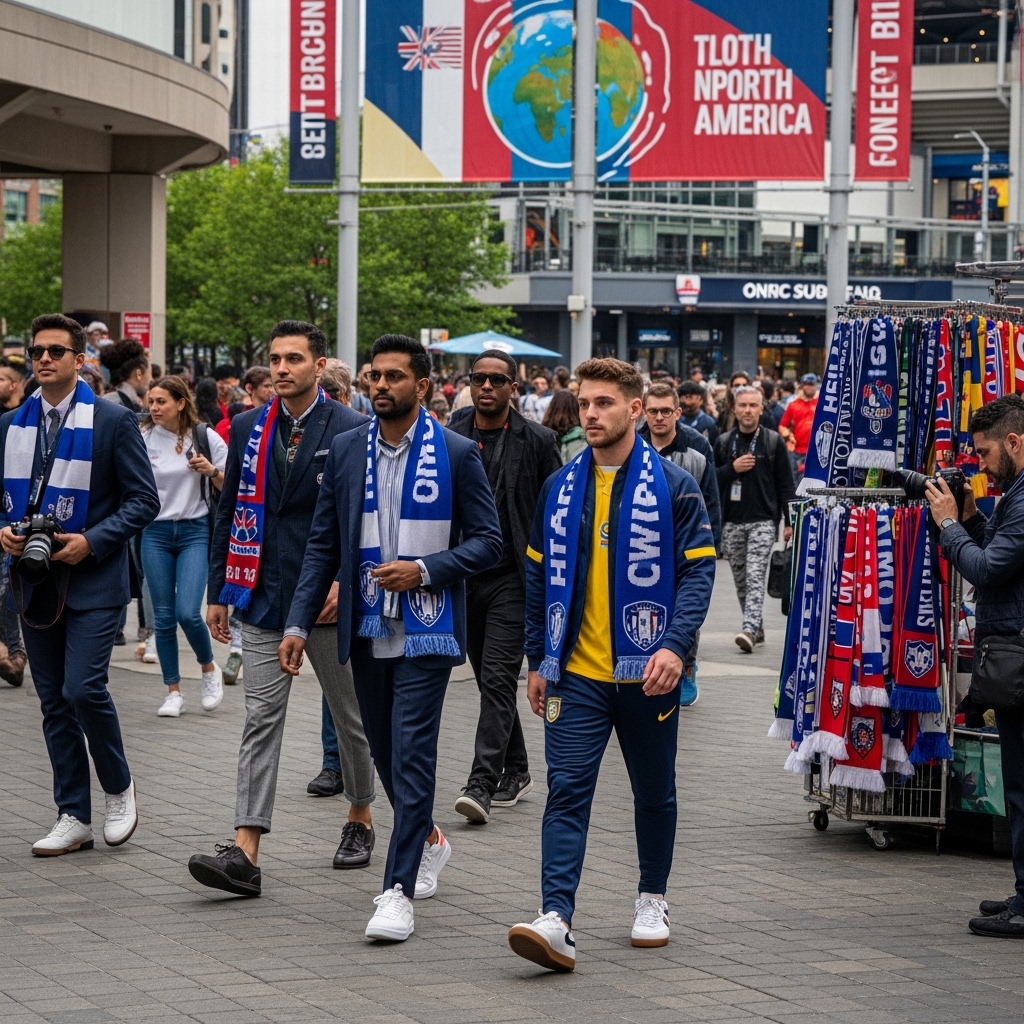
From the World Cup in North America to the Winter Olympics in Italy and the Asian Games in Japan, 2026 is shaping up as a year when sport, identity and style will converge on a global stage.
For fashion brands, 2026 is not just another year of major tournaments. It is a compressed global runway of flags, fan cultures, athlete personalities, streetwear moments and broadcast spectacle. The year brings together some of the most valuable marketing stages in sport: the FIFA World Cup across the United States, Canada and Mexico; the Milano Cortina Winter Olympics in Italy; the Asian Games in Aichi and Nagoya; the Commonwealth Games in Glasgow; the Tour de France; the Super Bowl; and a crowded calendar of tennis, motorsport, basketball, cricket and golf.
The opportunity is larger than selling replica jerseys or logo-heavy merchandise. Sport has become one of fashion’s most powerful cultural distribution systems. Athletes now arrive at arenas like celebrities at premieres. Tunnel walks, podium outfits, national-team travel kits and fanwear collaborations circulate across social media before the competition even begins. In 2026, brands that understand sport as culture — not just as sponsorship inventory — will have the advantage.
The biggest event is the 2026 FIFA World Cup, scheduled from June 11 to July 19 across 16 host cities in North America. It will be the first men’s World Cup with 48 teams and 104 matches, giving fashion brands more markets, more fan bases and more daily moments than any previous edition. The geography matters. Matches in the United States, Canada and Mexico will place football culture inside cities already central to streetwear, music, immigrant identity and luxury retail. New York/New Jersey, Los Angeles, Miami, Toronto, Mexico City and Vancouver are not only match locations; they are style capitals.
For global sportswear companies, the World Cup remains the obvious battleground: boots, training kits, national jerseys and lifestyle apparel. But the 2026 edition is also a major opening for luxury houses, denim labels, sneaker boutiques and regional designers. The expanded format means smaller football nations can produce unexpected fashion moments. A distinctive warm-up jacket, a fan scarf, a pre-match arrival outfit or a locally designed capsule collection can travel globally in hours. The most successful brands will not simply print flags on shirts. They will understand how diaspora communities dress, gather and celebrate.
Before football dominates the summer, the Winter Olympics in Milano Cortina will give fashion brands a different kind of stage. The Games officially run from February 6 to 22, with some competition beginning on February 4. Italy gives the event a rare advantage: it links elite winter sport with one of the world’s most influential fashion economies. Milan, already a global fashion capital, will provide a setting where technical outerwear, luxury tailoring, ski culture and national ceremony uniforms can overlap naturally.
The Winter Olympics are particularly valuable because they sit at the intersection of performance and aspiration. Down jackets, goggles, gloves, base layers and alpine silhouettes already influence mainstream fashion. In 2026, brands will be able to tell stories about cold-weather innovation, sustainability, mountain heritage and Italian design. The debut of ski mountaineering as an Olympic sport adds another layer, connecting elite endurance with the rising consumer appetite for outdoor and adventure apparel.
The Paralympic Winter Games, following in March, should not be treated as an afterthought. Adaptive design is one of the most important frontiers in fashion, and Paralympic athletes have long exposed the industry’s gaps in fit, function and representation. Brands that approach the Games with serious product thinking — not token campaigns — can show how inclusive design improves clothing for everyone. Magnetic closures, seated fits, temperature control, prosthetic-friendly construction and easy-adjust systems are not niche features. They are part of fashion’s future.
In February, the Super Bowl LX at Levi’s Stadium in Santa Clara will offer another kind of opportunity. Unlike the Olympics or World Cup, the Super Bowl is a single-game spectacle, but its influence extends far beyond sport. It is television, music, celebrity, advertising and American consumer culture compressed into one week. For fashion brands, the game itself is only one part of the stage. The real action includes arrival outfits, halftime performance styling, celebrity suites, brand parties and limited-edition drops tied to the host city.
The Bay Area location matters. Northern California brings technology wealth, sustainability debates, outdoor culture and a deep sneaker and streetwear history. Brands that connect football aesthetics with local culture — rather than relying only on generic sports imagery — will have a better chance of standing out. Expect varsity jackets, technical layers, collaboration sneakers and premium fanwear to compete for attention around the event.
The summer also brings the Tour de France, scheduled for July 4 to 26, beginning in Barcelona. Cycling has become increasingly relevant to fashion because it blends performance gear, urban mobility and lifestyle identity. Jerseys, sunglasses, helmets, compression fabrics and aerodynamic silhouettes have crossed into streetwear and luxury styling. The Tour’s visual language — landscapes, endurance, color-coded jerseys and moving crowds — offers brands a cinematic platform. For labels interested in sustainability and city mobility, cycling may be one of the most credible sports to enter.
The Commonwealth Games in Glasgow, running from July 23 to August 2, will be smaller than the World Cup but still important, particularly for brands with strong positions in the United Kingdom, Australia, Canada, India, New Zealand, South Africa and the Caribbean. Glasgow’s urban setting gives the Games a sharper street-level identity than many multi-sport events. Athletics, swimming, cycling and para sport can provide a practical showcase for performance apparel, but the cultural opportunity lies in national pride, youth culture and community participation.
September brings another major stage: the Asian Games in Aichi and Nagoya, Japan, officially scheduled from September 19 to October 4. For fashion brands, this may be one of the most strategically important events of the year. Asia is not a single consumer market, and the Asian Games bring together different fashion languages: Japanese minimalism and technical design, Korean pop-cultural influence, Chinese sportswear expansion, Southeast Asian youth trends, Indian scale and Middle Eastern luxury consumption. A successful Asian Games strategy must be localized, multilingual and culturally precise.
Japan’s role as host adds further significance. The country has deep credibility in performance textiles, sneakers, workwear, outdoor fashion and design discipline. Brands may use the event to explore cleaner silhouettes, technical fabrics, limited regional capsules and collaborations with Japanese designers. The risk is cultural flattening. Campaigns that treat Asia as one visual mood board will miss the point. The strongest work will recognize the diversity of athletes and fans across the continent.
Tennis will also remain one of fashion’s most dependable global stages in 2026. The Australian Open, Roland-Garros, Wimbledon and the U.S. Open each offer a different style vocabulary: heat and color in Melbourne, clay-court elegance in Paris, tradition and restraint in London, and celebrity-driven night-session energy in New York. Tennis is valuable because its clothing is visible, individual and easily translated into lifestyle apparel. A single dress, jacket or shoe can become a season-defining image.
Motorsport, particularly Formula One, will continue to matter because it has turned paddock access into fashion media. Drivers are now front-row figures as much as athletes, and race weekends attract luxury brands, musicians and influencers. For fashion houses, Formula One offers a rare blend of speed, technology, wealth and global city circuits. The challenge is authenticity. The audience can quickly detect opportunistic branding that does not understand racing culture.
Basketball will remain essential through the NBA Finals, the WNBA season and the broader global sneaker economy. Basketball’s influence on fashion is already mature: tunnel fits, signature shoes, athlete-led labels and luxury partnerships are part of the sport’s daily media cycle. In 2026, the key will be differentiation. The market is crowded, and brands will need sharper storytelling around women’s basketball, international players and community-level courts.
Cricket should not be ignored, especially because the sport commands enormous attention in South Asia, the United Kingdom, Australia, the Middle East and parts of Africa. The men’s T20 World Cup, scheduled for India and Sri Lanka in 2026, gives fashion brands access to one of the world’s most passionate fan economies. Cricket apparel is no longer limited to match shirts. It now includes travel wear, supporter capsules, celebrity-led campaigns and festival-like viewing culture.
The lesson across the 2026 calendar is clear: the biggest wins will come from preparation, not reaction. Brands need athlete relationships, local creative partners, production timelines, rights clarity and social strategies in place before the opening ceremonies and first whistles. They must also be careful. Sport is emotional, national and sometimes politically sensitive. A campaign that feels celebratory in one market can appear tone-deaf in another.
The brands that succeed in 2026 will not merely sponsor events. They will study how fans dress, how athletes express identity, how cities shape sport and how digital audiences turn small visual moments into global signals. In a year crowded with competitions, fashion’s most valuable space may not be on the scoreboard. It may be in the walk to the stadium, the jacket on the podium, the scarf in the crowd and the image that travels before the result is even known.