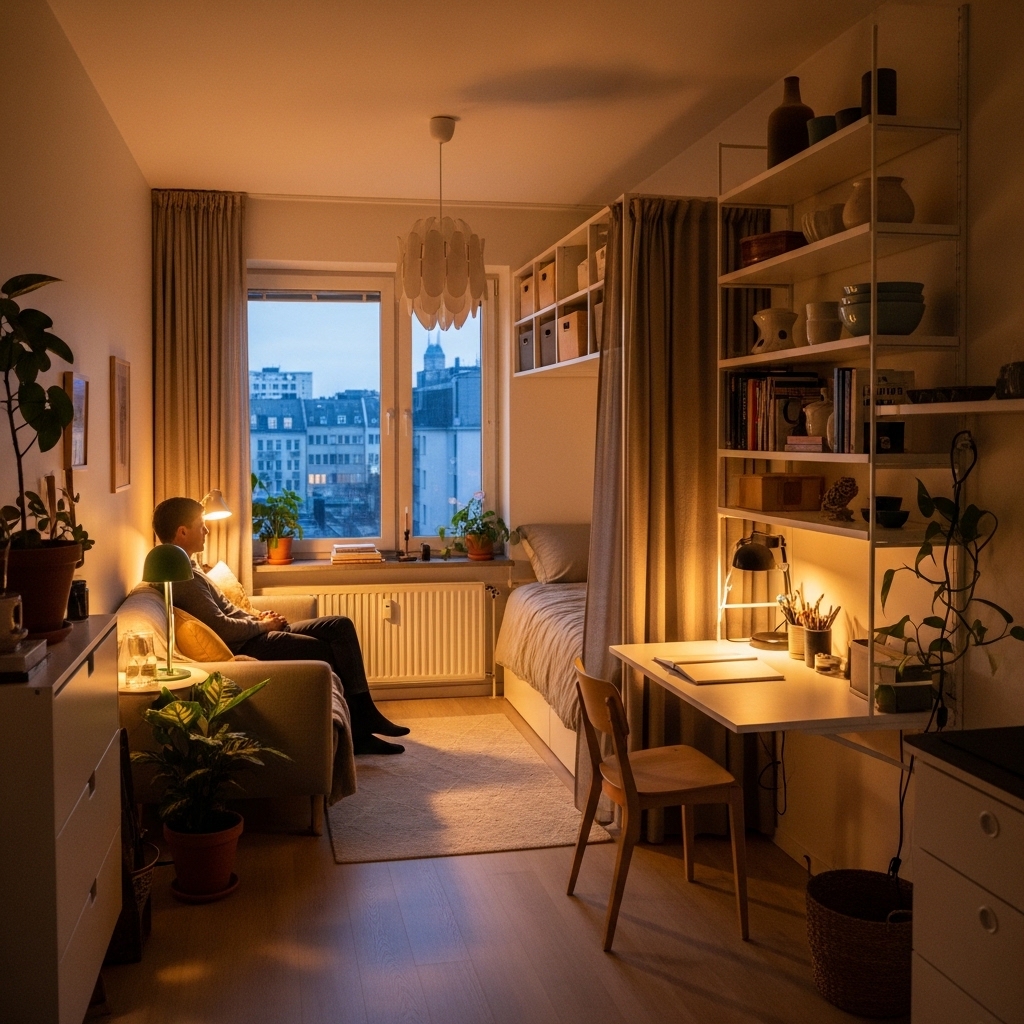
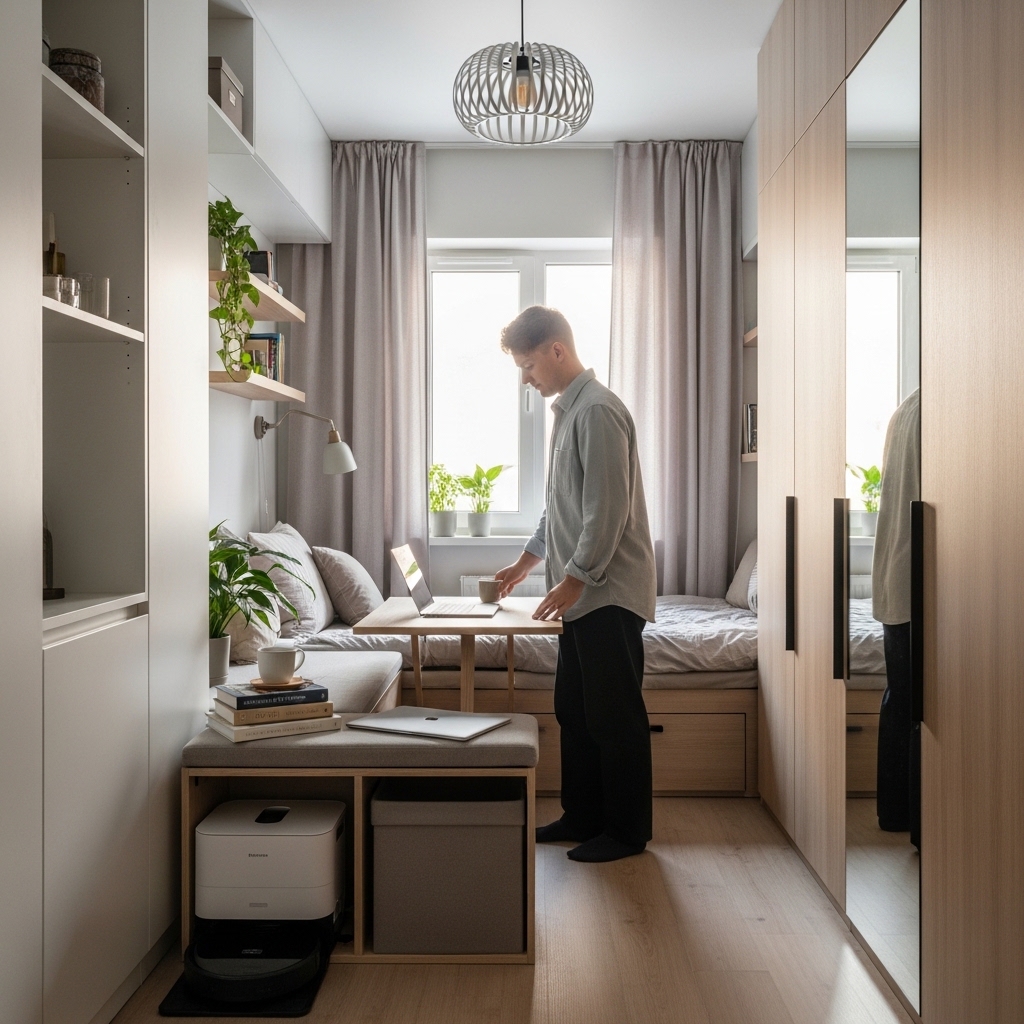
As urban homes shrink and housing costs rise, designers and young residents are proving that a small apartment can be elegant, functional and deeply personal when every square meter has a purpose.
In many of the world’s fastest-growing cities, the dream home is getting smaller. High rents, dense neighborhoods and changing lifestyles have pushed millions of people into studios, micro-apartments and compact one-bedroom homes. Yet a smaller floor plan no longer has to mean a smaller life. Across cities from Seoul and Tokyo to Paris, New York, Singapore and Ho Chi Minh City, residents are learning to treat limited space not as a compromise, but as a design challenge.
The shift reflects a broader urban reality. UN-Habitat has repeatedly placed adequate housing at the center of sustainable urban development, while the global market for small-space and multifunctional furniture is expanding as more people live in compact city homes. At the same time, research into life at home shows that people want more than shelter. They want comfort, control, belonging, beauty and joy. That desire is especially powerful in small apartments, where every object is visible and every poor decision is felt immediately.
A beautiful small apartment begins with an honest principle: space is not only measured in square meters. It is measured in light, movement, storage, proportion and emotion. A 30-square-meter apartment can feel generous if it is calm, organized and flexible. A larger home can feel cramped if it is crowded with furniture that does not serve the way people actually live. The most successful compact homes are not decorated by accident. They are edited.
The first way to transform a narrow apartment is to define its purpose before buying anything. Many people furnish small homes by copying larger ones: a sofa, coffee table, television stand, dining table, desk, bed, wardrobe and extra chairs all competing for space. In a compact apartment, that approach quickly fails. Residents need to begin with a sharper question: What must this home help me do every day? Sleep well, work remotely, cook often, exercise, host friends, care for a pet, store a bike, or simply rest after long hours outside? The answer determines the design. A person who rarely hosts dinner does not need a full dining set. Someone who works from home may need a real desk more than a large sofa. Beauty starts when the home reflects life as it is lived, not life as furniture catalogs imagine it.
The second strategy is to choose furniture that performs more than one job, but still looks intentional. A storage bed can replace a bulky cabinet. A bench can hold shoes, bags and guests. A foldable dining table can become a work surface by day and disappear at night. A sofa bed can support visitors without turning the apartment into a permanent guest room. The best multifunctional furniture does not feel like a trick. It feels calm, sturdy and easy to use. If a piece requires too much effort to open, close or move, it will eventually become clutter. In small homes, convenience is not a luxury. It is the difference between order and frustration.
The third rule is to build upward. When the floor is limited, walls become valuable real estate. Tall shelving, wall-mounted desks, hanging rails, pegboards, cabinets above doors and floating nightstands can release the floor from visual pressure. Vertical storage also draws the eye upward, making the room feel taller. But height must be handled carefully. A wall covered in heavy cabinets can make an apartment feel like a storage unit. The goal is balance: closed storage for items that create visual noise, open shelves for books, ceramics, plants or objects that bring personality. A small home should not hide everything. It should display only what deserves attention.
The fourth transformation comes from light. Natural light is one of the most powerful tools in a compact apartment because it expands the sense of space without adding a single centimeter. Heavy curtains, dark corners and oversized furniture can make a small home feel dense. Sheer curtains, mirrors placed opposite windows, pale walls, reflective surfaces and layered lighting can change the mood entirely. In the evening, one ceiling light is rarely enough. A combination of floor lamps, table lamps, under-shelf lights and warm bulbs can create zones: a reading corner, a cooking area, a work desk, a sleeping space. Good lighting allows one room to have several lives.
The fifth way is to use color with discipline, not fear. Many small apartments are painted white because people believe white always makes a space feel bigger. It often helps, but it is not the only answer. Soft neutrals, warm beige, muted green, pale blue, clay, charcoal accents or natural wood can make a compact home feel richer and more personal. What matters is continuity. Too many unrelated colors break a small apartment into fragments. A limited palette creates flow. Designers often recommend repeating materials and tones across the room: the same wood in the table and shelves, the same metal finish on lamps and handles, the same fabric tone in cushions and curtains. Repetition is the quiet architecture of small-space elegance.
The sixth strategy is to divide space without closing it off. Many small apartments must serve as bedroom, office, living room and dining area at once. Solid walls would make them feel smaller, but no division at all can make daily life feel chaotic. The solution is soft zoning. A rug can mark a living area. A curtain can hide a bed. A low bookcase can separate a desk without blocking light. A change in wall color can signal a sleeping corner. A pendant light over a table can create the feeling of a dining room. These gestures help the mind understand where one activity ends and another begins. In a small home, psychological boundaries matter as much as physical ones.
The seventh way is to edit possessions with honesty. No design solution can rescue a compact apartment from too many things. The most beautiful small homes are often built around subtraction. That does not mean adopting a cold or empty form of minimalism. It means keeping what is useful, loved or meaningful, and letting go of what only fills space. Clothes that no longer fit, duplicate kitchen tools, broken electronics, forgotten souvenirs and decorative objects bought without conviction all carry a cost. They occupy drawers, shelves and mental attention. A small apartment teaches a hard but liberating lesson: every object is a roommate.
The eighth and most important approach is to make the home emotionally generous. Small apartments become dream homes not because they imitate luxury hotels, but because they support real life with care. A plant near the window, a favorite chair, soft bedding, a framed photograph, a tiny coffee ritual, a reading lamp, a scent, a textured rug or a balcony garden can transform limited space into refuge. The goal is not perfection. It is belonging. A small home should make its resident feel that the world has slowed down at the door.
This emotional dimension is increasingly important as homes carry more responsibility. Since the rise of remote work and hybrid schedules, apartments have become offices, gyms, studios, classrooms and places of recovery. For young renters and first-time buyers, a compact home may be the first space they can fully shape. For older residents, it may represent independence. For couples, it may require negotiation. For single people, it may become a private expression of identity. A small apartment is rarely just a design project. It is a daily test of how much life can fit into limited boundaries.
The most successful small-space design is also realistic about budget. Custom cabinetry and designer furniture can be beautiful, but they are not the only path. Measuring carefully, buying secondhand, using modular shelves, repainting old furniture, replacing handles, adding lighting and organizing storage can make dramatic differences. The key is not how much money is spent, but whether the choices solve real problems. In a compact apartment, a cheap item that does not fit is expensive. A well-chosen piece that lasts for years is an investment.
Small homes also raise wider questions about urban life. Compact apartments can be efficient and sustainable, using fewer materials and less energy than larger homes. But they should not become an excuse for poor housing standards. A small apartment can be beautiful only if it has light, ventilation, safety, privacy and enough room for basic dignity. Design can improve limited space, but it cannot replace the need for fair housing policy, responsible development and livable cities.
Still, within those limits, the small apartment has become a site of creativity. It asks residents to become editors, problem-solvers and storytellers. It rewards clarity. It punishes excess. It makes beauty practical and practicality beautiful. In a world where many people are buying less, moving more often and seeking homes that support mental well-being, the compact apartment may become one of the defining interiors of modern urban life.
The dream home, then, is not always the largest one. It is the home where the morning light reaches the table, where storage works quietly, where the bed folds away or the desk fits perfectly, where guests can sit, where the floor is clear, where every object has earned its place. Small apartments remind us that luxury can be measured not by size, but by attention. With the right choices, even the narrowest space can become a place people are proud to return to.