
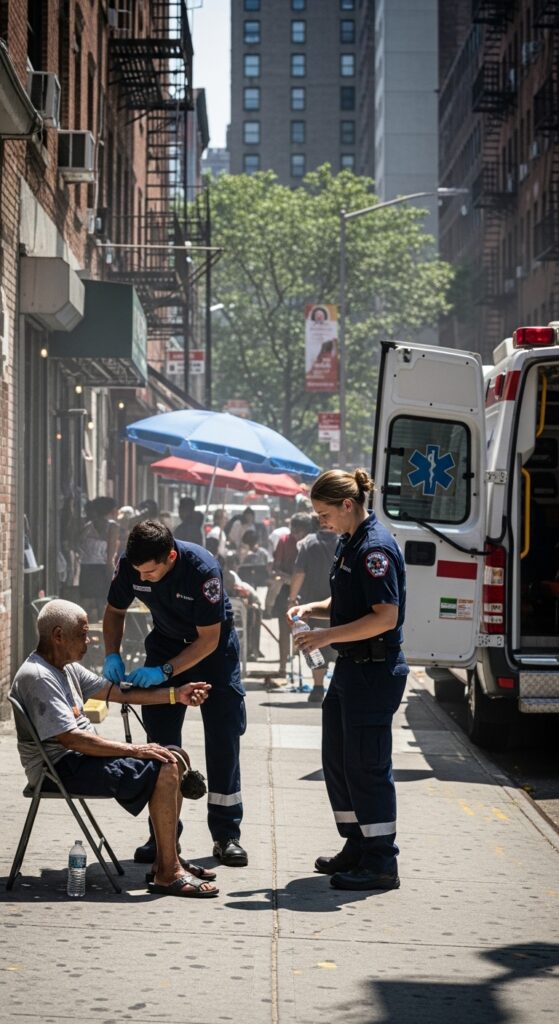
Extreme heat, polluted air, storms and shifting disease patterns are forcing doctors and governments to treat climate policy as public health policy.
Climate change is no longer only an environmental issue. It is a health emergency unfolding in clinics, emergency rooms, farms and cities. Rising temperatures, extreme weather and ecological disruption are changing who gets sick, when they get sick and whether health systems can respond.
The World Health Organization has warned that climate change affects the basic determinants of health, including clean air, safe drinking water, sufficient food and secure shelter. Those risks are already visible. Heat waves strain hearts and kidneys. Floods spread contamination and interrupt care. Wildfire smoke worsens asthma and lung disease. Drought threatens food security.
Extreme heat is among the clearest dangers. Older people, infants, outdoor workers, pregnant women and people with chronic illness face particular risk. Heat can cause dehydration, heat exhaustion and heatstroke. It can worsen cardiovascular and respiratory disease. In crowded cities, asphalt, concrete and limited tree cover can create urban heat islands that make nights dangerously warm.
Health systems must adapt. Hospitals need reliable cooling, backup power, emergency plans and supply chains that can withstand storms and floods. Clinics need protocols for heat illness, smoke exposure and climate-sensitive infections. Public health agencies need early warning systems that reach vulnerable people before disaster strikes.
Climate change also affects infectious disease. Mosquitoes and other vectors can expand into new regions as temperature and rainfall patterns shift. Waterborne diseases may rise after floods. Foodborne illness can increase in warmer conditions. These changes require surveillance and preparedness, not panic.
Air pollution connects climate and health directly. Burning fossil fuels produces greenhouse gases and pollutants that damage lungs and hearts. Reducing emissions can therefore bring immediate health benefits through cleaner air. This is one reason health experts argue that climate action is not only a long-term environmental investment but a near-term medical intervention.
Mental health is part of the climate story. Survivors of fires, floods and storms may experience trauma, grief and anxiety. Farmers facing crop failure, families displaced by rising seas and young people worried about the future can suffer psychological stress. The term climate anxiety reflects a real emotional burden, though the severity varies widely.
The burden is unequal. Communities that contributed least to global emissions often face the greatest health risks. Poor households may live in flood-prone areas, work outdoors, lack air conditioning or have limited access to care. Climate change multiplies existing inequality.
Doctors and nurses are increasingly speaking about climate policy because they see the consequences. Medical associations in several countries have called for stronger action to reduce emissions and protect health. Some hospitals are also examining their own environmental footprint, including energy use, waste and supply chains.
Adaptation has limits. Cooling centers, warning systems and resilient hospitals can save lives, but they cannot fully protect populations if warming continues unchecked. Public health experts therefore emphasize both adaptation and mitigation: preparing for unavoidable impacts while reducing the emissions that drive future harm.
The language of climate change can feel abstract, filled with temperature targets and emissions pathways. Health makes it immediate. It is about a worker collapsing in a field, a child breathing smoke, an older person trapped in a hot apartment or a clinic flooded during a storm.
Climate policy is health policy. The sooner governments treat it that way, the more lives can be protected.”””
