A new generation of cryptographic logins is reshaping online security, promising fewer breaches, less phishing and a simpler way for people to prove who they are.
For decades, the password has been the front door to digital life. It guarded bank accounts, email inboxes, shopping profiles, hospital portals, cloud drives and corporate networks. It also became one of the weakest links in modern cybersecurity: reused, guessed, stolen, phished, leaked, sold and forgotten. Now, after years of failed promises about a “passwordless future,” the technology industry is moving closer to a practical replacement.
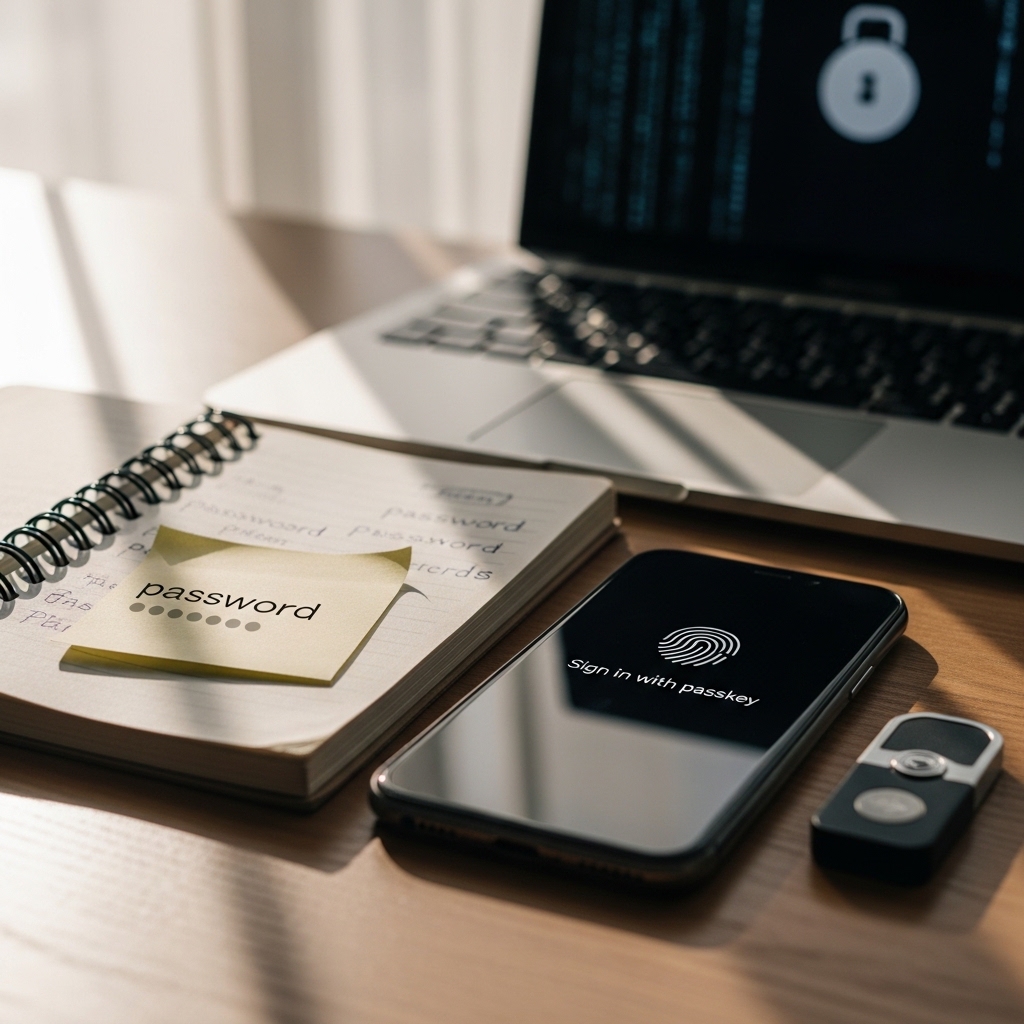
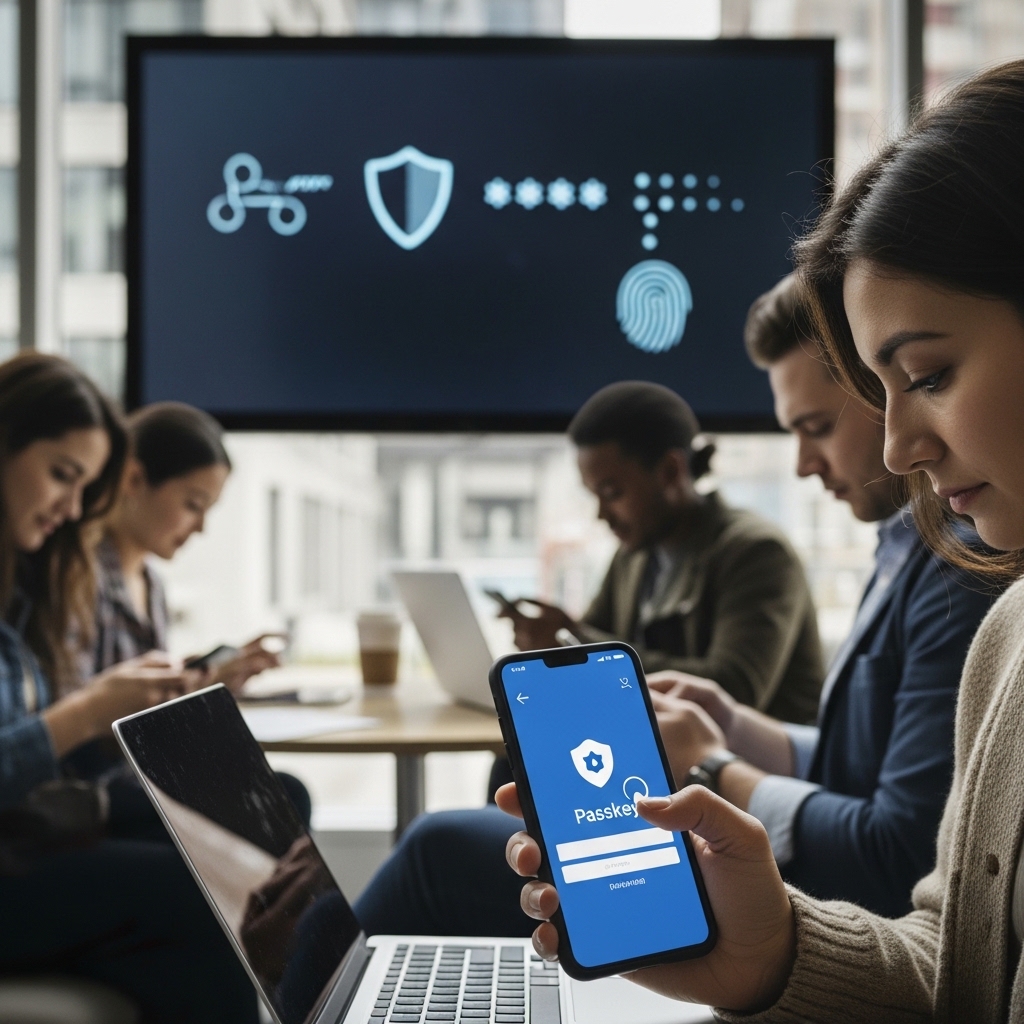
The change is being driven by passkeys, a form of authentication built on public-key cryptography and promoted by major technology companies, banks, payment firms and cybersecurity standards groups. Instead of asking a user to remember a secret phrase, a passkey lets a person sign in with a device they already control — often a phone, laptop or hardware security key — and then verify themselves with a fingerprint, facial scan or device PIN.
The shift is not merely cosmetic. Passwords work by sharing a secret with a website or app. If that secret is weak, reused or stolen from a breached database, attackers can use it elsewhere. Passkeys work differently. When a person creates one, the service stores a public key, while the private key stays on the user’s device or inside a secure credential manager. During login, the device proves possession of the private key without revealing it. That design means there is no password to steal from the user and no reusable secret sitting on a company server.
The security advantage is especially important because cybercriminals have become highly efficient at exploiting human habits. A convincing message that looks like it came from a bank, employer or delivery company can lure people into typing credentials into a fake website. Even multifactor authentication, once seen as the essential upgrade to passwords, has come under pressure from attacks that intercept one-time codes, flood users with approval prompts or steal session tokens after login. Passkeys are not magic, but they close off some of the most common paths into an account because they are tied to the legitimate website or app that created them.
That phishing resistance is why governments and security agencies have begun giving passkeys stronger public support. In April 2026, Britain’s National Cyber Security Centre said passkeys should be the preferred option where available, reflecting a broader conclusion across the industry: the safest password is often no password at all. Major platforms have already pushed users in that direction. Microsoft said in 2025 that new consumer accounts would be passwordless by default, while Google, Apple and other large providers have spent years integrating passkeys into browsers, operating systems and account settings.
The economic logic is also powerful. Passwords are costly. Companies pay for reset systems, help-desk calls, fraud investigations and account recovery processes. Users pay in time and frustration. They create weak credentials because strong ones are hard to remember, then reuse them because every service demands another login. Password managers reduce the danger, but they still rely on users choosing, installing and maintaining an additional tool. Passkeys try to make the safer action the easier one.
For consumers, the most visible change is speed. A login that once required typing an email address, entering a password, waiting for a text message and copying a six-digit code can become a biometric prompt. That convenience matters because security technologies often fail when they add too much friction. People bypass complex systems, delay updates and choose shortcuts when protection feels like punishment. Passkeys have gained momentum partly because they promise better security without asking users to become security experts.
The technology is also arriving at a moment when identity has become central to cybercrime. Many attacks no longer begin with sophisticated malware or exotic software flaws. They begin with access: a stolen employee credential, a reused password, a phished login, a compromised administrator account. Once inside, attackers can move through systems, steal data, demand ransom or impersonate trusted users. Reducing the value of stolen passwords attacks the business model behind a large share of online fraud.
Still, the death of the password should not be overstated. The transition will be uneven, and for years many people will live in a hybrid world. Some websites already support passkeys as the main sign-in method. Others treat them as optional. Many smaller services lack the technical resources to implement them smoothly. Enterprises must consider legacy applications, compliance obligations, shared devices, employee turnover and account recovery rules. A single person may use passkeys for a bank account and still rely on a password for a local utility, school portal or old workplace system.
Recovery remains one of the thorniest questions. Passwords are insecure partly because they can be reset easily after a forgotten login or lost device. Passkeys are safer because the private credential is not simply known by a human, but that raises practical concerns. What happens when a phone is stolen, a laptop fails, or a person changes ecosystems from one device maker to another? Cloud synchronization by Apple, Google, Microsoft and password managers has made passkeys more portable, but portability and recovery must be handled carefully. A recovery process that is too weak can become the new target.
There are also social and accessibility concerns. Not everyone owns the latest smartphone or feels comfortable using biometrics. Some users share devices with family members. Others work in environments where phones are restricted. People with disabilities may need different authentication options. A secure future cannot depend on a single device, body feature or corporate platform. The strongest implementations will offer multiple passkey storage options, clear recovery paths and fallback methods that do not quietly reintroduce the same old password risks.
Privacy is another issue that companies must explain clearly. A passkey login using a fingerprint or face scan does not usually mean the website receives a copy of that biometric data. In typical implementations, the biometric check unlocks the credential locally on the device. But public trust depends on understanding, and many users remain wary of any system that involves face or fingerprint verification. The industry’s task is not only to deploy new technology, but to make it understandable enough that people know what is being protected and what is not being shared.
For businesses, the move away from passwords requires more than adding a button to a login page. Security teams must design enrollment, recovery, fraud monitoring and customer support around the new model. They must decide when to require passkeys, when to offer them as an option and how to handle high-risk actions such as changing bank details or transferring money. The migration also requires careful communication. Users who do not understand passkeys may ignore prompts, mistrust them or assume they are just another form of two-factor authentication.
The broader direction, however, is clear. The password was never designed for a world in which billions of people maintain hundreds of accounts across global networks targeted by organized criminal groups. It survived because it was simple, universal and cheap to deploy. But its weaknesses have become structural. A secret that must be remembered, typed, reused, reset and stored is increasingly unsuited to the scale of modern digital life.
Passkeys represent a more mature model of online identity: one based less on what a person can remember and more on cryptographic proof that they possess a trusted device. They will not eliminate cybercrime, nor will they remove the need for software updates, fraud detection and user education. Attackers will adapt, looking for weak recovery systems, compromised devices and social engineering opportunities. But the migration away from passwords changes the terrain. It removes a familiar target, reduces the usefulness of leaked credential databases and makes fake login pages far less effective.
The password is unlikely to disappear overnight. It may linger like the fax machine: outdated, inconvenient, still present in corners of the system that modernization has not reached. But the direction of travel is no longer speculative. Governments, technology companies and security standards bodies are converging on the same answer. The future of login is not a stronger password. It is a world in which users no longer have to type one.