
A closely watched clinical study is set to test whether partial cellular reprogramming can safely refresh damaged human tissue, opening a new chapter in longevity science while leaving the biggest questions unanswered.
One of the most ambitious ideas in modern biomedicine is now edging into the clinic: the possibility that aged human cells might be coaxed into acting younger again.
Nature reported in early April that the field of cellular reprogramming is preparing for its first clinical trial in people, a milestone that moves a long-hyped anti-ageing concept out of animal studies and into human testing. The goal is not immortality, and not even general age reversal across the whole body. At least for now, the objective is narrower and far more medically grounded: to see whether a carefully controlled form of “partial reprogramming” can restore function in diseased tissue without causing dangerous side effects.
That distinction matters. Few areas of medical science generate as much excitement, or as much misunderstanding, as the effort to reverse aspects of biological ageing. In public discussion, the field is often framed in sweeping language about turning back the clock. In the lab, however, the science is more cautious. Researchers are trying to determine whether some of the molecular changes that accumulate with age can be reset, at least partly, in ways that improve tissue function while preserving the identity of the cells themselves.
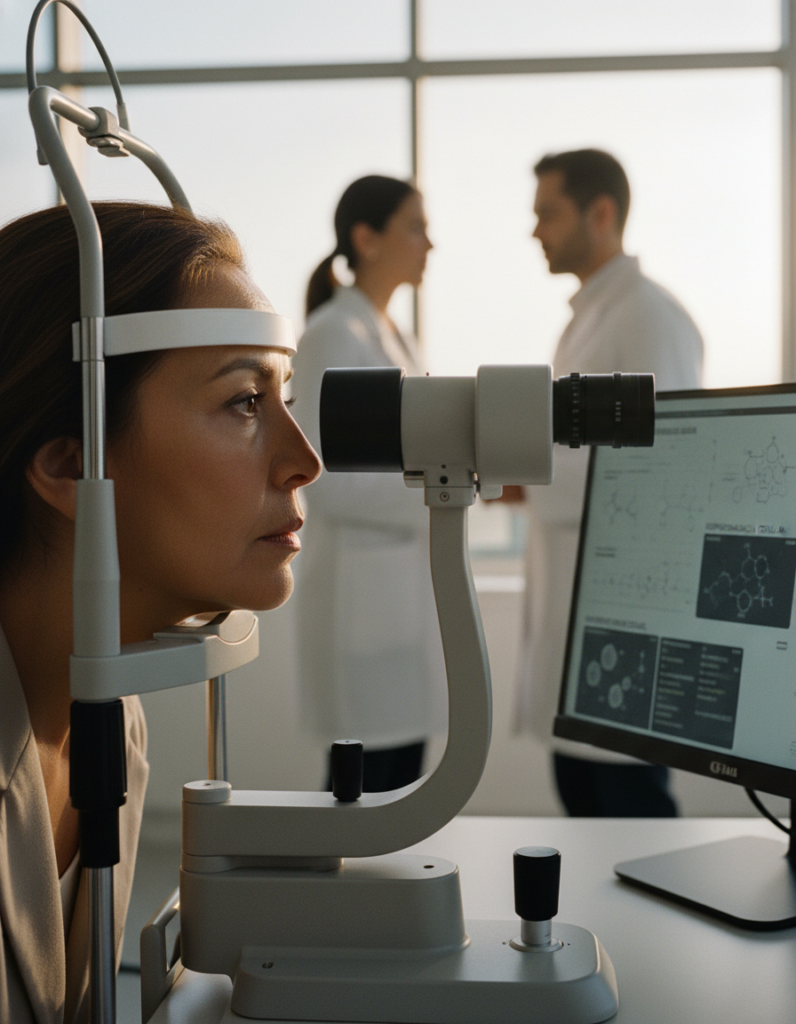
The first human test now taking shape is centered on the eye. According to Nature Biotechnology and the trial record on ClinicalTrials.gov, Boston-based Life Biosciences has received U.S. Food and Drug Administration clearance for a Phase 1, first-in-human study of its experimental therapy ER-100 in patients with optic neuropathies, including open-angle glaucoma and non-arteritic anterior ischemic optic neuropathy. The study is designed primarily to assess safety and tolerability, not to prove broad anti-ageing benefits, and is expected to enroll 18 participants. ClinicalTrials.gov lists the trial as recruiting, with an actual study start date of March 2, 2026. The registry says participants will receive a single dose and then be followed for up to five years.
Even in that limited form, the trial is a major moment for the field. It is the first time a therapy explicitly based on partial epigenetic reprogramming, sometimes called cellular rejuvenation, has reached human testing. That makes it a scientific milestone even before any efficacy data exist.
The underlying concept has roots in one of the most important biological discoveries of the past two decades. In 2006, researchers showed that adult cells could be pushed back into a stem-cell-like state using a set of transcription factors that became known as the Yamanaka factors. Full reprogramming of that kind can erase a cell’s specialized identity, which is why it has been so transformative for stem-cell biology. But it is also why the approach is risky as a therapy inside the body. If pushed too far, cells can lose their normal function or become tumorigenic.
That danger led researchers to a subtler idea: perhaps cells do not need to be fully reset to gain some benefits of youthfulness. Instead, they might be nudged backward just enough to restore healthier gene-expression patterns and epigenetic marks while still remaining the same kind of cell. In theory, that would allow damaged tissue to recover function without slipping into biological chaos.
Nature’s April report describes this as a test of whether dialing back cell development can safely refresh aged tissues and organs. Life Biosciences’ ER-100 uses a modified viral vector to deliver three transcription factors — OCT4, SOX2 and KLF4, often referred to together as OSK — while omitting c-MYC, the fourth classic Yamanaka factor that is more strongly associated with cancer risk. The company says the therapy is intended to restore methylation patterns and push injured or aged cells toward a younger functional state.
The eye has become the first testing ground partly because it offers a relatively contained environment and a clinically measurable target. Retinal ganglion cells, which are damaged in glaucoma and certain other optic nerve diseases, do not naturally regenerate well. If partial reprogramming can help preserve or restore their function, the effect could in principle be measured through established vision assessments rather than through vague claims about feeling younger.
That choice also reflects the field’s most persuasive preclinical evidence. In 2020, Nature reported on a study in mice showing that expression of OSK could restore vision in old mice and in mice with optic nerve damage, apparently by resetting some age-related epigenetic changes without altering cell identity. Those results helped establish the eye as one of the strongest early proof-of-concept models for reprogramming-based rejuvenation. They also helped attract investors to a broader commercial race around ageing biology.
But promising mouse data are not proof in humans, and that is the point where the current excitement must be tempered.
The new trial is not designed to show that human ageing has been reversed. It is not a demonstration that organs can be broadly made young again. It is an early safety study in a specific disease context, involving a small number of people and a single localized treatment. That is a long way from a validated anti-ageing medicine.
The scientific uncertainties are substantial. Researchers still do not fully understand how far partial reprogramming can go before beneficial rejuvenation gives way to harmful dedifferentiation, in which cells begin losing the stable characteristics that define their role in the body. Reviews of the field have emphasized this boundary as one of the central technical and conceptual problems. The same biological plasticity that makes rejuvenation attractive is what makes it dangerous. If a therapy resets cells too little, it may do nothing meaningful. If it resets them too much, it may destabilize tissue identity or raise the risk of uncontrolled growth.
That is why Phase 1 matters so much. Before anyone can seriously discuss wider anti-ageing uses, researchers need basic evidence that the approach is tolerable in humans, that the delivery system behaves as expected, that immune responses are manageable and that the treated tissue does not show signs of abnormal transformation. In the ER-100 trial, investigators are looking not only at safety and side effects, but also at immune responses, multiple visual assessments and samples meant to help understand how the therapy is processed and cleared.
The commercial and cultural significance of the trial is also hard to ignore. Longevity science has drawn growing amounts of venture capital over the past decade, but investors have often had to rely on biomarker studies, animal models and broad narratives about ageing as the root cause of disease. A first-in-human reprogramming trial offers something more concrete: the beginning of a regulatory pathway. That does not mean success is likely or imminent. It means the field is becoming testable in the language regulators, clinicians and pharmaceutical developers understand.
If the study fails, it will be an important result. It would suggest that one of the field’s boldest strategies is not yet ready for human medicine, or at least not in its current form. If it shows acceptable safety and even a hint of functional benefit, it will intensify pressure for larger studies and encourage rivals pursuing similar approaches in other tissues.
Either way, the implications stretch beyond eye disease. Ageing is the dominant risk factor for many major disorders, from neurodegeneration to cardiovascular disease. The hope behind cellular rejuvenation is that by resetting some core features of ageing biology, medicine might eventually treat not just one disease at a time but a deeper layer of tissue decline shared across multiple conditions. That vision remains speculative. Yet it helps explain why the field has generated such intense attention from scientists, startups and the public alike.
For now, the clearest way to read this moment is neither as a breakthrough cure nor as overhyped fantasy. It is a threshold event. The science of partial cellular reprogramming has matured enough to be tested where the stakes are highest: in human patients.
That alone makes this a landmark in anti-ageing medicine. But the real judgment will come later, in data rather than headlines. The field has crossed from laboratory promise into clinical accountability. It now has to show, under the discipline of human trials, whether refreshing aged cells can be done safely, precisely and usefully.
For a discipline long fueled by extraordinary claims, that may be the most important development of all.