
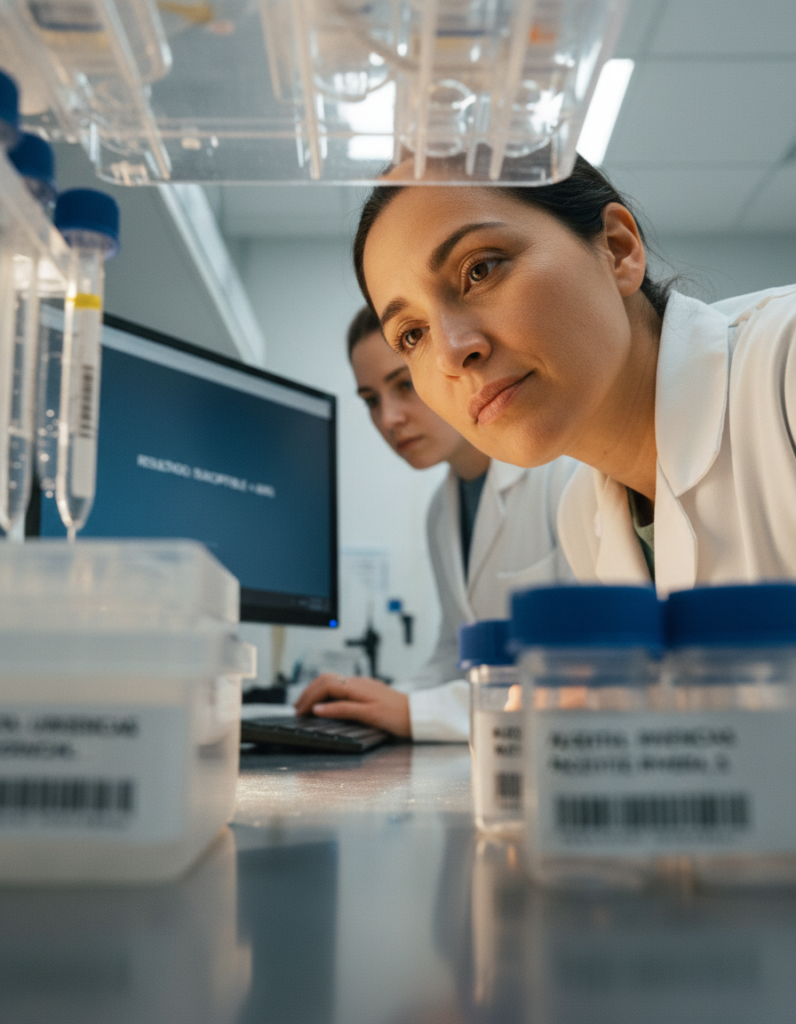
A new study suggests doctors could move from guesswork and waiting days for lab cultures to same-day guidance on which antibiotic is most likely to work for urinary tract infections.
A new urine test developed by researchers in Britain may sharply reduce the time needed to identify which antibiotics can treat a urinary tract infection, potentially allowing doctors to prescribe targeted medication the same day a sample is collected rather than relying first on educated guesses.
The study, published on March 31 in JAC-Antimicrobial Resistance and summarized by ScienceDaily, evaluated a direct-from-urine method that bypasses one of the slowest parts of standard testing: the overnight culture step. Instead of first growing bacteria in the laboratory and only then exposing them to antibiotics, the new system tests urine samples more directly to see whether bacteria keep growing in the presence of different drugs.
Researchers from the University of Reading, the University of Southampton and Hampshire Hospitals NHS Foundation Trust reported that the method returned results in an average of 5.85 hours. Conventional laboratory workflows typically take two to three days to provide comparable antibiotic susceptibility information, the researchers said.
That time difference matters because urinary tract infections are among the most common reasons antibiotics are prescribed. In everyday practice, clinicians often begin treatment before a full laboratory susceptibility profile is available. In many cases that works. But when the first choice drug is not effective, the patient may worsen, require a second prescription, or in more serious cases progress to kidney infection or sepsis.
The new test is designed to reduce that gap between diagnosis and effective treatment. It uses a small cartridge containing thin capillaries preloaded with antibiotics. Those tubes are exposed directly to the urine sample, and an imaging system detects whether bacterial growth continues or is stopped. In simple terms, the method seeks to answer the question clinicians most urgently face: which of the commonly used drugs is likely to work for this patient’s infection, and which is not?
In the main part of the study, the team assessed 352 remnant urine samples collected from patients with suspected UTI. The samples were tested against seven first-line antibiotics commonly used in UTI care: ampicillin, amoxicillin-clavulanic acid, trimethoprim, nitrofurantoin, ciprofloxacin, cefalexin and cefoxitin. Among urine samples containing a single organism, the rapid test matched the reference laboratory method in 96.95% of bacteria-antibiotic combinations.
The researchers also examined a practical question that could affect real-world adoption. Many urine samples are collected in containers that include boric acid, a preservative used to stabilize samples during transport to the lab. Because the new method works directly on urine rather than after culture, the team wanted to know whether that preservative could distort the results. In a second analysis of 90 duplicated urine samples, they found 98.75% agreement between preserved and unpreserved samples, suggesting the preservative did not materially interfere.
That finding could be important for implementation. One of the recurring challenges for rapid diagnostics is that a promising test may perform well only under ideal research conditions, but not fit smoothly into routine hospital and community workflows. By showing that the method worked on boric-acid-preserved samples already common in practice, the researchers addressed one of the immediate operational hurdles to wider use.
The broader appeal of the study lies not only in speed but in stewardship. The World Health Organization has repeatedly warned that misuse and overuse of antimicrobials are major drivers of antimicrobial resistance, turning once-reliable drugs into weaker tools against common infections. A test that can narrow treatment more quickly could help reduce unnecessary exposure to ineffective antibiotics and, in theory, lessen some of the pressure that accelerates resistance.
That does not mean the technology solves the resistance problem on its own. Faster testing cannot replace careful clinical judgment, and not every patient with urinary symptoms actually has a bacterial infection requiring antibiotics. Guidelines from the UK’s National Institute for Health and Care Excellence already emphasize prudent prescribing for lower UTI, part of a broader effort to optimize antibiotic use. Rapid susceptibility data could strengthen that effort, but only if the test is used within a system that still distinguishes infection from other causes of symptoms and avoids treatment when antibiotics are not needed.
The study’s authors and outside coverage were careful to frame the findings as promising rather than definitive. The results were strong, but the evaluation was still focused on a defined set of samples and first-line drugs, and some authors disclosed links to Astratus Limited, a University of Reading spin-out company created to help commercialize the technology. The paper also noted that further work is needed to assess how the test performs when fully integrated into clinical laboratory workflows, as well as whether the costs and benefits justify broad deployment.
Those questions are significant. Health systems do not adopt diagnostics based on speed alone. Laboratories will want evidence that the test is reliable across a wide range of sample types, bacterial concentrations and care settings. Clinicians will want proof that faster results change prescribing decisions in real time. Administrators and payers will want to know whether same-day testing lowers repeat visits, hospital admissions, or downstream complications enough to offset the cost of new equipment and training.
Still, the direction of travel is clear. For decades, culture-based microbiology has been central to identifying pathogens and determining susceptibility, but its timetable often sits uneasily beside the urgency of frontline medicine. UTI is exactly the kind of condition where a same-day answer could be clinically useful: common, painful, sometimes deceptively routine, but occasionally dangerous when treatment misses the mark.
The researchers said the method could support more accurate same-day prescribing and reduce avoidable delays. ScienceDaily’s summary, citing NHS-linked figures from the research team, said UTIs have led to more than 800,000 hospital admissions in England over the past five years and that roughly one in four urine samples tested in NHS laboratories contains bacteria resistant to commonly used antibiotics. Those numbers underscore why laboratories and clinicians are searching for tools that can compress the timeline from sample collection to targeted therapy.
For patients, the practical promise is simple: fewer days spent waiting for a phone call saying the first antibiotic was wrong. For doctors, it could mean less guesswork. For health systems, it offers a potential way to align everyday infection care with the global push to preserve antibiotic effectiveness.
Whether the technology becomes routine will depend on larger trials, workflow evidence and regulatory and commercial progress. But the study adds to a growing body of work aimed at accelerating one of medicine’s most important clock races: getting the right drug to the right patient before a common infection becomes a complicated one.