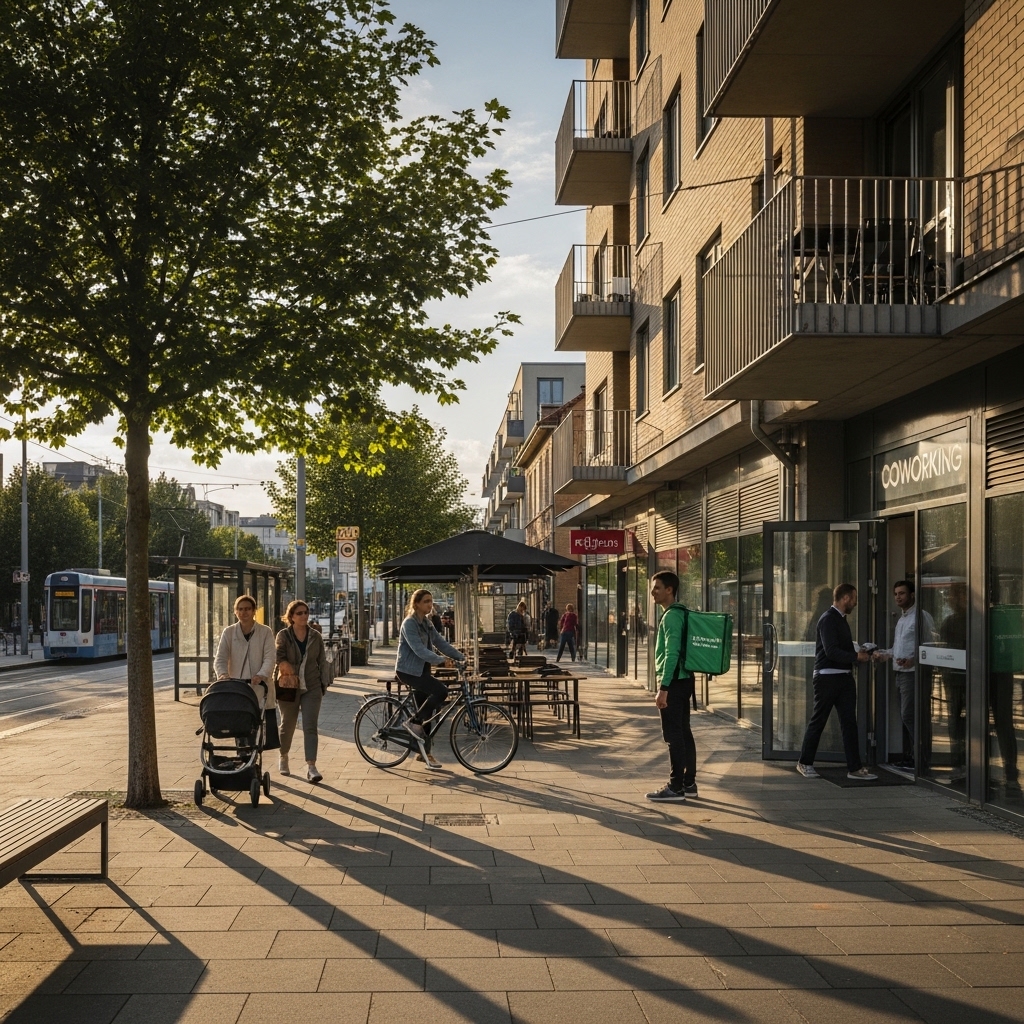
From redesigned streets to hybrid offices and neighborhood food networks, urban life is being rebuilt around flexibility, climate pressure and the search for a more livable daily routine.
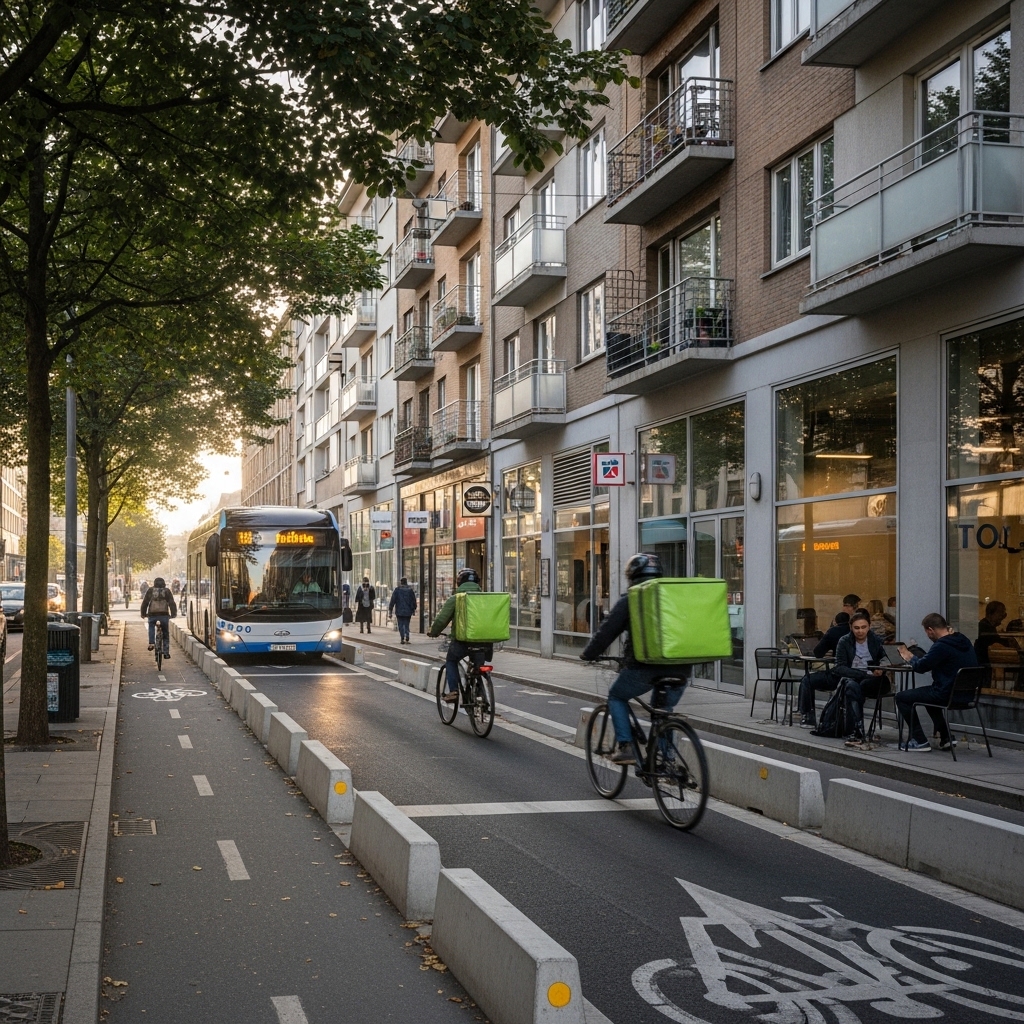
The modern city is being reorganized not by a single invention, but by a series of small changes that are reshaping everyday life. A bus lane painted red on a crowded avenue. A bike lane protected by concrete barriers. A café that once served office workers at noon and now fills with laptop users through the afternoon. A grocery order delivered by e-bike. A downtown tower with empty floors on Monday and crowded meeting rooms on Wednesday.
Across the world, cities are changing how people move, eat and work. The shift began before the pandemic, accelerated during it and has continued in a more complicated form since. Climate change, housing costs, digital technology, public health concerns and new expectations about time have pushed governments, companies and residents to rethink the rhythms of urban life.
For much of the 20th century, many cities were organized around the daily commute. Workers traveled from residential districts to office centers in the morning and returned home in the evening. Roads, rail systems, lunch businesses, parking garages and office towers were built around this predictable flow. That pattern has not disappeared, but it is no longer as dominant or as stable as it once was.
Hybrid work has weakened the traditional rush hour in many business districts. In some cities, Tuesday through Thursday now feel like the core of the office week, while Mondays and Fridays are quieter. Transit agencies have had to adjust to ridership that is less concentrated at the old peak times. Restaurants that depended on five-day office crowds have had to adapt. Employers are redesigning offices less as places for individual desk work and more as venues for meetings, collaboration and corporate identity.
The change is visible in downtown neighborhoods. Some business districts that once emptied after office hours are trying to become mixed-use areas with housing, entertainment, schools and grocery stores. City leaders have encouraged the conversion of older office buildings into apartments, though the process is expensive and technically difficult. A tower built for cubicles may not easily become a comfortable residential building with adequate light, plumbing and ventilation. Still, the idea reflects a broader truth: cities can no longer rely only on commuters to keep central districts alive.
Mobility is undergoing an equally significant transformation. After decades in which many streets were designed primarily for cars, more cities are allocating space to buses, bicycles, scooters and pedestrians. The goal is not simply aesthetic. Transportation is a major source of urban emissions, congestion is costly, and traffic injuries remain a persistent public safety problem. Cities looking to reduce pollution and improve quality of life are trying to make shorter, cleaner trips more practical.
In Paris, Barcelona, London, Milan, New York and other major cities, debates over street space have become political battles over the future of urban life. Supporters of bike lanes, low-traffic zones and pedestrian streets argue that cities must prioritize people over vehicles. Opponents say restrictions on cars can hurt small businesses, burden drivers and make life harder for residents who do not have good transit options. The disagreement is not only about transportation; it is about who the city is for.
Public transit remains central to the answer. Buses, metros, trams and commuter rail move large numbers of people more efficiently than private cars. But transit systems face financial pressure when ridership changes, operating costs rise and public subsidies become uncertain. To remain relevant, agencies are experimenting with more frequent service, contactless payment, real-time information, electric buses and routes that serve changing travel patterns rather than only old commuter corridors.
Micromobility has added another layer. Shared bicycles, e-bikes and scooters have made short trips easier in many dense neighborhoods. For residents who do not own cars, they can fill the gap between walking and transit. For cities, they offer a low-emission option that takes less space than automobiles. But they also bring conflicts over sidewalk clutter, safety, regulation and unequal access. A well-managed e-bike system can help a city move; a poorly managed one can make streets feel chaotic.
Food is changing the city just as visibly. The old pattern of eating in urban areas was shaped by workplaces, schools, markets and neighborhood restaurants. Now it is increasingly influenced by delivery platforms, ghost kitchens, online grocery services and changing work schedules. A person working from home may buy lunch near an apartment rather than near an office. A restaurant may serve fewer seated customers but more delivery orders. A supermarket may function partly as a warehouse for online shopping.
This has altered the geography of food demand. Neighborhoods with more remote workers have gained daytime customers. Some downtown lunch spots have struggled. Residential districts have seen more cafés, bakeries and casual restaurants aimed at people who spend more hours close to home. In some cities, the border between workplace and dining space has blurred, with coffee shops and food halls becoming unofficial offices for freelancers, students and hybrid employees.
Delivery has created convenience but also pressure. Food ordered through apps depends on a fast-moving labor force of couriers, many traveling by bicycle, scooter or motorcycle. Their work has become part of the urban transport system, yet it often remains precarious. Cities are grappling with questions about wages, safety, curb space, parking and the environmental impact of packaging. The meal that appears at a doorway in 25 minutes is supported by a complex network of kitchens, algorithms, workers and streets.
At the same time, many cities are paying renewed attention to local food resilience. Climate shocks, supply-chain disruptions and inflation have reminded officials that food access is a core urban issue. Farmers markets, community gardens, rooftop farms, food cooperatives and public programs to reduce food deserts are increasingly part of urban planning conversations. These efforts will not replace global food systems, but they can strengthen neighborhood access and build social ties.
Work is also spreading into the city in new ways. The office has not died, but its role has changed. For some employees, it is now a place for scheduled interaction rather than daily presence. For others, especially service workers, health care staff, teachers, delivery workers and construction crews, remote work was never an option. This divide has created a new urban inequality: some residents gained flexibility, while others continued to travel, serve and maintain the city in person.
The consequences reach far beyond employment. Hybrid workers may spend more money in their own neighborhoods and less in central business districts. They may want larger apartments, better parks and nearby cafés. They may travel at different times of day, reducing some peak congestion but increasing local trips. Families may reconsider where they live if the commute is only two or three days a week. Employers may compete not only on salary, but on flexibility and location.
Cities are responding with the idea of the “complete neighborhood,” sometimes described as the 15-minute city: a place where daily needs such as groceries, schools, parks, health care and transit are close enough to reach without a long car trip. The concept has been praised as a path to healthier, lower-emission urban living. It has also faced criticism and, in some places, conspiracy-driven backlash. In practical terms, however, many residents simply want what cities have always promised at their best: convenience, safety and access.
The risk is that these improvements may deepen inequality if they reach only affluent areas. Protected bike lanes, tree-lined streets, good cafés, safe parks and flexible work options can raise quality of life, but they can also raise rents. Neighborhoods that become more livable may become less affordable. Climate adaptation, pedestrianization and transit investment must therefore be paired with housing policy, tenant protections and inclusive planning. Otherwise, the city of the future may be cleaner and more convenient for some while pushing others farther away.
The transformation of urban life is still uneven. Some cities are moving quickly toward greener transport and mixed-use neighborhoods. Others remain locked into car dependency, office vacancies or underfunded transit. Some residents welcome quieter streets and local work patterns. Others miss the energy of full downtowns and worry about lost jobs in restaurants, cleaning, security and retail.
What is clear is that the old urban routine is no longer the default. The city is becoming less centered on one daily commute, one lunch hour and one office district. It is becoming more distributed, more digital, more contested and, potentially, more human-scaled. Whether that promise is fulfilled will depend on choices made now by mayors, planners, employers, landlords and residents.
The future city may not be defined by skyscrapers or highways, but by how easily a person can live a full day with less stress: walking a child to school, taking a reliable bus, buying fresh food nearby, working where it makes sense, meeting friends in a public square and returning home without spending hours in traffic. The city is changing because daily life is changing. The challenge is to make that change not only efficient, but fair.