
“””VIDEO GAMES BECOME THE CENTER OF MODERN ENTERTAINMENT
Gaming now rivals and surpasses older media sectors, combining storytelling, social life, competition and commerce in one expanding global market.
Video games have moved from the margins of entertainment to its center. Once treated as a youth hobby, gaming is now a global industry that influences film, television, music, sports and social media. It is not only a form of play. It is a platform for culture.
PwC has forecast that global video game revenue will grow from $224 billion in 2024 to $300 billion by 2029. That scale places gaming ahead of many traditional entertainment sectors. Its strength comes from a combination of interactivity, community and recurring revenue that film and television have struggled to match.
Games hold attention differently. A movie may last two hours. A series may run for several seasons. A successful game can keep players engaged for years through updates, expansions, competitions and social events. Players do not simply watch a story. They participate in it.
The industry has several business models. Premium games still sell at launch. Mobile games depend heavily on in-app purchases and advertising. Subscription services offer libraries of titles. Free-to-play games attract large audiences and earn through cosmetic items, battle passes or optional upgrades. Each model has advantages and controversies.
Mobile gaming has expanded access dramatically. A smartphone can turn almost anyone into a player. This has helped gaming grow in emerging markets where consoles and high-end computers are expensive. But mobile monetization has also drawn criticism over aggressive spending mechanics, especially when young players are involved.
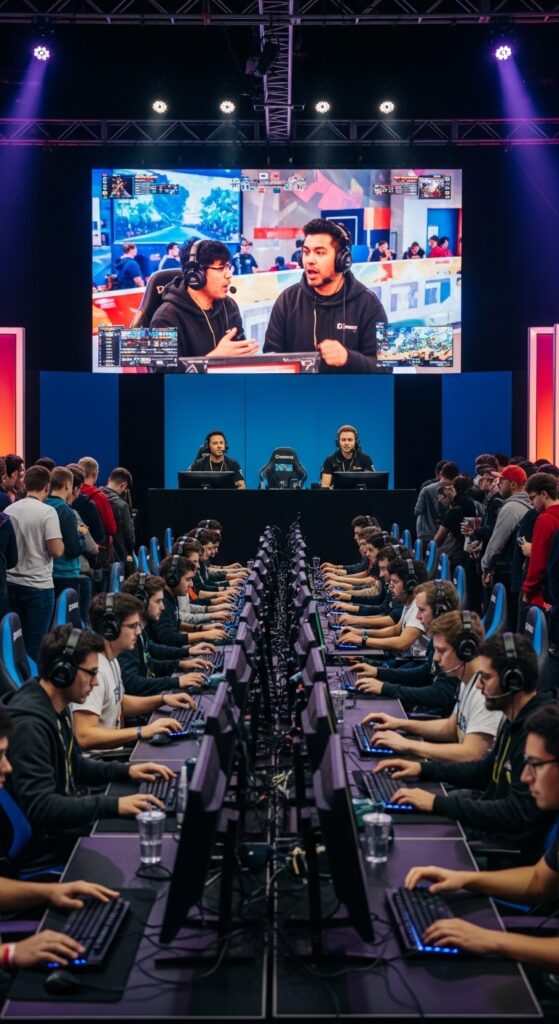
Esports remains influential, though uneven. Competitive gaming has built passionate communities, professional teams and international tournaments. Yet profitability has been difficult for some organizations. The strongest esports titles are those with deep player bases, publisher support and clear spectator appeal.
Games are increasingly connected to other media. Film and television adaptations of game franchises have become more ambitious and successful. Studios now recognize that games contain rich worlds, loyal fan bases and characters with global recognition. At the same time, game companies are learning from cinema and television about narrative, performance and emotional pacing.
Technology is pushing the medium forward. Cloud gaming promises access without expensive hardware, though latency and business models remain challenges. Virtual reality and augmented reality continue to develop, but adoption is still limited compared with traditional gaming. Artificial intelligence may change how non-player characters behave, how worlds are built and how players create content.
Labor issues are growing. Game development can involve long hours, unstable contracts and layoffs after major projects end. Even successful studios have cut staff during periods of restructuring. Workers in several countries have begun organizing for better conditions. The image of gaming as a creative dream job is being tested by the realities of production pressure.
Players are also demanding accountability. They criticize unfinished releases, excessive monetization and broken promises. Online communities can support a game for years or turn against it within days. Trust has become one of the industry’s most valuable assets.
Gaming’s future looks strong because it speaks the language of younger audiences: interactive, social, customizable and global. But growth brings responsibility. The industry must manage labor, safety, privacy, addiction concerns and fair monetization.
The game is no longer separate from entertainment. In many ways, it is where entertainment is going.”””
