
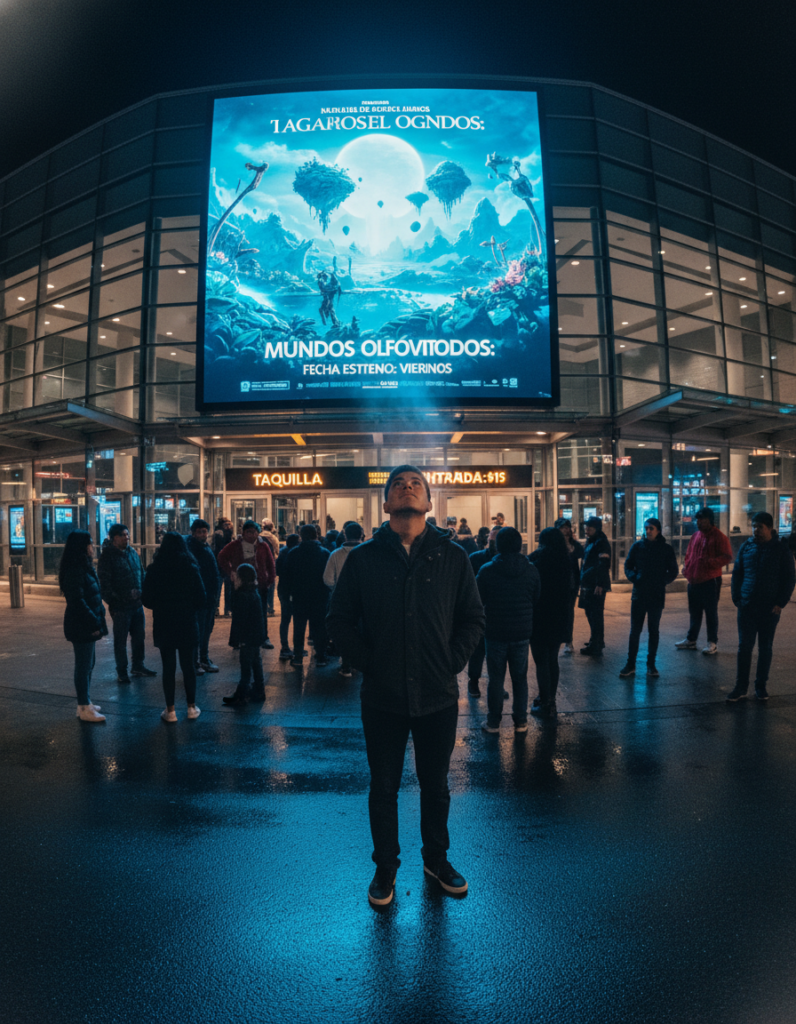
James Cameron’s latest sci-fi epic has crossed the $1 billion mark worldwide and started the new year at No. 1, while Zootopia 2 continues to show rare staying power, offering Hollywood an early sign of momentum after a difficult 2025.
Hollywood has entered 2026 with a badly needed show of strength, led by James Cameron’s “Avatar: Fire and Ash,” which opened the year atop the North American box office and quickly crossed the $1 billion mark worldwide, according to studio figures and Associated Press reporting. The performance has given the global theatrical business an early jolt of optimism, while Disney’s “Zootopia 2” has continued to post unusually strong holds, underscoring how a handful of event films are still capable of driving moviegoing at a scale the industry has struggled to consistently reproduce.
“Fire and Ash,” released in late December, arrived carrying enormous expectations. Cameron’s “Avatar” brand remains one of the most commercially dominant franchises in modern cinema, but it also faces a uniquely high bar: each new installment is measured not merely against contemporary rivals, but against two of the biggest global hits ever released. By the first weekend of January, however, the third “Avatar” film had already provided one answer to the central commercial question. It remained No. 1 in North America for a third straight weekend as 2026 began and had surpassed $1 billion globally in just three weeks of release.
That milestone, significant in any era, feels especially important now. The global box office has spent the past several years trying to regain stable momentum after pandemic disruption, labor strikes, release-date reshuffling and a steady shift in audience habits toward streaming. For theater owners and studios alike, the concern has not been whether giant movies can still break through. They plainly can. The deeper question has been whether the theatrical marketplace can generate enough of those moments, across enough months of the year, to restore confidence in the broader business. Early January’s numbers do not settle that issue, but they do offer a favorable opening signal.
For Disney, the moment is especially notable because “Avatar: Fire and Ash” is not carrying the burden alone. “Zootopia 2,” already a major international hit before the new year began, has continued to demonstrate strong endurance in theaters. Its staying power matters because box office strength is not defined only by a large debut. In industry terms, good “legs” — the ability to sustain revenue week after week — often say as much about audience enthusiasm as opening weekend totals do. AP reported earlier that “Zootopia 2” had already reclaimed the top spot domestically in late 2025 and crossed the $1 billion global threshold, propelled in part by exceptional business in China. By early 2026, it was still generating substantial revenue, showing that family audiences had not moved on quickly.
That combination — a new event film dominating premium screens and an animated blockbuster continuing to play well across international markets — has made the start of the year look healthier than many in the business had reason to expect. According to AP, the first weekends of 2026 were running ahead of the same period a year earlier. That kind of year-over-year comparison can be noisy, especially in January, when release calendars are thin and one or two strong titles can distort the picture. But after a 2025 that many observers described as disappointing or uneven, even a modest rebound carries symbolic weight.
“Avatar: Fire and Ash” is, of course, the kind of film built for precisely this role. Cameron’s movies have long functioned as theatrical showcases, using scale, visual spectacle and immersive world-building to make the case for seeing a film on the biggest screen possible. In an era when many dramas, comedies and mid-budget titles struggle to pull people away from home viewing, “Avatar” remains one of the clearest examples of a franchise that still turns theatrical exhibition itself into part of the attraction. Its commercial success is not merely about recognition of the brand, but about audience confidence that the film will deliver something difficult to replicate in a living room.
Yet the start-of-year box office story is not simply one of franchise inevitability. “Fire and Ash” may have reached $1 billion worldwide quickly, but its trajectory is still being watched closely in comparison with the first two films. Such comparisons are unavoidable with Cameron, whose previous “Avatar” entries became historic earners. The more relevant industry question, though, is not whether the new film will rewrite all-time records. It is whether it can continue to anchor a robust multi-week run that helps sustain theaters through the early winter corridor, traditionally a period when momentum can fade quickly after the holidays. Its hold at No. 1 entering 2026 suggests that, at least initially, it is doing exactly that.
Meanwhile, “Zootopia 2” offers a different but equally valuable lesson for the market. Animated sequels can often open strongly on brand recognition and holiday timing, but not all of them display the kind of staying power that translates into lasting global impact. The film’s resilience indicates broad family appeal and strong word of mouth, particularly overseas. It also reinforces Disney’s ability to dominate multiple corners of the market at once: premium large-format sci-fi spectacle on one side, crowd-pleasing animation on the other. When one studio can keep two very different films commercially relevant at the same time, it tends to amplify the sense that the market itself is healthier than it may actually be. But even that perception has practical consequences. Confidence matters in exhibition, in scheduling and in the way studios decide how aggressively to back theatrical rollouts.
There is still reason for caution. January is not a reliable month for sweeping conclusions, and recent box office history has shown how quickly momentum can cool when the release schedule thins out. Theatrical recovery remains uneven across genres and regions. Horror can still break out. Family animation can still travel. Event franchises can still command worldwide attention. But many original films and medium-scale releases continue to face a harsher environment than they did a decade ago. The danger for studios is assuming that the success of a few giant titles means the entire ecosystem has stabilized.
Even so, the early 2026 frame offers something Hollywood has repeatedly sought: evidence that audience appetite for theaters remains real when films are positioned as must-see events. That does not solve the structural problems facing the business, from compressed windows to changing consumer expectations. But it does remind the industry what theatrical momentum looks like when the right films arrive at the right time.
The broader calendar ahead will now determine whether this opening heat can be sustained. AP noted that studios are looking to a year filled with major releases from established brands, hoping a fuller pipeline can do what 2025 often could not: turn isolated wins into consistent traffic. In that sense, the significance of “Avatar: Fire and Ash” is not only the billion-dollar milestone itself. It is that the film has helped give the new year a narrative of strength, one reinforced by “Zootopia 2” refusing to fade.
For theater owners, that is the most encouraging part of the story. A strong box office is rarely built on one title alone. It takes overlap, endurance and the sense that moviegoing is becoming a habit again rather than an occasional event. In the first stretch of 2026, Hollywood has at least a glimpse of that possibility. “Avatar: Fire and Ash” is leading the charge, “Zootopia 2” is still holding firm, and after years of volatility, the global box office has begun the year with a pulse that the industry can feel.