
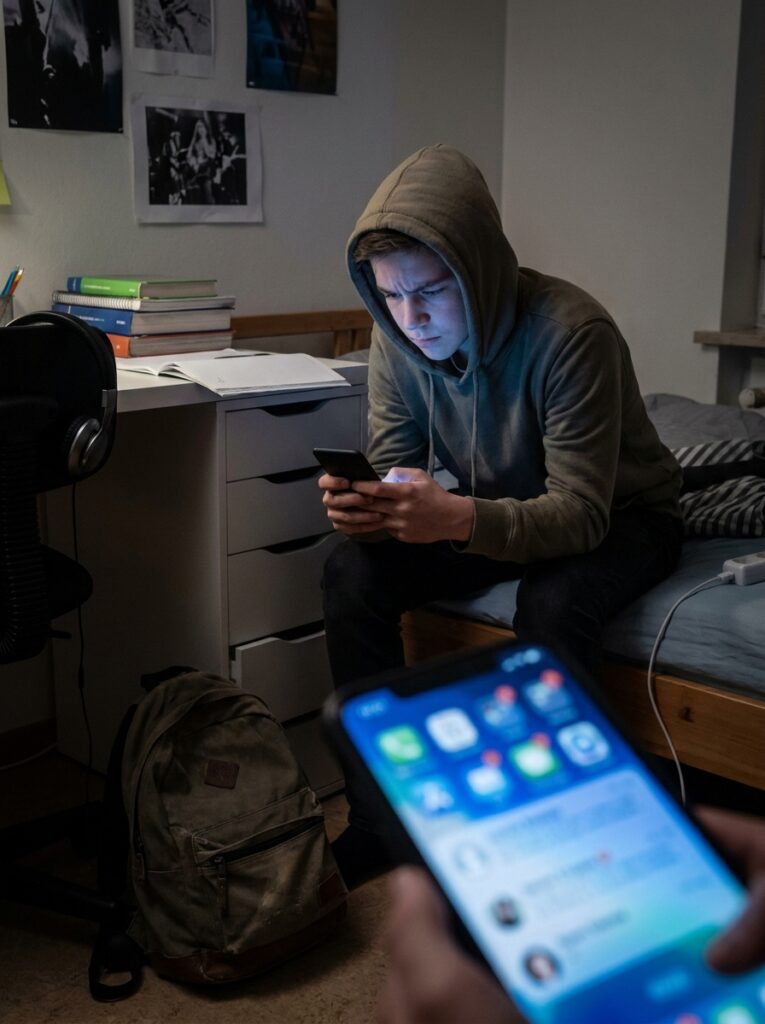
For a generation growing up online, social media has become both a source of connection and a new arena of pressure, forcing families, schools, technology companies and governments to rethink what protection means.
The mental health of young people is now being shaped in a world where the phone is rarely out of reach. For many adolescents, friendships, entertainment, news, identity and self-expression all pass through social media. The same platforms that help a teenager find community can also expose that teenager to comparison, harassment, sleep disruption, harmful content and the pressure to remain constantly visible. The result is not a simple story of technology harming youth, nor a defense of social media as harmless. It is a complicated public health challenge unfolding in real time.
Adolescence has always been a vulnerable period. Young people are forming identity, seeking belonging, testing independence and becoming more sensitive to peer approval. Social media enters directly into that developmental stage. It makes social feedback measurable through likes, views, comments, shares and follower counts. It turns private insecurity into public performance. It also means that school conflicts, social exclusion and embarrassment no longer end at the classroom door. They can follow a young person home, appear late at night and remain searchable long after the moment has passed.
One of the strongest concerns is the link between heavy social media use and emotional distress. Research has not proved that social media alone causes the youth mental health crisis. Anxiety, depression, family stress, academic pressure, economic insecurity, bullying, discrimination, violence and the legacy of the pandemic all play major roles. But frequent social media use can intensify several of these pressures at once. A teenager who is already lonely may spend more time scrolling, and more scrolling may deepen loneliness. A young person struggling with body image may seek reassurance online, only to encounter edited images and algorithmic content that makes self-comparison worse.
Sleep is one of the clearest pathways through which social media affects mental health. Adolescents need consistent rest for mood regulation, learning and physical development. Yet social platforms are designed for continued engagement. Notifications, short videos, direct messages and algorithmic feeds can keep young users awake long after they intended to stop. Late-night use also exposes young people to emotional content at the hour when they may have the least support available. Poor sleep can then increase irritability, anxiety and difficulty concentrating the next day.
Body image is another major risk, especially for girls but not only for them. Social media places young people in a constant stream of curated faces, bodies, lifestyles and achievements. Filters, editing tools and influencer culture can make unrealistic appearances look ordinary. Even when teenagers know images are manipulated, repeated exposure can still shape expectations. Boys may face pressures around muscularity, athletic status or wealth. Girls may face pressures around beauty, thinness, popularity and sexualized attention. For LGBTQ+ youth and other marginalized groups, online spaces may offer affirmation, but they can also expose them to targeted harassment.
Cyberbullying is especially damaging because it can be public, anonymous and persistent. A cruel comment in a hallway may be heard by a few students. A cruel post can be copied, shared and viewed by hundreds. Victims may feel there is no escape, and bystanders may participate through likes or silence. The emotional harm is not limited to the original message. It is intensified by the awareness that others have seen it, judged it or passed it along. For some young people, online harassment becomes a constant source of fear and humiliation.
At the same time, social media can provide real benefits. For adolescents who feel isolated in their offline lives, online communities can offer friendship, information and emotional support. Young people with rare illnesses, disabilities, minority identities or niche interests may find peers they could not easily meet locally. Social platforms can help students organize, learn, create art, share music, discuss mental health and seek help. During periods of isolation, such as illness, relocation or crisis, digital connection may reduce loneliness rather than deepen it.
This dual nature is why a purely anti-technology response is inadequate. The question is not whether young people should live online or offline. They already live in both spaces. The more useful question is what kind of digital environment supports healthy development. A platform built around endless scrolling, social comparison and algorithmic outrage produces different effects from one designed for meaningful communication, privacy, creative expression and age-appropriate limits. Design choices are health choices.
Parents often carry much of the responsibility, but they cannot solve the issue alone. Many families struggle to set boundaries when schoolwork, friendships and entertainment all happen on the same device. Strict bans may backfire if they isolate teenagers from peer communication or push use into secrecy. No rules at all can leave young people exposed to pressures they are not ready to manage. The most effective approach is usually active guidance: discussing what young people see online, setting device-free times, protecting sleep, modeling healthy behavior and gradually increasing autonomy as adolescents develop judgment.
Schools also have a central role. Teachers and counselors see the effects of digital conflict every day: distraction, bullying, anxiety, rumors and social comparison. Schools can teach digital literacy as a mental health skill, not merely a technical skill. Students need to understand algorithms, privacy, misinformation, consent, image manipulation, online cruelty and the emotional impact of constant comparison. They also need trusted adults who respond seriously when online harassment spills into school life.
Technology companies face the most difficult questions because they control the architecture of the digital spaces where young people spend time. Age verification, privacy settings, recommendation systems, reporting tools, addictive design features and advertising practices all affect youth well-being. Platforms often say they want to protect young users, but their business models reward attention and engagement. If harmful content keeps users watching, the incentive structure becomes a public health problem. Stronger transparency and independent research access are essential because families cannot manage risks they cannot see.
Governments are increasingly considering regulation, but policy must be careful. Rules that protect children’s privacy, restrict harmful design practices, limit exploitative advertising and require accountability for online abuse can help. But sweeping restrictions may raise questions about speech, access, enforcement and the rights of young people to seek information and community. The best policies are likely to combine safety standards, research transparency, digital literacy, mental health investment and accountability for platforms that knowingly expose minors to preventable harm.
Mental health services remain a critical part of the response. Social media is often blamed for problems that existed before the smartphone era: lack of counseling, stigma, family stress, poverty, discrimination and academic pressure. Removing an app will not treat depression, trauma or anxiety. Young people need easier access to school counselors, community mental health care, crisis support and trusted adults. They also need environments that reduce shame around asking for help.
For young people themselves, healthier social media use begins with awareness. Not every hour online has the same effect. Messaging a close friend may feel supportive. Doomscrolling at midnight may worsen anxiety. Creating music, art or videos may build confidence. Comparing one’s body or life to strangers may deepen insecurity. The goal is not perfection, but the ability to notice how a platform changes mood, sleep, self-worth and relationships.
The youth mental health crisis cannot be solved by telling teenagers to put down their phones. It also cannot be solved by pretending that digital life is harmless. Social media is now part of adolescence, and its risks are shaped by design, family life, school culture, social inequality and access to care. The challenge is to build a digital world that gives young people connection without exploitation, creativity without constant comparison, and community without cruelty.
The central lesson is that youth mental health must be protected both online and offline. A teenager does not divide life into two separate worlds. What happens on a screen can affect sleep, confidence, friendships and safety. What happens at home, school and in society can shape how that same teenager uses the screen. The future of youth well-being will depend on whether adults treat social media not as a private habit, but as a shared environment that must be designed, governed and used with care.
“””

