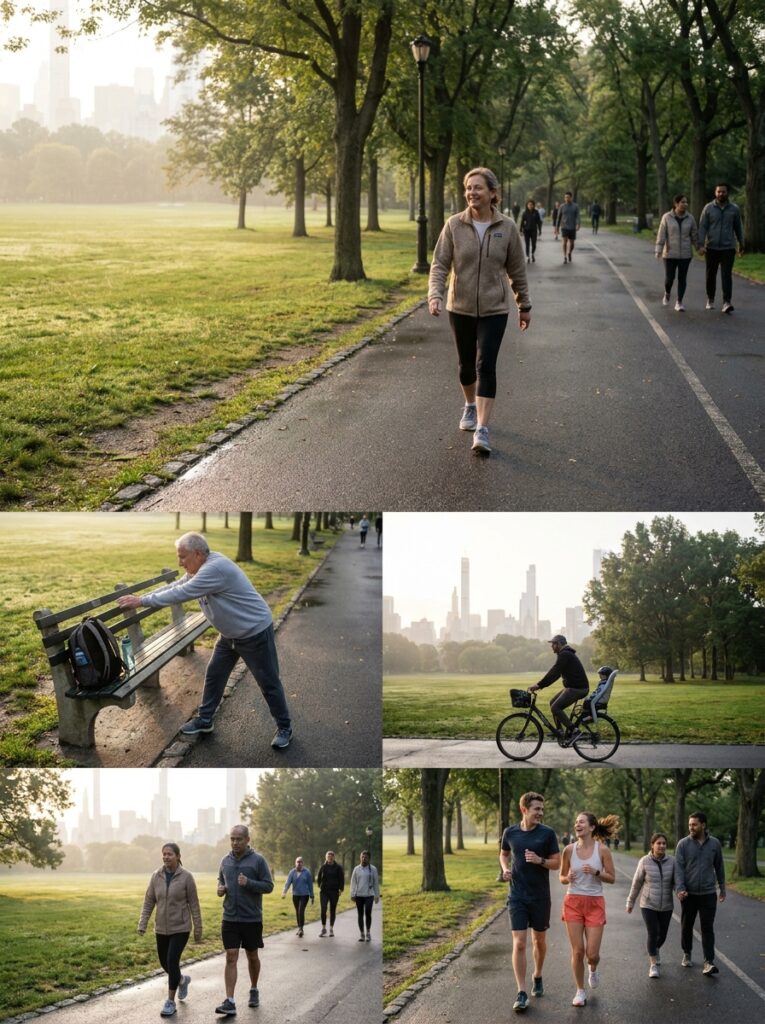
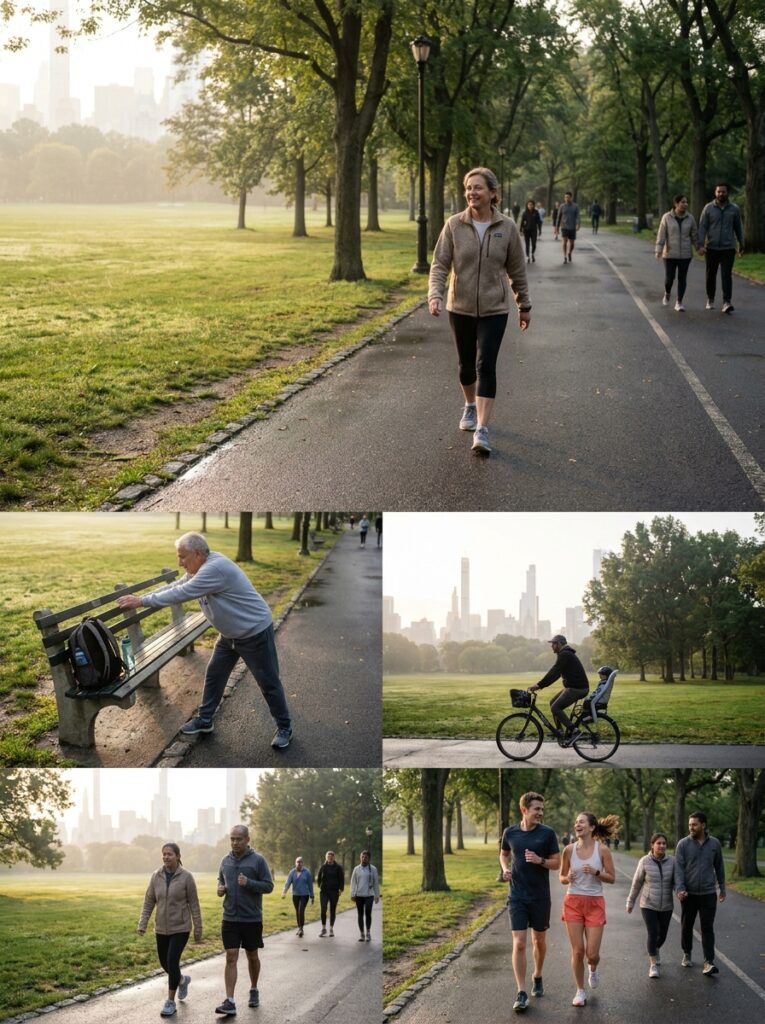
From better sleep and sharper focus to lower risks of chronic disease, daily physical activity is emerging as one of the simplest public health tools available.
In an age of expensive wellness trends, wearable trackers and highly specialized fitness programs, one of the most effective health habits remains strikingly ordinary: moving the body every day. The exercise does not have to be dramatic. It may be a brisk walk before work, a cycle ride through a neighborhood, a swim after school, a strength session at home, a dance class, a few flights of stairs, or a short routine of stretching and bodyweight movements. What matters most, health experts say, is consistency.
Daily exercise has become increasingly important because modern life has become increasingly sedentary. Many people work at desks, commute in vehicles, order food through apps and spend leisure hours in front of screens. The body, however, was not designed for prolonged stillness. Muscles, bones, blood vessels, lungs and the brain all respond to movement. When movement becomes part of everyday life, the benefits accumulate across nearly every system of the body.
The most visible benefit is cardiovascular health. Regular physical activity strengthens the heart, improves circulation and helps the body use oxygen more efficiently. Over time, this can support healthier blood pressure, better cholesterol profiles and improved blood sugar control. These changes matter because heart disease, stroke and diabetes remain among the most serious global health burdens. Exercise is not a magic shield, but it is one of the most reliable ways to reduce risk.
Daily movement also helps manage body weight, though its value should not be reduced to appearance or calorie burning. Exercise builds and preserves muscle, and muscle plays an important role in metabolism, posture, balance and long-term independence. Even moderate activity can help the body regulate energy more effectively when combined with adequate sleep and a balanced diet. For older adults, maintaining strength can mean the difference between independence and frailty.
The benefits reach the brain quickly. A single session of moderate activity can improve mood, reduce stress and sharpen attention. This is one reason walking meetings, lunchtime exercise and morning routines have become popular among office workers and students. Movement increases blood flow, stimulates neurochemical changes and provides a mental break from repetitive tasks. For people facing anxiety or low mood, exercise can be a useful support, although it should not replace professional care when medical treatment is needed.
Sleep is another major dividend. Many people who move regularly report falling asleep more easily and waking with more energy. Exercise helps regulate the body’s internal clock, reduces tension and gives the nervous system a healthier rhythm. The timing and intensity matter: vigorous workouts too close to bedtime may keep some people alert, while gentle evening walks or stretching can help others unwind. The broader pattern is clear: bodies that move during the day often rest better at night.
Daily exercise is also a form of preventive medicine for bones and joints. Weight-bearing activity such as walking, jogging, hiking or resistance training helps maintain bone strength. Strength and balance exercises can reduce the risk of falls, especially later in life. Contrary to the belief that movement necessarily wears the body down, appropriate exercise often protects it. The key is progression, recovery and choosing activities suited to age, fitness level and medical condition.
For children and teenagers, daily movement supports growth, coordination, confidence and social development. Sports, play, martial arts, dance and active commuting can help young people build habits that continue into adulthood. In a digital era, exercise also offers relief from constant screen exposure. It gives the body a role in daily life beyond sitting, scrolling and studying. The goal should not be pressure or perfection, but enjoyment and routine.
For working adults, exercise can be a defense against burnout. A short daily walk cannot solve job insecurity, long hours or financial stress, but it can create a pocket of control. It gives people a reason to leave a chair, breathe more deeply and reset their attention. In many cities, the most accessible form of exercise is still walking. It requires no membership, no equipment and no advanced skill. For people who feel intimidated by gyms, walking remains a powerful starting point.
The social value of exercise is often underestimated. Running clubs, football games, cycling groups, yoga classes and community fitness events bring people together in a period when loneliness has become a public health concern in many countries. Shared physical activity can create belonging without demanding constant conversation. It allows people to meet around a common purpose, whether that purpose is health, competition, recovery or simple enjoyment.
Daily exercise does not mean intense exercise every day. In fact, excessive training without rest can lead to injury, fatigue and discouragement. A sustainable routine usually mixes intensity levels: brisk walking on one day, strength training on another, mobility work, stretching, cycling, swimming or recreational sports. Rest and light movement are part of the plan, not signs of failure. The healthiest routine is one a person can repeat.
The standard public health recommendation for adults is at least 150 minutes of moderate-intensity aerobic activity each week, or 75 minutes of vigorous activity, combined with muscle-strengthening activities on two or more days. But experts also emphasize that some movement is better than none. For someone who is inactive, ten minutes a day can be a meaningful beginning. The path from inactivity to health does not require a dramatic transformation. It often begins with making the next choice slightly more active than the last.
Barriers remain real. Safe sidewalks, parks, time, income, disability, caregiving duties and chronic illness all shape a person’s ability to exercise. Public health messages can fail when they treat exercise purely as an individual choice. Cities, schools, employers and governments also influence whether movement is easy or difficult. Safe streets, accessible recreation spaces, affordable programs and flexible work cultures can make daily exercise more realistic for more people.
The rise of fitness technology has changed how many people approach movement. Watches, apps and online classes can motivate users, track progress and make exercise more convenient. Yet they can also create pressure, comparison and data fatigue. The simplest measure remains how the body feels and functions: whether walking upstairs is easier, sleep is deeper, mood is steadier, and everyday tasks require less effort. Health is not always best captured by a number on a screen.
There is also a psychological lesson in daily exercise. It teaches patience. The gains are usually gradual, almost quiet. A person may not notice one walk, one workout or one stretch session changing their life. But weeks and months of repetition can reshape energy, confidence and resilience. Exercise works not because every session is extraordinary, but because ordinary sessions compound.
For people with medical conditions, pregnancy, injuries or long periods of inactivity, professional guidance may be important before beginning a new routine. The message is not that everyone should train the same way. It is that nearly everyone benefits from moving in ways that are safe, appropriate and sustainable.
Daily exercise is ultimately less about athletic identity than human maintenance. The heart pumps better, muscles stay useful, joints remain more mobile, sleep improves, stress becomes easier to manage and the mind often feels clearer. In a world that sells complicated solutions, the act of moving every day remains remarkably direct. It is not a cure for every problem, but it is one of the most dependable investments a person can make in a longer, stronger and more independent life.
“””