
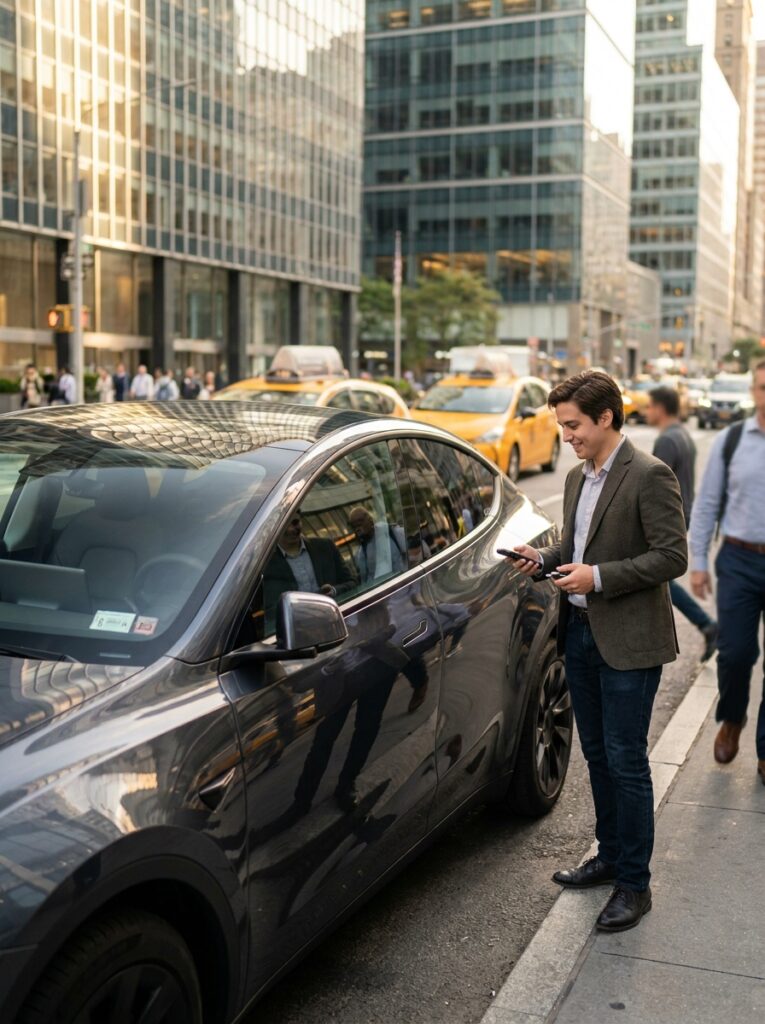
For a new generation of buyers, prestige is no longer defined only by leather seats and famous badges, but by technology, design, electric power and the image a car projects online and on the street.
For decades, the luxury car market was shaped by older buyers with high incomes, long commutes and established brand loyalty. Today, a different audience is influencing the conversation. Younger drivers, from successful professionals in their 20s to entrepreneurs, creators and first-time premium buyers in their 30s, are changing what a desirable luxury car looks like.
The cars they admire are not always the most expensive. In many cases, they are the models that combine status with usability: compact luxury SUVs, electric sedans, sporty coupes and performance versions of familiar nameplates. The appeal is not only about arriving in a prestigious vehicle. It is also about software, screens, acceleration, safety technology, fuel savings, design identity and the ability to fit the car into a lifestyle that is constantly photographed, shared and compared.
There is no single global ranking of the luxury cars most loved by young people. Preferences differ by country, income, charging infrastructure, taxes, fuel prices and culture. In the United States, Lexus, BMW, Mercedes-Benz, Tesla and Audi remain highly visible. In Europe, compact German luxury models and electric crossovers have strong appeal. In China, domestic premium electric brands have challenged European automakers with advanced cabins, connected services and aggressive pricing. In Southeast Asia and other emerging markets, luxury cars are often judged by brand reputation, resale value, comfort and the ability to signal achievement.
Still, several names appear repeatedly in conversations about youth-oriented luxury. The Tesla Model 3 and Model Y are among the clearest examples of how technology has changed the premium market. To many young drivers, Tesla feels less like a traditional luxury car and more like a digital device on wheels. Quick acceleration, minimalist interiors, over-the-air updates and a charging ecosystem have helped the brand build a powerful identity among buyers who grew up with smartphones rather than analog dashboards.
The Model 3 appeals because it offers premium performance and a modern image at a price that can be closer to upper-mainstream cars than traditional luxury sedans. The Model Y adds the body style young families and urban professionals often prefer: a compact SUV with space, efficiency and a clean, futuristic cabin. Even as Tesla faces stronger competition and sharper public debate around its leadership and brand perception, its most accessible models remain central to the youth luxury conversation.
BMW continues to hold a different kind of attraction. For many young enthusiasts, the brand still represents driving pleasure, athletic design and a direct link between luxury and performance. The BMW 3 Series remains an aspirational sedan for drivers who want a car that feels mature but not conservative. The 4 Series, especially in coupe or Gran Coupe form, adds more visual drama. The X3 and X5 show why SUVs dominate modern luxury: they offer the badge, the seating position, the practicality and the performance options that make them easy to justify as daily cars.
BMW M models have a special pull among younger fans. Cars such as the M2, M3 and M4 occupy a space between dream machine and attainable performance icon, depending on the market. They are loud in design, fast in execution and widely circulated across automotive media and social platforms. For younger buyers who care about the act of driving, BMW remains one of the strongest emotional brands.
Mercedes-Benz appeals to young luxury buyers in another way. It represents status, comfort and a sense of arrival. The CLA, C-Class and GLC are often the brand’s gateway models for younger customers. The CLA, with its coupe-like shape and more accessible positioning, has long been a bridge between youthful design and the prestige of the three-pointed star. The C-Class offers a more traditional luxury sedan experience, while the GLC gives buyers the SUV format that now dominates the premium market.
For some young drivers, Mercedes-AMG is the dream. AMG models project speed, sound and exclusivity, but they also carry the social weight of the Mercedes badge. The G-Class sits even higher in the image hierarchy. It is expensive, impractical in some urban settings and instantly recognizable, which is precisely why it has become a cultural object as much as a vehicle. Among celebrities, athletes and influencers, the G-Class functions almost like a moving luxury symbol.
Audi remains popular with young professionals who prefer a cleaner and more understated form of luxury. Models such as the A3, A5, Q3 and Q5 offer sharp interiors, modern lighting, digital displays and a design language that feels premium without being overly aggressive. Audi’s quattro performance image, combined with its restrained styling, appeals to drivers who want sophistication rather than spectacle.
The Q3 and Q5 are especially relevant because compact and midsize luxury SUVs match what many younger buyers need: space for daily life, manageable size for cities and enough badge value to feel like a step up. Audi’s electric e-tron models also fit the broader shift toward cleaner technology, though pricing and charging access remain important barriers in many markets.
Lexus has become one of the strongest choices for younger buyers who want luxury without anxiety. The brand’s reputation for reliability, comfort and resale value gives it an advantage among buyers who may be stretching their budgets to enter the premium segment. The NX and RX are particularly important because they combine SUV practicality with hybrid options, refined cabins and a less aggressive image than some German competitors.
For young drivers who want a luxury car that feels responsible as well as prestigious, Lexus can be persuasive. It may not always carry the same performance image as BMW or Mercedes-AMG, but it offers a different kind of confidence: quiet quality, lower ownership stress and a design direction that has become sharper in recent years.
Porsche occupies a more emotional space. The 911 remains an icon beyond age, but for many younger luxury buyers, the Macan is the realistic entry point into the Porsche world. It is compact enough for daily use, sporty enough to feel special and prestigious enough to stand apart from mainstream SUVs. The Taycan, Porsche’s electric sports sedan, appeals to younger buyers who want performance and sustainability without giving up drama.
Range Rover also retains strong youth appeal, particularly the Evoque, Velar and Range Rover Sport. These models are not chosen only for off-road ability. They are chosen for design, presence and lifestyle association. A Range Rover suggests wealth, travel, fashion and urban confidence. For younger buyers who treat the car as part of a broader personal brand, that image matters.
Volvo, Genesis and newer electric premium brands are also reshaping the field. Volvo’s compact electric and hybrid SUVs appeal to younger buyers who prioritize safety, Scandinavian design and environmental awareness. Genesis, Hyundai’s luxury brand, has attracted attention with bold styling, high equipment levels and competitive pricing. In China and parts of Europe, brands such as NIO, Zeekr, BYD’s premium lines and Aito show that younger buyers are open to luxury defined by software, screens and intelligent driving features rather than heritage alone.
What unites these choices is not a single badge but a changing definition of luxury. Young buyers want cars that feel advanced, look distinctive and make sense financially. They are more likely to compare monthly payments, charging costs, insurance, resale value and technology features. They are also more likely to be influenced by social media, online reviews and real owner experiences than by traditional showroom prestige.
The most loved luxury cars among young people are therefore not simply the fastest or most expensive. They are the cars that combine aspiration with relevance. A Tesla offers technology and electric identity. A BMW offers driving emotion. A Mercedes offers status. An Audi offers understated modernity. A Lexus offers trust. A Porsche offers desire. A Range Rover offers presence.
For automakers, the lesson is clear. Winning young buyers requires more than placing a famous badge on the hood. The car must feel connected, efficient, personal and visually strong. It must work in a crowded city, look good in a photograph, deliver comfort on a long drive and justify its cost in a world where ownership is increasingly expensive. The luxury car of the young generation is no longer only a symbol of wealth. It is a symbol of taste, technology, mobility and identity.”””

