
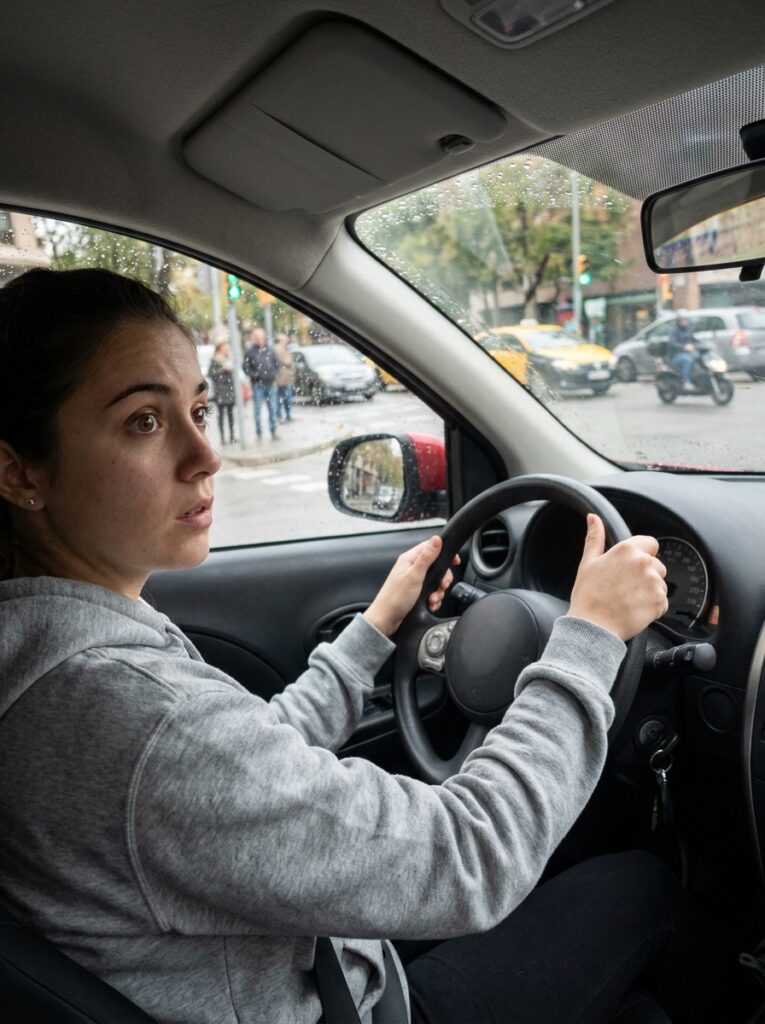
From overconfidence to poor observation, early driving errors often come from habit, nerves and a lack of real-world experience.
For many new drivers, passing the driving test feels like the end of a long process. In reality, it is only the beginning. The first months behind the wheel are often when drivers face the most unpredictable situations: crowded intersections, impatient motorists, sudden rain, narrow parking spaces, night traffic and the pressure of making decisions in seconds.
The most common mistakes new drivers make are rarely dramatic at first. They are usually small errors repeated often: checking mirrors too late, braking too hard, driving too close, turning without scanning properly, or trusting other road users to behave perfectly. Over time, these habits can become risky, especially in heavy traffic or at higher speeds.
One of the first mistakes is overconfidence. After receiving a license, many beginners believe they are fully prepared for every road condition. But formal training cannot reproduce every situation a driver will face. A test route is limited. Real roads are not. A safe driver understands that skill develops gradually through calm, repeated experience.
Nervousness is another major problem. Some new drivers grip the steering wheel too tightly, hesitate at junctions, or panic when another vehicle honks. Hesitation can be as dangerous as aggression. A driver who stops unexpectedly, changes lanes too slowly, or freezes in the middle of a turn may confuse others on the road. Confidence matters, but it must be controlled and based on awareness, not ego.
Poor mirror use is one of the most common early errors. New drivers often look straight ahead and forget that driving is a 360-degree task. Mirrors should be checked before braking, changing lanes, turning, reversing and opening the door after parking. Many beginners check mirrors only after they have already begun the movement, which gives them little time to react.
Another frequent mistake is failing to check blind spots. Mirrors do not show everything. Motorbikes, bicycles and small cars can disappear beside a vehicle, especially during lane changes or turns. A quick shoulder check, done without pulling the steering wheel, can prevent serious collisions. This habit is especially important in cities where two-wheel vehicles often move between lanes.
Speed control is also difficult for beginners. Some drive too fast because they copy the pace of surrounding traffic. Others drive too slowly because they are afraid. Both can create danger. Safe speed depends on road conditions, visibility, weather, traffic density and the driver’s ability to stop in time. The posted limit is not always the safest speed; it is the maximum legal speed under normal conditions.
Following too closely is another mistake that new drivers often underestimate. Beginners may not yet understand how much distance a car needs to stop, particularly in rain or on uneven roads. Tailgating reduces reaction time and increases the risk of rear-end crashes. A safe following distance gives the driver space to observe, decide and brake smoothly.
Many new drivers also brake too suddenly. This often happens because they look only at the vehicle directly in front rather than scanning further ahead. Experienced drivers watch traffic lights, pedestrian crossings, brake lights several cars ahead and the movement of people near the road. Early observation allows smoother braking and safer driving.
Lane discipline is another challenge. New drivers may drift within the lane, change lanes without a clear plan, or stay in the wrong lane until the last moment. Good lane discipline begins before the turn or exit. A driver should know the route, choose the correct lane early, signal clearly and avoid sudden movements. Last-second decisions are a common source of accidents.
Signaling errors are also frequent. Some beginners signal too late, while others forget completely. A turn signal is not a request for permission after the movement begins; it is advance communication. It tells others what the driver intends to do. Signaling early, but not misleadingly early, helps traffic flow more safely.
Distraction is one of the most serious dangers for inexperienced drivers. A mobile phone, loud music, passengers, navigation screens or even eating while driving can reduce attention. New drivers need more mental focus than experienced drivers because many actions are not yet automatic. Looking away for a few seconds can be enough to miss a pedestrian, a red light or a vehicle braking ahead.
Parking mistakes are also common. Beginners may misjudge the size of the car, turn the wheel too early, or rely only on cameras and sensors. Technology can help, but it should not replace observation. Mirrors, direct vision and slow movement remain essential. In parking areas, children, motorbikes and pedestrians can appear suddenly from behind larger vehicles.
Reversing without enough awareness is another risk. New drivers sometimes reverse quickly because they feel pressure from waiting vehicles. Reversing should always be slow and deliberate. The driver should check all sides before moving, continue checking while moving and be ready to stop immediately. A few extra seconds are far better than a collision.
Another early mistake is poor steering technique. Some beginners cross their arms awkwardly, turn too sharply, or fail to straighten the wheel smoothly after a turn. Steering should be controlled, progressive and matched to speed. Sharp steering at higher speeds can unsettle the vehicle, while slow steering in tight spaces can make parking harder.
New drivers also often misunderstand right of way. They may assume that having priority means they can move without caution. In practice, right of way does not guarantee safety. A driver should always look for vehicles that may run a red light, pedestrians who step out suddenly, or motorbikes approaching from unexpected angles. Defensive driving means preparing for mistakes by others.
Driving in rain exposes many weaknesses. Beginners may not reduce speed enough, may brake too hard, or may follow too closely. Wet roads reduce tire grip and increase stopping distance. Visibility can also fall quickly. Safe driving in rain requires lower speed, gentle inputs, clean windows, working lights and more space from other vehicles.
Night driving creates another set of challenges. New drivers may misjudge distance, become dazzled by headlights, or fail to notice pedestrians in dark clothing. They should keep the windshield clean, use lights correctly and reduce speed when visibility is limited. Looking slightly away from oncoming headlights can help reduce glare while maintaining awareness of the road.
A common social mistake is allowing passengers to influence decisions. Friends may encourage faster driving, sudden overtaking or risky shortcuts. A new driver must remember that the person holding the steering wheel is responsible for the vehicle. Calm authority is part of safe driving. It is acceptable to ask passengers to lower their voices, stop distracting behavior or let the driver concentrate.
Overtaking is another area where beginners take unnecessary risks. They may misjudge the speed of oncoming traffic, forget to check mirrors, or accelerate too late. Safe overtaking requires a clear view, enough space, a suitable road, proper signaling and the ability to return to the lane without forcing others to brake. When in doubt, it is safer to wait.
Vehicle maintenance is sometimes ignored by new drivers. Tire pressure, engine oil, coolant, lights, brakes and windshield wipers all affect safety. A driver who does not understand basic vehicle checks may discover a problem only when it becomes dangerous. Building a simple routine before longer trips can prevent breakdowns and reduce risk.
Perhaps the most important mistake is failing to learn from each drive. Every trip offers feedback. A missed mirror check, a rushed turn, a poor parking attempt or a moment of panic should not be ignored. The safest new drivers are those who review their actions honestly, correct small errors early and treat driving as a skill that continues to develop.
Good driving is not only about controlling a machine. It is about judgment, patience, observation and respect for others. New drivers will make mistakes, but the goal is to make them small, recognize them quickly and prevent them from becoming habits. Experience matters, but only when it is built carefully. On the road, confidence should grow at the same speed as responsibility.”””
