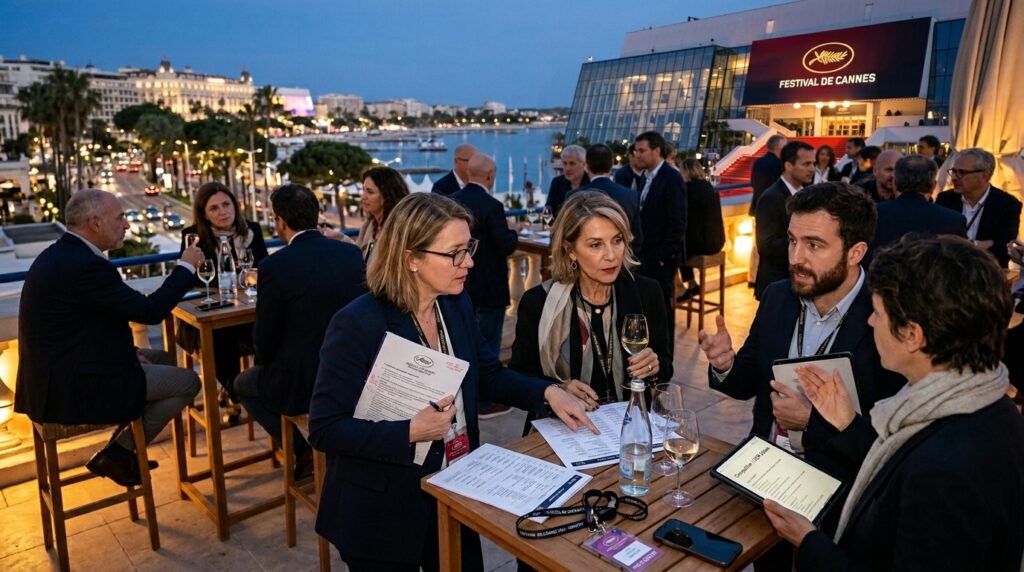
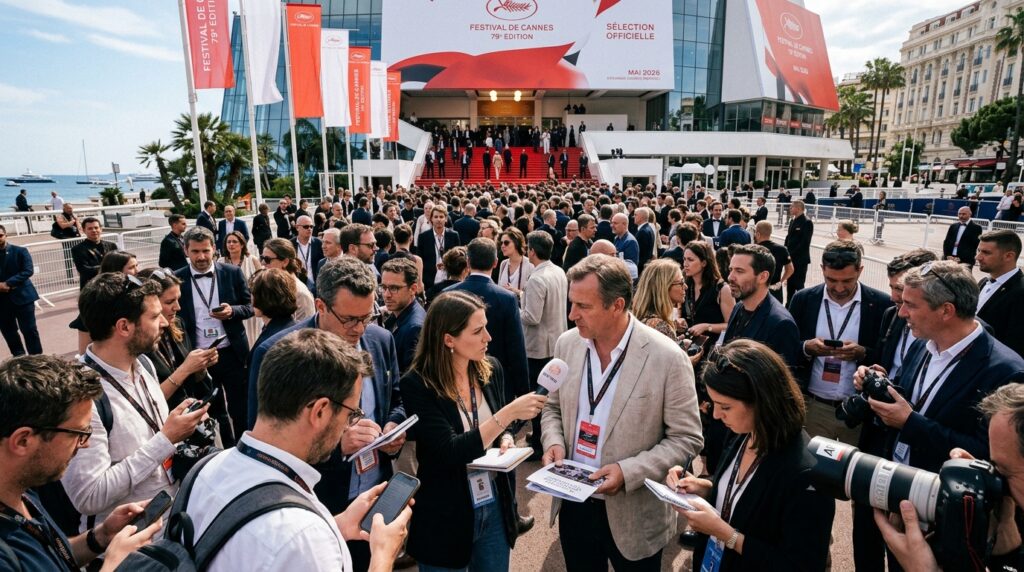
With Pedro Almodóvar, Asghar Farhadi, Ryusuke Hamaguchi, Hirokazu Kore-eda and other major auteurs spread across the lineup, the Cannes Film Festival has once again positioned itself as an early battleground for prestige cinema, awards momentum and the year’s most closely watched art-house discoveries.
The Cannes Film Festival has unveiled the Official Selection for its 79th edition, offering the clearest early map yet of how the global film year may take shape in 2026.
As always, the announcement matters for more than the two weeks the festival occupies on the Croisette. Cannes is not simply a showcase for new films. It is one of the main engines that determine which international titles command critical attention, which directors set the cultural conversation, which distributors gain momentum heading into autumn, and which films eventually become central to the awards season months later.
This year’s selection, presented in Paris by festival president Iris Knobloch and artistic director Thierry Frémaux, suggests Cannes intends once again to anchor the high end of world cinema around auteur prestige, cross-border storytelling and a lineup that is notably lighter on Hollywood studio fare than many previous years. That does not make the festival smaller. If anything, it sharpens its identity.
The main Competition lineup alone reflects that approach. Among the 21 titles named for the Palme d’Or race are Pedro Almodóvar’s “Amarga Navidad,” Asghar Farhadi’s “Parallel Tales,” Ryusuke Hamaguchi’s “All of a Sudden,” Hirokazu Kore-eda’s “Sheep in the Box,” Cristian Mungiu’s “Fjord,” László Nemes’ “Moulin,” Pawel Pawlikowski’s “Fatherland,” Ira Sachs’ “The Man I Love,” Rodrigo Sorogoyen’s “El Ser Querido” and Andrey Zvyagintsev’s “Minotaur.” It is an imposing cluster of filmmakers whose names alone signal seriousness, stylistic confidence and likely festival-to-awards traction.
That density of established auteurs is one reason the Cannes announcement instantly reverberates far beyond France. A Cannes Competition slate does not function only as a list of premieres. It serves as a statement about the current hierarchy of prestige filmmaking. When Cannes leans heavily into directors such as Almodóvar, Farhadi, Hamaguchi, Kore-eda, Mungiu and Pawlikowski, it is effectively declaring that the global art-film conversation this year will begin with authorship, craft and ambitious personal cinema rather than franchise logic.
The selection also underscores how Cannes continues to reward filmmakers with long-standing ties to the festival while leaving room for fresh voices in adjacent sections. The Competition side is filled with returning names and former Palme d’Or figures, while Un Certain Regard appears designed to widen the lens. Its 2026 titles include Jane Schoenbrun’s opening film “Teenage Sex and Death at Camp Miasma,” alongside “Elephants in the Fog,” “Ben’imana,” “Club Kid,” “Yesterday the Eye Didn’t Sleep,” and “I’ll Be Gone in June,” several of them marked as first features. That balance is essential to Cannes’ institutional role. It must both preserve prestige and manufacture discovery.
This dual identity is part of what gives the festival such influence over the year’s cinematic ecosystem. Competition is where reputations are tested at the highest level, but Un Certain Regard is often where the next generation of internationally recognized directors begins to crystallize. Films that emerge strongly there may not dominate immediate headlines in the way a Palme race does, yet they often become the quieter long-term winners of the festival circuit, critical lists and global arthouse distribution.
Outside those two pillars, Cannes 2026 also looks determined to preserve the event’s breadth. The Out of Competition slate includes titles by Antonin Baudry, Guillaume Canet, Agnès Jaoui and Nicolas Winding Refn, whose “Her Private Hell” gives the section one of its most conspicuous headline-makers. Midnight Screenings, long one of the festival’s most kinetic and tonally flexible spaces, include Quentin Dupieux’s “Full Phil” and Yeon Sang-ho’s “Gun-Che.” Cannes Premiere features films by Daniel Auteuil, Kiyoshi Kurosawa, Volker Schlöndorff and John Travolta, whose directorial debut “Propeller One-Way Night Coach” adds a dose of curiosity and celebrity intrigue. Special Screenings include documentaries and nonfiction-driven works from Ron Howard and Steven Soderbergh, among others.
Taken together, the structure of the selection reveals how Cannes keeps multiple constituencies in play at once. It offers hard-core cinephiles a Competition slate built around internationally revered auteurs. It gives industry buyers a deep field of potential acquisitions and awards plays. It creates space for discovery in Un Certain Regard. It maintains glamour and media heat through out-of-competition premieres and star-driven titles. And it broadens the editorial footprint of the festival through documentaries and special events.
That formula has become increasingly powerful because Cannes is no longer judged only by what wins in May. It is judged by what continues to matter in September, December and March. In recent years the festival has repeatedly fed the awards season pipeline, sending films from the Riviera into the center of Oscar, BAFTA and critics’ season conversation. That history changes how every Official Selection announcement is read. It is not merely a programming bulletin. It is an early market signal.
AP noted that Cannes is coming off a 2025 edition that yielded major Oscar contenders, reinforcing the view that the festival has become one of the world’s most reliable launchpads for serious international films seeking both artistic stature and broader recognition. That reputation increases the weight of every selection choice. A Competition berth can instantly transform a film’s profile, not just among critics but among distributors, sales agents, streaming platforms and award strategists.
The relatively modest Hollywood presence this year adds another layer to the conversation. Rather than positioning itself around studio-driven spectacle, Cannes appears comfortable emphasizing its historical strength as the premier gathering place for filmmakers whose work arrives with artistic identity already intact. In an era when the global entertainment business is often dominated by intellectual-property logic and release-calendar calculations, Cannes continues to assert that cinema’s center of gravity can still be shaped by directorial voice.
That does not mean the 2026 lineup is austere. It means the festival seems intent on drawing a firmer line around what makes Cannes distinct. Its value lies not in replicating the commercial logic of other major industry events, but in elevating the films that want to be debated, interpreted, fought over and remembered. The films that leave Cannes with mixed responses can still matter enormously later in the year. In that sense, the festival’s authority comes not from consensus but from concentration: it gathers the world’s most closely watched serious films into one compressed arena and lets critics, buyers and audiences start sorting the future in public.
Frémaux said 2,541 feature films were submitted for consideration, a number that underlines the degree to which Cannes remains one of the most sought-after platforms in cinema. Even by major festival standards, that level of competition is a measure of extraordinary cultural leverage. To be selected by Cannes is still, for many filmmakers, to enter a different category of visibility.
The strategic significance of the 2026 lineup is therefore clear. This is a Cannes edition betting that the appetite for auteur cinema remains strong, that discovery still matters, and that the festival can continue to serve as both curator and gatekeeper for the most prestigious tier of global film culture. With the Official Selection now in place, the next phase begins: speculation over the Palme d’Or, distribution jockeying, critical forecasting and the annual attempt to determine which Cannes titles will define the rest of the year.
For the entertainment world, that is why this announcement matters so much. Cannes does not just reflect momentum. It creates it. And judging by the 2026 Official Selection, the festival is preparing once again to shape the conversation about what serious cinema looks like, who controls its direction, and which films will dominate the cultural calendar long after the red carpet has been rolled away.