As streaming platforms turn real murders, disappearances and fraud cases into global entertainment, psychologists and media analysts say the genre’s power lies in a mix of fear, control, moral curiosity and addictive storytelling.
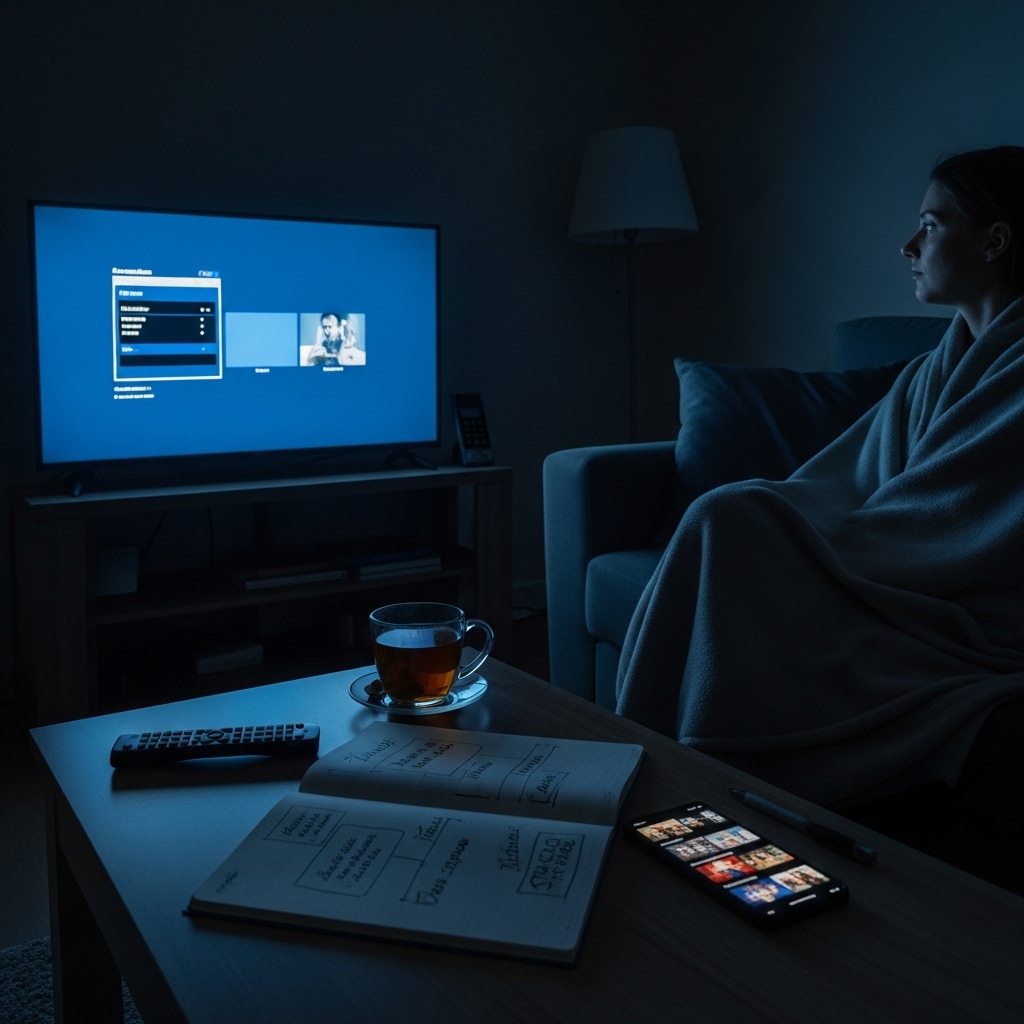
The lights are off. The episode is supposed to be the last one. A detective has found a new inconsistency, a family member is about to speak, and a police interview cuts to black just before the answer. The viewer knows the story is disturbing. They may feel anxious, saddened or even guilty for watching. Yet the next episode begins automatically, and the hand does not reach for the remote.
True crime has become one of the defining entertainment forms of the streaming era. Once confined largely to late-night television, tabloid magazines and courtroom specials, it now fills global platforms with polished documentary series, podcasts, dramatized reconstructions and limited-run investigations. The darker the story, the more likely it is to travel: serial killers, cults, missing women, family murders, online predators, wrongful convictions and cold cases all compete for attention in an entertainment market built around suspense.
The appeal appears contradictory. People usually avoid danger in real life, yet many willingly spend hours watching stories about violence, deception and human cruelty. The contradiction is only apparent. True crime offers danger at a distance. It allows viewers to approach fear while remaining physically safe. That controlled exposure is one of the genre’s strongest psychological hooks. The viewer can feel the pulse of threat without leaving the sofa.
Psychologists often describe this as a form of “safe fear.” Similar to horror films, roller coasters or ghost stories, true crime activates anxiety while also providing boundaries. The crime has already happened. The screen creates separation. The viewer can pause, rewind, turn away or search for more information. That sense of control changes the experience of fear. It becomes not only tolerable, but compelling.
But true crime is different from fictional horror because it claims reality. The knowledge that the victim, suspect, detective or grieving parent existed outside the script gives the story a special emotional force. Fiction can frighten, but true crime unsettles because it suggests that ordinary life can rupture without warning. A suburban home, a dating app, a family holiday, a workplace or a school can become a crime scene. The genre takes familiar settings and makes them unstable.
That instability feeds another powerful human instinct: the desire to understand danger. Many viewers watch true crime not because they enjoy suffering, but because they want to know how it happened. What signs were missed? Why did no one intervene? How did the offender gain trust? What mistakes did investigators make? Could this happen to someone like me? The genre turns fear into a puzzle, and puzzles invite completion.
This is why true crime often becomes bingeable. The viewer is not simply watching events unfold; they are mentally investigating. Each episode offers fragments of evidence: a voicemail, a surveillance clip, a timeline, a contradictory statement, a forensic detail, a courtroom exchange. The brain dislikes unresolved patterns. When a series withholds the answer, it creates a loop of curiosity. Stopping midway feels like leaving a door open in the mind.
Streaming platforms have intensified that effect. Traditional television once imposed a pause between episodes. Viewers had time to cool down, discuss or disengage. Streaming removes much of that friction. Autoplay, cliffhangers, compressed episode lengths and algorithmic recommendations make the next case appear immediately. A documentary about one murder leads to another about a cult, then to a podcast about a missing person, then to a dramatization of a trial. The viewer may begin with one question and end inside an entire ecosystem of fear-based storytelling.
The structure of many true crime series also borrows from scripted drama. Episodes are built around revelation, reversal and uncertainty. A suspect appears guilty, then less guilty. A witness seems reliable, then compromised. A family member becomes sympathetic, then suspicious. This rhythm is designed to keep the viewer moving. Even when the facts are public, the storytelling can make the outcome feel newly uncertain.
Moral curiosity is another reason the genre is difficult to abandon. True crime asks questions that ordinary life usually suppresses. What makes someone capable of murder? Can a person live a double life for years? How does a community fail to see abuse? Why do institutions ignore victims? How reliable is memory? How fair is the justice system? These questions are frightening because they challenge basic assumptions about trust, safety and character.
Viewers are often drawn not only to criminals, but to the social worlds around them. A compelling true crime documentary is rarely just about one violent act. It is about family pressure, police procedure, class, gender, race, media attention, mental illness, technology, domestic control or institutional failure. The crime becomes an entry point into broader anxieties. That is why cases involving online stalking, coercive relationships, influencer families or dating apps can feel especially gripping now. They connect old fears to modern life.
For some viewers, especially women, true crime can also function as informal threat education. Surveys and audience studies have repeatedly suggested that many women consume the genre at high rates. One explanation is practical: stories of abduction, stalking, domestic violence and deception may feel like grim lessons in risk recognition. Viewers may watch to learn warning signs, survival strategies or investigative failures. The content is frightening, but it can also create a sense of preparedness.
That sense may be partly real and partly illusory. True crime can teach people about coercive control, financial fraud, grooming, digital harassment and the importance of taking victims seriously. It can also distort perception. The cases most likely to become documentaries are often extreme, unusual or narratively dramatic. Watching too much of the genre can make danger feel more common than it is, or make strangers seem more threatening than familiar risks. In reality, many violent crimes are committed by people known to the victim, but media narratives often highlight the most sensational patterns.
The genre’s emotional power also comes from justice. Viewers are often not only asking what happened, but whether anyone will be held accountable. A solved case offers closure. A wrongful conviction story offers outrage and the possibility of correction. An unsolved case offers participation, inviting audiences to examine clues and speculate. The desire for justice gives the viewer a moral role. Watching begins to feel less like consumption and more like concern.
This is one reason true crime fandom can become active. Audiences discuss cases online, map timelines, compare documents and challenge official narratives. In some instances, public attention has helped revive interest in neglected cases. In others, amateur speculation has harmed innocent people, harassed families or spread misinformation. The same curiosity that makes the genre powerful can become reckless when viewers forget that real lives are not fictional characters.
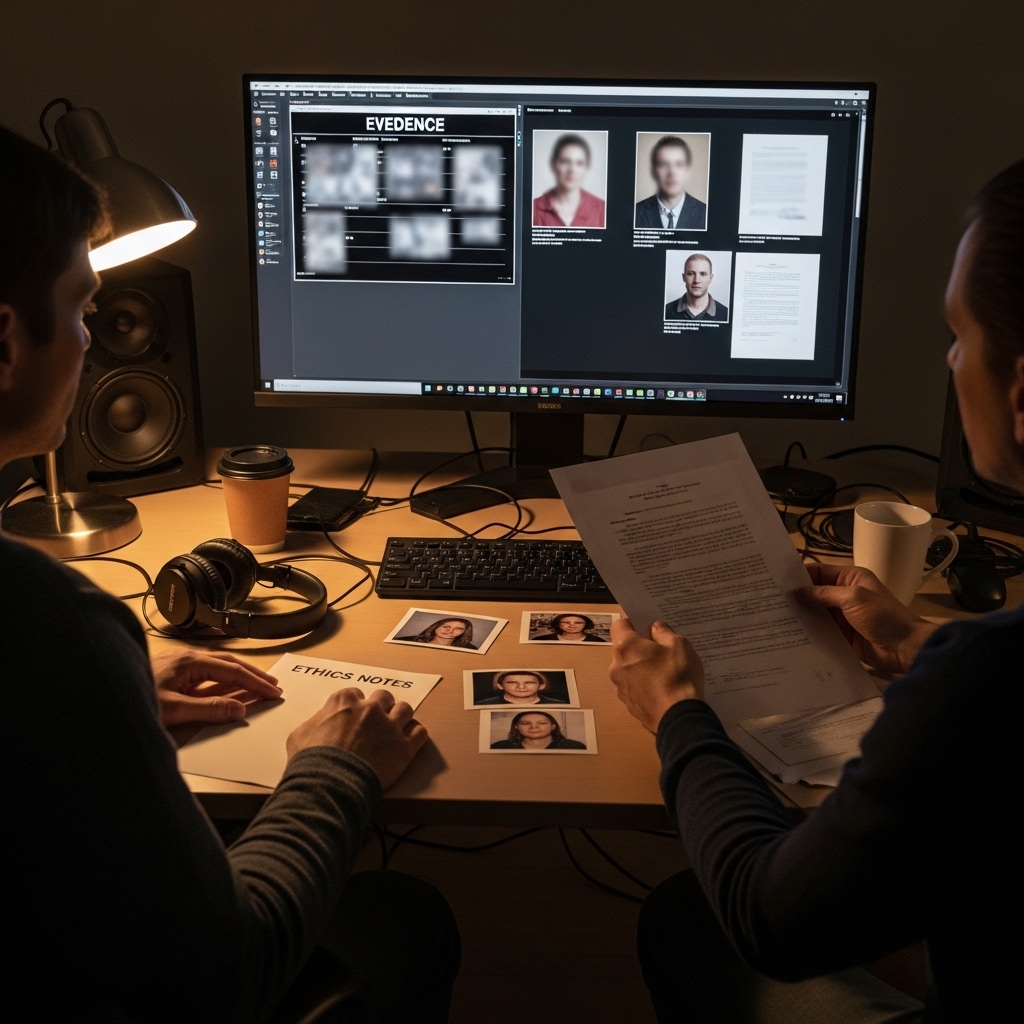
Ethics remain the central problem for true crime documentaries. A well-made film can expose injustice, honor victims, reveal institutional failure and help the public understand violence. A careless one can turn trauma into spectacle. The line between investigation and exploitation is not always clear, but there are warning signs. Does the story center victims as full human beings, or use them only as plot devices? Are families treated with dignity? Are graphic details necessary, or merely shocking? Does the documentary clarify uncertainty, or manipulate it for suspense? Does it help viewers understand, or only make them afraid?
The most criticized true crime productions often rely on the aesthetics of dread: slow-motion crime scene footage, ominous music, blurred photographs, reenactments and repeated descriptions of violence. These techniques can hold attention, but they also risk transforming suffering into atmosphere. The more horrific the case, the more responsibility filmmakers have to avoid making brutality feel like a thrill ride.
At the same time, the popularity of true crime cannot be dismissed as simple voyeurism. Many viewers are responding to real social fears. They live in a world of digital surveillance, online scams, domestic abuse revelations, institutional mistrust and constant news alerts. True crime gives these anxieties a structure. It has a beginning, middle and sometimes an end. Unlike the chaos of daily news, a documentary can organize terror into chapters.
This structure may explain why some people watch true crime to relax, even before sleep. To outsiders, that can seem strange. But for regular viewers, the genre may offer predictability. The voice of a narrator, the rhythm of investigation and the eventual explanation can feel contained compared with the uncontrolled stress of ordinary life. The story is dark, but it has shape. For anxious minds, shape can be calming.
The danger is when the shape becomes dependence. Constant exposure to violence can heighten fear, reduce empathy or turn tragedy into background entertainment. Viewers may begin to measure ordinary situations through worst-case scenarios. They may also become numb to victims’ suffering. A healthy relationship with true crime requires remembering that each case represents a real person, not only a mystery to solve.
The future of the genre will likely be shaped by that tension. Audiences still want suspense, but there is growing pressure for more responsible storytelling. Some newer documentaries place greater emphasis on victims, survivors, systemic failures and the aftermath of crime rather than only on offenders. Others examine scams, cults, corporate wrongdoing and digital abuse, expanding true crime beyond murder. This broader approach may make the genre more socially useful and less dependent on graphic horror.
The reason the darkest true crime documentaries are so hard to stop watching is therefore not one single impulse. It is fear made safe, danger made understandable, morality turned into mystery and trauma shaped into narrative. The viewer is frightened, but also curious. Disturbed, but also in control. Saddened, but also searching for justice.
True crime holds a mirror to the most frightening possibility in ordinary life: that beneath routine, trust and familiar faces, something dangerous may be hidden. People keep watching not only because they want to see darkness, but because they want to believe that darkness can be recognized, explained and, perhaps, stopped before it reaches them.