As cars become software-defined machines, automakers are redesigning the driver’s seat around displays, augmented reality and electronic controls, but the old steering wheel remains harder to replace than it looks.
For more than a century, the steering wheel has been the most recognizable symbol of driving. Engines have moved from gasoline to electricity, dashboards have changed from analog dials to digital screens, and cars have become increasingly automated. Yet the round wheel in front of the driver has remained almost sacred. It is practical, familiar and deeply emotional. It tells the human body what driving is supposed to feel like.
That certainty is now being challenged.
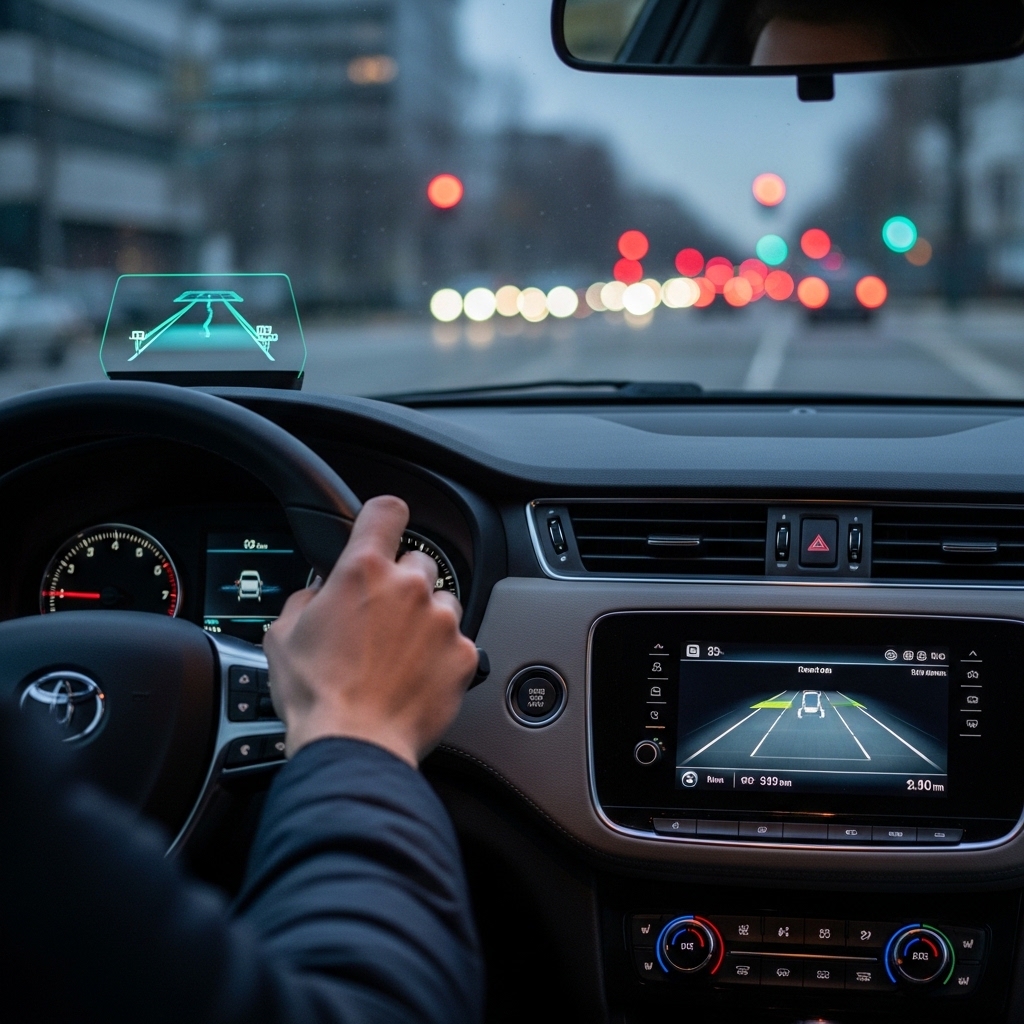
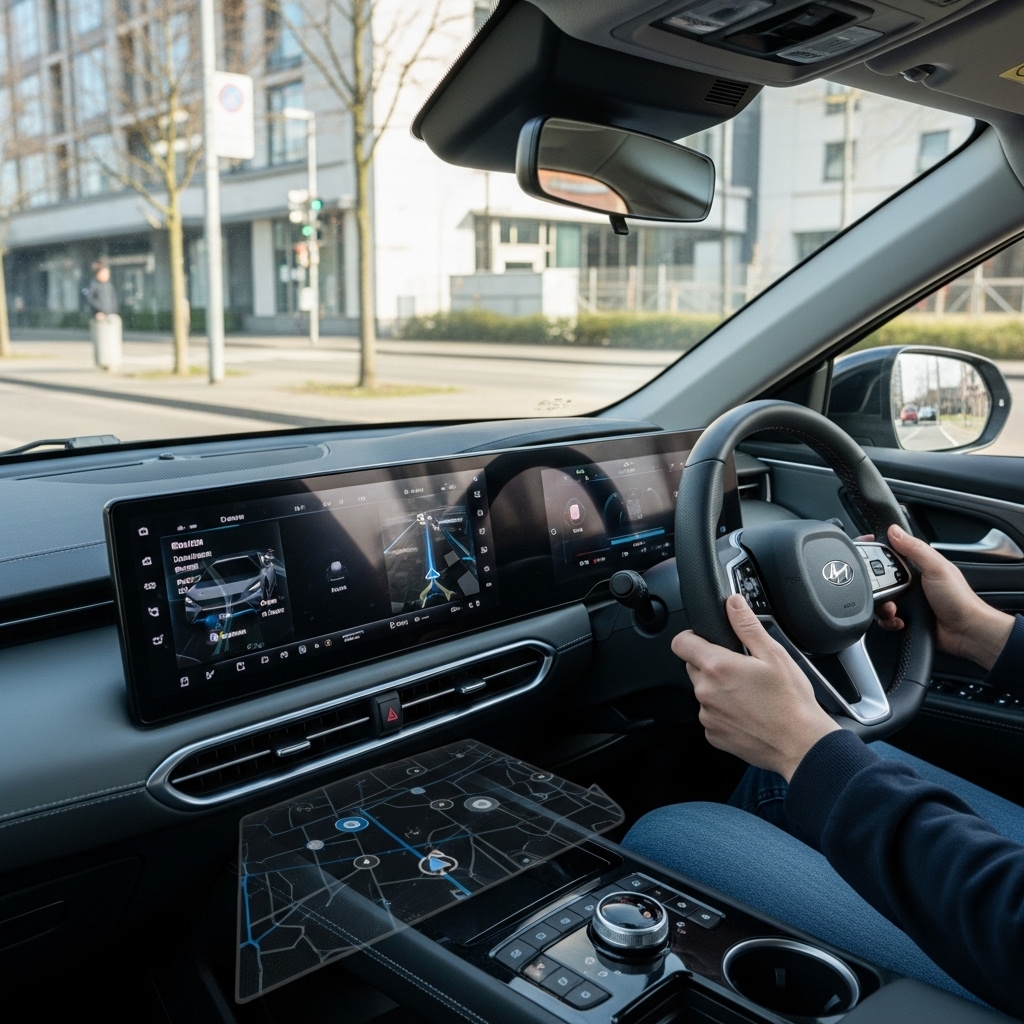
The cockpit of the future is beginning to look less like the cabin of a traditional car and more like a digital command center. Large displays stretch across dashboards. Head-up displays project speed, navigation and driver-assistance information toward the windshield. Augmented reality systems can place arrows, lane guidance and hazard warnings in the driver’s line of sight. Voice assistants, touchscreens and haptic controls are replacing physical buttons. In some concept cars, the steering wheel folds away. In others, it becomes a yoke, a flattened handle or something closer to a joystick.
The question is no longer whether the car interior will change. It already is changing. The harder question is whether these new interfaces will make driving safer and simpler — or merely more complicated at highway speed.
Automakers have strong reasons to rethink the cockpit. Electric vehicles have fewer mechanical constraints than combustion-engine cars. Software-defined vehicles can receive updates long after leaving the factory. Advanced driver-assistance systems require a new way to show what the car sees, what it plans to do and when the human must intervene. As vehicles become more automated, the relationship between driver and machine becomes less about constant mechanical input and more about supervision, trust and control.
Screens are the most visible sign of this shift. The center console has grown from a small radio display into a tablet-like interface controlling navigation, climate, entertainment, vehicle settings and charging. Some luxury models now offer passenger screens, rear entertainment displays and dashboard-wide digital surfaces. BMW has introduced its Panoramic Vision concept for production in its Neue Klasse generation, projecting information across the lower windshield area and pairing it with new display and control systems. The company says the technology is designed to put information in the driver’s field of view rather than bury it in the dashboard.
Augmented reality head-up displays go further. Instead of showing only speed or a turn arrow, they can visually align navigation cues with the road ahead. A driver approaching a complex junction might see guidance appear near the correct lane. A hazard warning might appear closer to the object that triggered it. In theory, this reduces the need to glance away from traffic. In practice, the system must be carefully designed. Too little information may be useless. Too much can clutter the windshield and distract the driver at the exact moment attention is most needed.
The promise of AR is therefore not spectacle, but timing and restraint. The best future cockpit may not be the one with the biggest screen, but the one that knows when not to speak. A car that constantly flashes graphics, warnings and menus risks turning the windshield into another phone. A car that quietly highlights the right information at the right moment could make driving less stressful.
The same tension applies to touchscreens. They allow automakers to update features, simplify manufacturing and create sleek interiors. But they also move basic controls into menus. Drivers once adjusted temperature or volume by feel. Now they may need to look down, tap a screen, open a submenu and confirm a setting. In a moving vehicle, that matters. A physical knob has a memory in the fingers. A flat glass surface usually does not.
That is why many manufacturers are now searching for a middle ground. The cockpit of the future may include fewer buttons than older cars, but not no buttons at all. Haptic feedback, voice commands, steering-wheel controls and dedicated switches for critical functions may coexist with large digital interfaces. Safety regulators and consumer groups have increasingly pushed back against designs that make essential operations too dependent on touchscreens.
The most radical change is not the screen. It is steer-by-wire.
In a traditional car, the steering wheel is mechanically connected to the front wheels through a steering column and related hardware. In a steer-by-wire system, the physical connection is replaced by sensors, actuators, motors and software. The driver turns a control, the system interprets the input, and electric actuators steer the wheels. This allows engineers to change steering ratio by speed, reduce vibration, improve packaging and potentially redesign the driver control itself.
Lexus has announced steer-by-wire for its new RZ electric SUV, describing the system as a way to provide more intuitive steering response and better maneuverability at low speeds. Supplier JTEKT said the Lexus application marks the first adoption of a steer-by-wire system without mechanical connections in Lexus vehicles, including a backup power supply designed for redundancy. These details matter because steering is not entertainment software. It is a safety-critical system that must work reliably even when components fail.
Steer-by-wire makes the joystick question technically plausible. If a wheel no longer needs a mechanical shaft, the control shape can change. A yoke can replace a circle. A small aircraft-style controller can replace a large wheel. In autonomous modes, the control could retract. In vehicles designed for people with disabilities, electronic steering could allow more flexible input devices. For designers, it opens space. For engineers, it opens a new world of software control.
But technical possibility is not the same as social acceptance. Drivers trust what they understand. A steering wheel is not only a device; it is a habit learned over years. Hands know how far to turn. Arms understand the motion. In an emergency, instinct matters. A joystick may work well in aircraft, gaming or industrial machinery, but a road vehicle operates in dense public space with pedestrians, cyclists, potholes, sudden braking and unpredictable human behavior.
The steering wheel also has built-in advantages. It allows fine control over a wide range of motion. It gives physical feedback. It supports hand-over-hand maneuvers, parking corrections and emergency swerves. A poorly designed yoke or joystick could make low-speed turns awkward or high-speed reactions too sensitive. Tesla’s controversial yoke steering showed how quickly drivers can resist a control that feels futuristic in a showroom but inconvenient in daily use.
For joystick-style controls to become mainstream, several conditions would need to be met. The system would require strong redundancy, clear regulation, intuitive feedback, driver training and broad public confidence. It would also need to prove that it is not merely different, but better. Automakers cannot ask millions of drivers to relearn steering for style alone.
Regulators are likely to be cautious. The U.S. National Highway Traffic Safety Administration has studied steer-by-wire as a safety-critical technology, focusing on functional safety requirements for systems that may include active steering and four-wheel steering. Such systems must address failures in sensors, actuators, power supplies and software logic. The more electronic the control becomes, the more important cybersecurity and fault tolerance become.
There is also a philosophical question about automation. If the car is increasingly able to steer, accelerate and brake by itself, should the human interface become simpler or more complex? One answer is that the cockpit should move toward supervision: clear displays, fewer distractions and unmistakable takeover requests. Another answer is that drivers should remain fully engaged, with controls that preserve skill and responsibility. The industry is still negotiating that balance.
The future cockpit will also reflect competition beyond driving itself. Automakers now see the vehicle interior as a digital living space. Drivers and passengers stream music, take calls, navigate charging stops, manage calendars and interact with AI assistants. In electric and automated vehicles, the cabin becomes a place to wait, work, rest or be entertained. That pushes companies to add screens and software services, sometimes faster than drivers can adapt.
This creates a risk that the cockpit becomes a battlefield for attention. The same car may ask the driver to monitor traffic, respond to lane-keeping systems, adjust climate menus, manage navigation, read warnings and ignore entertainment options. Good design will have to decide what belongs in the driver’s field of view, what belongs on a center display, what should be controlled by voice and what should remain a physical switch.
The best future cockpits may therefore feel less dramatic than today’s concept cars. They may use AR sparingly. They may keep essential controls tactile. They may make screens appear calmer, not brighter. They may use AI to reduce interaction rather than create more menus. A car that learns a driver’s preferred seat position, cabin temperature, route and charging behavior can remove small tasks from the day. But a car that guesses too aggressively can feel intrusive or unsafe.
Will the joystick replace the steering wheel? In specialized vehicles, perhaps. In autonomous shuttles, accessible mobility systems, industrial vehicles or experimental electric models, nontraditional controls may become more common. In mainstream passenger cars, the steering wheel is likely to survive much longer, though it may become smaller, flatter, smarter and electronically mediated. The circular wheel may lose its mechanical purity before it loses its cultural power.
The cockpit of the future is not a single object. It is a negotiation between technology, regulation, habit and trust. Screens will grow more intelligent. AR will move information closer to the road. Steer-by-wire will give designers new freedom. But the driver’s seat remains a place where mistakes have consequences. The future will not belong to the most futuristic interface. It will belong to the one that lets people understand, react and feel in control when it matters most.