For millions entering their 40s, 50s and early 60s, the most important workout may not be the hardest one, but the one they can repeat tomorrow.
Middle age often arrives quietly, not as a birthday but as a negotiation. The body still works, but it sends more detailed reports. Knees object to old habits. Sleep becomes more valuable. Recovery takes longer. Weight shifts to places it did not used to stay. A routine medical check may bring new words into daily life: cholesterol, blood pressure, blood sugar, bone density, inflammation, stress.
For many people, this is the decade when exercise stops being about appearance alone and becomes a question of maintenance, independence and health. Yet the fitness culture surrounding them often speaks in a different language: heavier weights, harder intervals, extreme transformations, punishing challenges and images of bodies performing at peak intensity. The result is a familiar cycle. People begin too hard, hurt something, stop for weeks, feel guilty and begin again.
A quieter message is gaining force among doctors, trainers and public-health experts: for middle-aged adults, the essential goal is not to train like an athlete. It is to move consistently enough to keep the heart, muscles, joints and mind functioning well. The workout does not have to be heroic. It has to be repeatable.
The World Health Organization recommends that adults do at least 150 to 300 minutes of moderate-intensity aerobic activity each week, or 75 to 150 minutes of vigorous activity, along with muscle-strengthening work involving major muscle groups on two or more days a week. The U.S. Centers for Disease Control and Prevention gives a similar message and emphasizes that the time can be broken into smaller pieces. In practical terms, that can mean brisk walking, cycling, swimming, dancing, gardening, body-weight exercises, resistance bands, light weights or climbing stairs.
This matters because middle age is not a cliff, but it is a transition. Muscle mass and strength tend to decline with age, especially when people are inactive. Joints may become less tolerant of sudden load. Cardiovascular risk can rise. Sedentary work can reduce mobility and weaken posture. Hormonal changes, caregiving responsibilities, long working hours and chronic stress can make structured exercise harder to protect. A training plan that ignores these realities may look ambitious, but it often fails.
Consistency works because the body adapts to repeated signals. A single difficult workout may create soreness and satisfaction, but it does not build lasting health by itself. Regular movement improves endurance, supports blood-pressure control, helps regulate blood sugar, preserves muscle, improves balance and can reduce the risk of many chronic conditions. It also protects something less visible but equally important: confidence in the body’s reliability.
For a 48-year-old office worker, the most useful routine may begin with a 30-minute walk five days a week and two short strength sessions. For a 55-year-old returning after years of inactivity, it may begin with 10-minute walks after meals, gentle mobility work and chair-assisted squats. For a former athlete in their early 60s, it may mean accepting that the body no longer benefits from proving itself every session. The common thread is not intensity. It is rhythm.
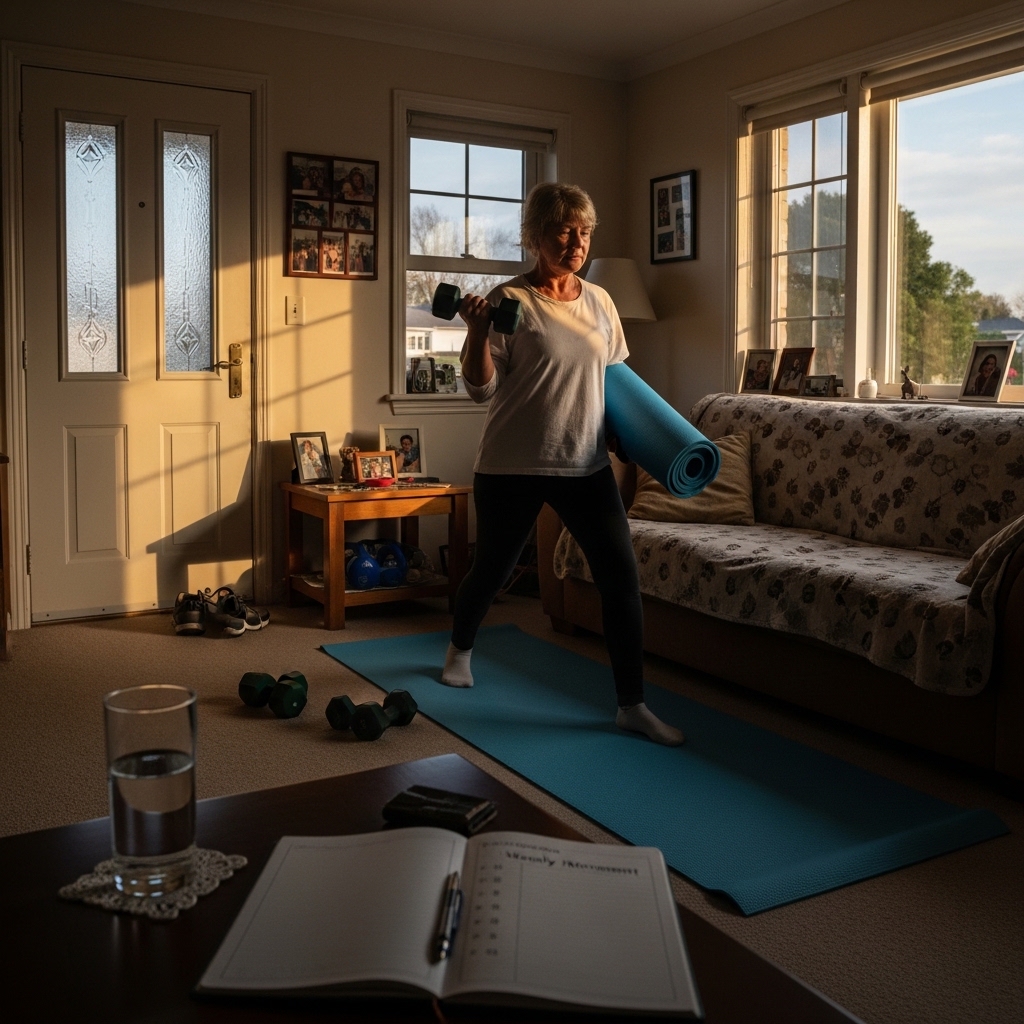
The phrase “not heavy, just regular” should not be misunderstood as a rejection of strength training. Resistance work is one of the most important forms of exercise in midlife. It helps preserve muscle, supports bones, improves balance and makes ordinary life easier: carrying groceries, lifting luggage, climbing stairs, getting up from the floor. But strength training does not have to mean maximal lifting or aggressive gym culture. For many adults, safe and effective strength work can involve controlled body-weight movements, machines, dumbbells, kettlebells, resistance bands or household objects.
The difference lies in purpose. In youth, training is often organized around performance or appearance. In middle age, the deeper objective becomes capacity. Can the body walk uphill without fear? Can it lift a child, move furniture, travel comfortably, recover from illness, sleep better and remain independent? The most successful routines are built around those questions.
Moderate exercise also has an emotional advantage. It is easier to integrate into life. A person who believes exercise requires a gym, a perfect outfit and an hour of free time may do nothing when life becomes busy. A person who sees exercise as a brisk walk, a short strength circuit or 15 minutes of stretching after work has more ways to continue. The lower the barrier, the stronger the habit.
Walking remains the most underestimated form of midlife training. It is accessible, inexpensive and adaptable. Done briskly, it raises heart rate without the joint impact of running. It can be done alone for reflection, with a friend for connection or after meals for routine. It may not look dramatic on social media, but it is one of the most sustainable health behaviors available to large numbers of people.
Still, walking alone may not be enough. A well-rounded middle-age routine usually needs four elements: aerobic activity, strength, mobility and balance. Aerobic work supports the heart and lungs. Strength preserves muscle and function. Mobility keeps joints moving through useful ranges. Balance reduces fall risk and supports coordination. None of these requires extreme effort. The challenge is not complexity. It is regularity.
The culture of “no pain, no gain” can be especially harmful at this stage of life. Some discomfort is normal when the body adapts. Sharp pain, persistent joint swelling, dizziness, chest pain or unusual shortness of breath is not a sign of discipline. It is a warning. People with existing medical conditions, long inactivity or new symptoms should seek professional guidance before starting a demanding routine. Sensible exercise is not timid. It is informed.
Technology has changed the way many middle-aged people train. Smartwatches count steps, estimate heart rate zones and remind users to stand. Apps offer short workouts, guided stretching and recovery scores. These tools can help create accountability. But they can also create anxiety or false precision. A watch may encourage movement, but it should not replace the body’s own signals. The goal is not to satisfy a device. It is to build a life in which movement is normal.
Food, sleep and stress shape the results as much as the workout itself. A middle-aged adult who trains intensely but sleeps poorly, eats irregularly and lives under constant stress may struggle to recover. This is another reason moderate consistency often beats occasional extremes. A routine that leaves a person energized is more likely to survive than one that requires days of recovery.
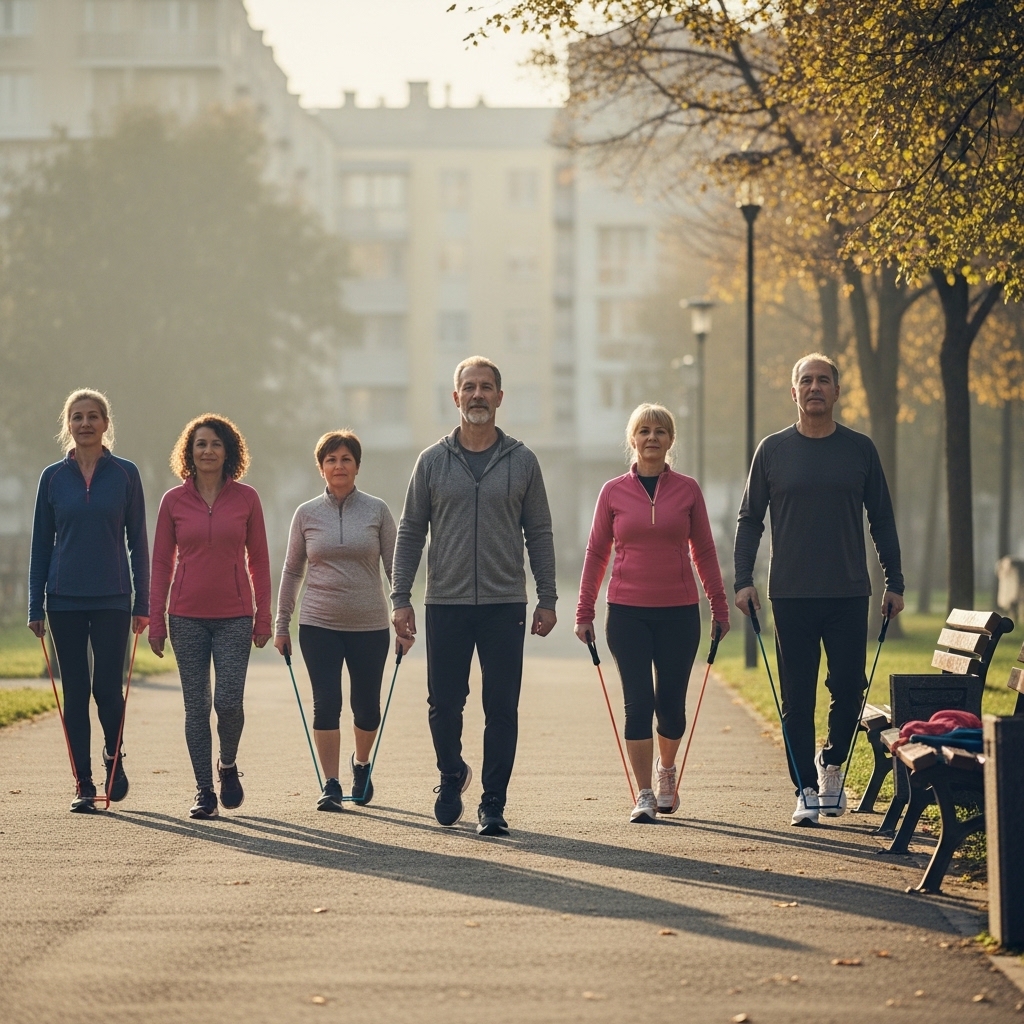
The social dimension also matters. People are more likely to continue when exercise is connected to identity and community rather than punishment. A walking group, weekend bike ride, swimming class, dance session or regular appointment with a friend can turn movement from an obligation into a relationship. In middle age, when loneliness and work pressure can narrow daily life, exercise can become a form of social protection.
There is also a psychological shift involved. Many people carry memories of what their bodies used to do. They compare today’s run with an old race time, today’s push-up with a younger version of strength, today’s waistline with a photograph from decades earlier. That comparison can become discouraging. A healthier approach is to measure progress against the life being lived now. Can you move more easily than last month? Do stairs feel less difficult? Are you sleeping better? Is pain reduced? Can you keep going without stopping?
The answer to middle-age fitness is not a miracle routine. It is a relationship with the body that becomes steadier, more patient and more practical. The body at 50 does not need to be punished for not being 25. It needs to be trained, respected and used.
In the end, the most important exercise plan may be the one that looks almost ordinary. A walk before work. Two strength sessions a week. Stretching while coffee brews. Taking stairs when possible. Cycling on Sunday. Resting when needed. Returning after interruption without shame.
Middle age does not demand that people become athletes. It asks them not to become still. The future of health may depend less on spectacular effort than on the quiet discipline of doing enough, often enough, for long enough.
“””