Ahead of its April 21, 2026 event, Framework signaled that its next phase may be about more than new hardware: it may be about turning Linux support into a defining feature of mainstream, repairable computing.
Framework, the computer maker that built its reputation on modularity, repairability and user ownership, has once again found a way to speak directly to one of the most committed corners of the PC world. In the run-up to its “Next Gen” launch event on April 21, the company offered only fragments of information, but the clues were hard to miss. The strongest of them pointed not simply to another laptop refresh, but to a broader embrace of Linux as a first-class platform.
That mattered because Framework occupies a rare position in personal computing. The company is small compared with the industry’s largest manufacturers, yet it has become disproportionately influential among buyers who care about upgradeable hardware, replacement parts, right-to-repair and software freedom. When Framework hints that Linux may move closer to the center of its product strategy, enthusiasts hear more than marketing. They hear the possibility that a mainstream-quality machine may finally treat Linux not as an afterthought, but as a design priority.
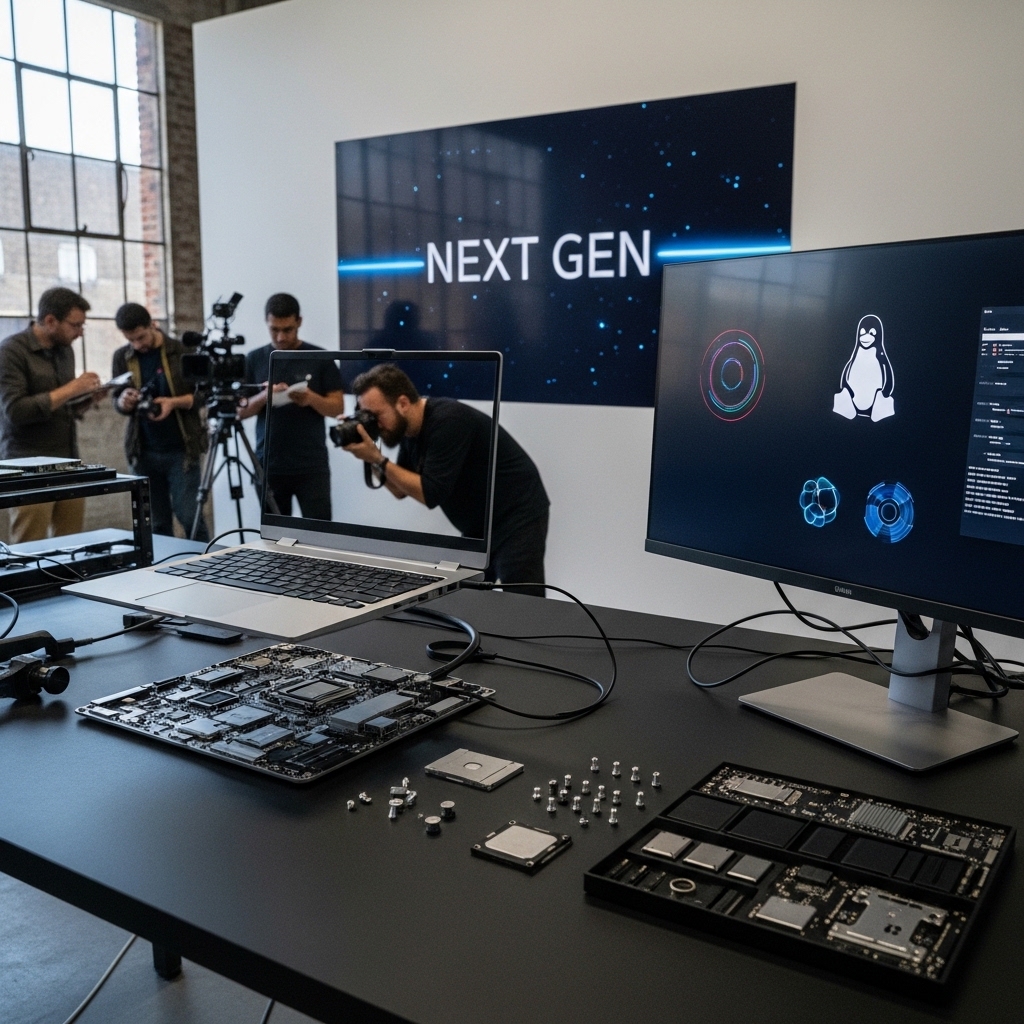
The most visible signal came through a teaser video that The Verge described as overflowing with Linux references. The video’s title, “Follow the white penguin,” was itself a conspicuous nod to Tux, the penguin associated with Linux. The imagery reportedly went further, invoking the long-running “I use Arch btw” joke and flashing logos for multiple Linux distributions, including Ubuntu, Fedora, Arch, CachyOS and Bazzite. It was the kind of teaser that left little ambiguity about the audience Framework wanted to excite.
Framework itself paired the event announcement with unusually ideological language. In its official launch post, the company framed the future of computing as a struggle over who controls the machine: the user, or an increasingly cloud-centered technology economy. It warned that memory, storage and silicon were being consumed in a “winner takes all” race toward an AI-first world, and then answered an implied question about its own future with a manifesto-like statement. Framework said it intended to keep building hardware for people who want to “own their means of computation,” choose their operating system, modify their hardware and keep data and processing local.
For Linux users, that message landed with force because it went beyond compatibility charts. It connected software choice to a larger philosophy of ownership. On conventional consumer laptops, Linux often works, but with caveats. Buyers may need to hunt for drivers, accept inconsistent sleep behavior, lose access to fingerprint readers or face a learning curve around firmware updates. Even when Linux can be installed, too many systems still feel as though they were designed for Windows first and merely tolerated everything else.
Framework has already tried to narrow that gap. On its official Linux compatibility page, the company and members of its community document support for a wide range of distributions. Ubuntu and Fedora are presented as officially supported on various Framework systems, while community-supported options include Arch Linux, Bazzite, NixOS and others. The company also points users toward setup guides and forum support, and has publicly highlighted work toward smoother firmware updating through Linux Vendor Firmware Service infrastructure. That may sound technical, but it matters in practice: it is the difference between saying Linux runs and showing that Linux can be maintained without friction.
The teaser therefore appeared significant not because Framework was suddenly discovering Linux, but because it seemed to suggest a step change in emphasis. The company was not merely listing supported distros on a webpage. It was using Linux symbolism as part of the central buildup to a major product launch. In the PC business, that is unusual. Most major laptop brands still treat Linux as a niche checkbox, reserved for enterprise workstations, developer editions or limited regional SKUs. Framework seemed ready to make Linux part of the product story itself.
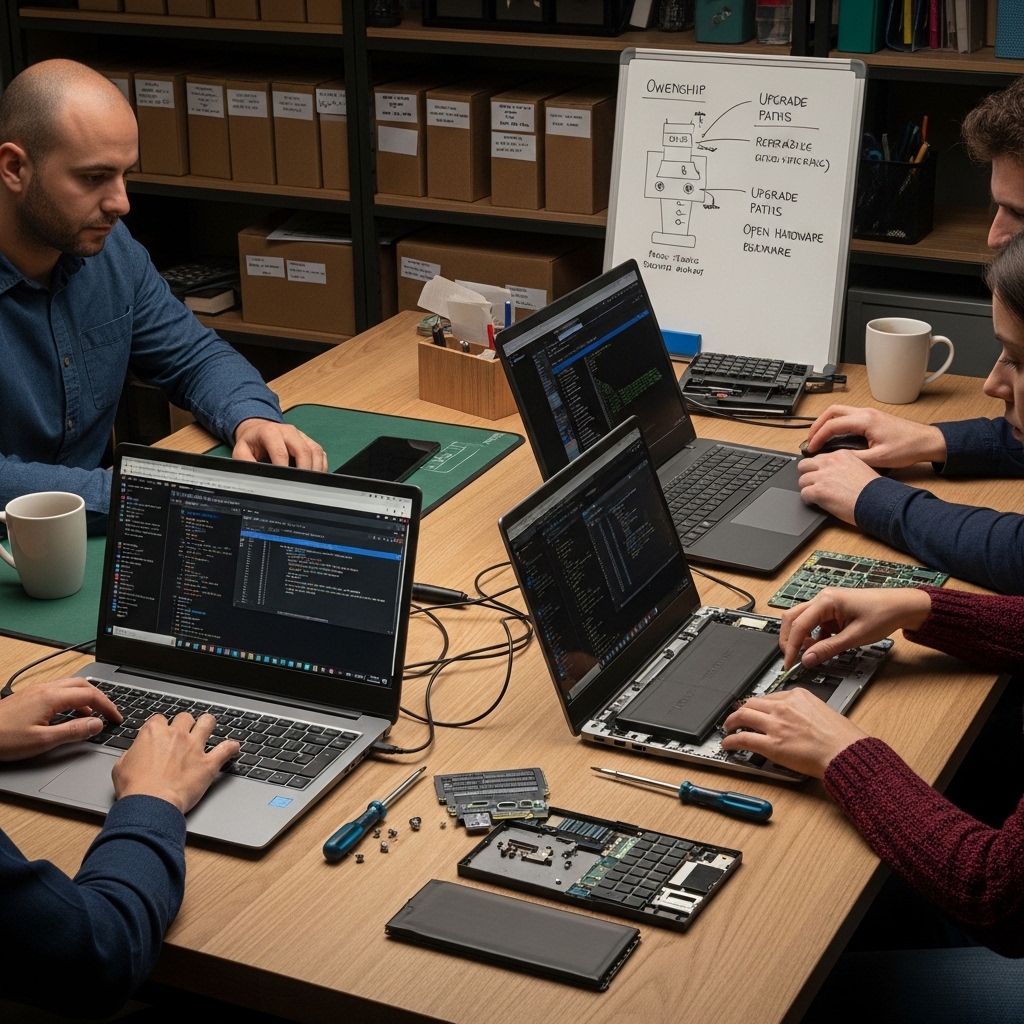
That would fit naturally with the company’s brand. Framework’s hardware strategy has always appealed to users who want transparency and control. Its laptops are designed to be opened, repaired and upgraded with ordinary tools. Expansion cards let owners swap ports as needed. Mainboards can be replaced rather than consigning a machine to obsolescence. Parts are sold individually, and documentation is central to the product experience. In that ecosystem, Linux is not just an operating system. It is a cultural match.
The appeal is especially strong for developers, tinkerers and power users who see operating system choice as inseparable from hardware freedom. For many of them, a machine is not fully theirs if the firmware is opaque, the storage is soldered, the battery is glued in or the software stack is effectively dictated by the vendor. Framework’s messaging before the event touched each of those anxieties. By linking modular design to local control of computation, the company aligned itself with a view of computing that has become more urgent as AI services and subscription software grow more pervasive.
The business logic may be just as compelling as the symbolism. Linux remains a minority desktop operating system, but it punches above its weight in technical communities. It dominates servers, underpins cloud infrastructure, powers embedded systems and is ubiquitous in software development workflows. A computer maker that can credibly promise a premium, repairable, Linux-friendly laptop may not win the mass market overnight, but it can win loyalty from influential buyers who shape purchasing decisions in startups, labs, classrooms and open-source communities.
That is why The Verge’s reporting resonated beyond Framework’s existing fan base. The publication noted that the teaser arrived alongside the company’s expansion into four new countries and against a backdrop of component shortages and rising costs. In other words, Framework was not teasing Linux during a moment of easy abundance. It was doing so while openly discussing pressure in the supply chain and the economics of modern computing. Rather than retreat to safer, broader messaging, it doubled down on a values-driven identity.
There is also a deeper industry tension at play. For years, the consumer PC market has oscillated between openness in theory and lock-in in practice. Manufacturers advertise customization, yet solder memory. They promise sustainability, yet make common repairs difficult. They tout performance, yet steer users toward ecosystems where services, accounts and cloud dependencies are increasingly unavoidable. Framework has positioned itself as a counterexample. A stronger Linux focus would sharpen that contrast.
None of this guaranteed that the April 21 event would deliver a Linux-only machine, nor that Framework was abandoning Windows. The company has supported Windows and benefited from buyers who want modular hardware regardless of operating system. But the teaser suggested something more realistic and perhaps more consequential: Linux may be moving from supported option to marquee selling point. That is a meaningful difference. A supported option says, “you can use Linux here.” A marquee selling point says, “we built this with your Linux use case in mind.”
For consumers who care about repairability and software autonomy, that distinction could make Framework one of the most important hardware companies to watch in 2026. Not because it is the biggest, but because it is testing whether a modern computer can be sold on principles that the broader market often sidelines: ownership, serviceability, local control and operating system freedom.
If Framework follows through, the impact may extend beyond one product cycle. Competitors may not copy its modular architecture overnight, but they will notice if a growing segment of buyers begins expecting better Linux support, better documentation and fewer barriers to repair. In that sense, the significance of the teaser was not only what it hinted Framework might launch. It was what it suggested the company believes the next era of personal computing should look like.
At a time when much of the industry is racing toward abstracted, cloud-mediated and tightly managed experiences, Framework’s message was pointedly concrete. Open the machine. Replace the part. Choose the operating system. Keep control close at hand. The white penguin in the teaser may have been a wink to Linux enthusiasts, but the larger argument was about something broader and increasingly rare in consumer technology: the idea that the computer should still belong to the person using it.”””