As generative technology moves from experiment to production tool, the entertainment industry is confronting a central question: who controls the future of creativity?
In a recording studio, a producer can now type a few words and hear a song emerge in seconds. In a film office, a director can generate a scene that once required a location scout, a camera crew, actors, lighting, props and weeks of planning. A singer’s voice can be imitated. A dead actor can be revived. A background can be built from text. A rough script can become a moving image before a budget meeting has even begun.
Artificial intelligence has entered music and film not as a distant theory, but as a working tool. It is being used to compose melodies, clean audio, separate vocals, generate storyboards, write drafts, dub dialogue, de-age actors, create visual effects and produce synthetic images that look increasingly realistic. For some artists, this is a new instrument — as disruptive as the synthesizer, sampling, digital editing or computer animation. For others, it is a machine aimed directly at their labor, identity and rights.
The debate is no longer about whether AI can create something that sounds like music or looks like cinema. It can. The harder question is whether it should be allowed to do so without the consent, payment or participation of the humans whose work made the technology possible.
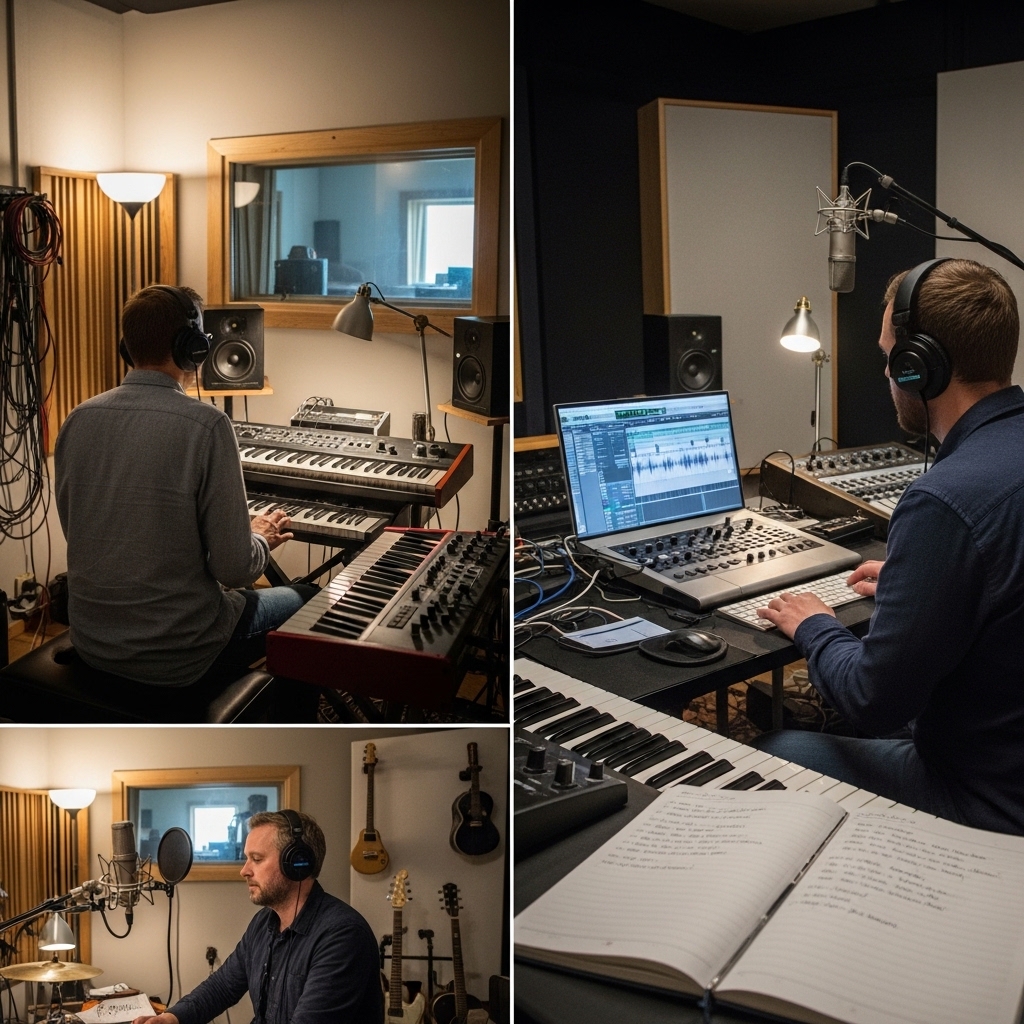
Music has become one of the sharpest battlegrounds. AI music platforms can generate full songs with vocals, lyrics and instrumental arrangements from short prompts. Some users treat them as toys. Others use them as production tools. Streaming platforms are now facing a flood of synthetic tracks. Deezer said in April 2026 that AI-generated songs accounted for roughly 44% of daily uploads to its service, though they represented only a small share of total listening. The company has moved to label AI-generated music and keep it out of recommendation systems.
For human musicians, the concern is not simply that bad songs will crowd the market. The deeper fear is substitution. If a company can request “an emotional pop ballad in the style of a famous singer” or “a cinematic orchestral cue like a blockbuster trailer” and receive usable music instantly, the value of session musicians, composers, vocalists and independent creators may be pushed downward. Even when AI does not replace an artist entirely, it can change bargaining power.
Record labels have already gone to court. In 2024, major music companies sued AI music firms Suno and Udio, alleging that their systems were trained on copyrighted sound recordings without authorization. The lawsuits, backed by major rights holders including Sony Music, Universal Music Group and Warner Records, are being closely watched because they could help define whether AI training on protected works requires licenses and compensation.
AI companies often argue that training systems on large bodies of existing work is part of technological learning and may be protected under legal doctrines such as fair use, depending on jurisdiction. Artists and rights holders counter that there is a difference between human influence and machine-scale extraction. A young guitarist may learn by listening to thousands of songs, but that musician does not copy millions of recordings into a commercial model capable of producing competing tracks on demand.
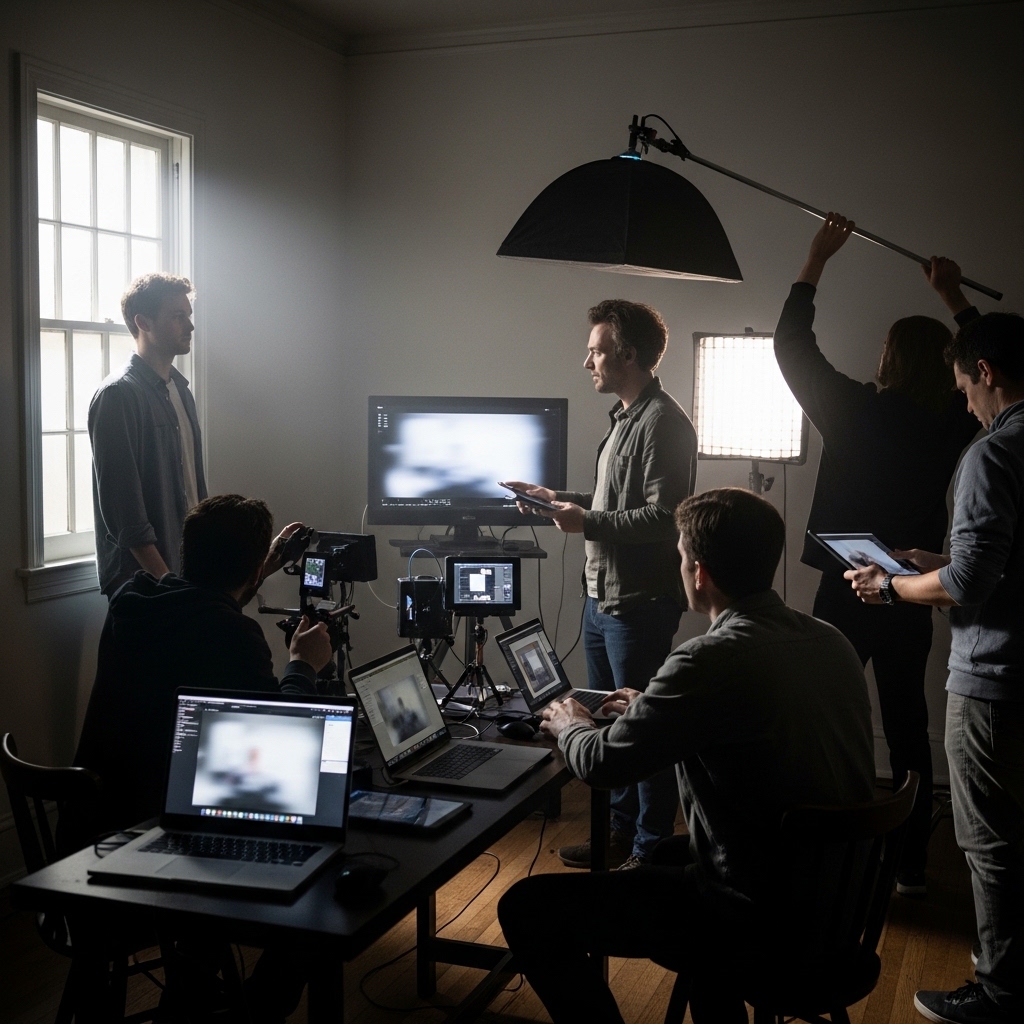
The film industry faces similar tensions, but with even more visible stakes. AI video tools can generate shots, characters and environments that previously required large teams. Independent filmmakers may use them to visualize ideas that were once impossible on small budgets. A director without studio backing can create concept footage, pitch materials or experimental sequences at a fraction of traditional cost. For creators outside Hollywood, this is a genuine opening.
At the same time, the same tools threaten many jobs that make film production possible: illustrators, storyboard artists, background actors, editors, translators, voice actors, visual effects workers and production designers. Studios under pressure to cut costs may see AI not only as a creative assistant, but as a labor-saving system. That possibility helped make artificial intelligence one of the defining issues in recent entertainment labor disputes.
Actors have been especially concerned about digital replicas. A performer’s face, body movement and voice can now be scanned, stored and reused. The threat is not only that a star might be copied without permission. It is also that background actors or lesser-known performers could be scanned for one day of work and then digitally inserted into future scenes without meaningful control. SAG-AFTRA’s agreement with major studios included protections requiring consent and compensation for certain uses of digital replicas, but many artists remain worried about loopholes and enforcement.
Voice actors and singers face a parallel challenge. A voice is not just a sound. It is identity, training, emotion, biography and livelihood. AI voice cloning can help with dubbing, accessibility and post-production, but it can also produce unauthorized performances. A singer may find a synthetic version of their voice performing lyrics they never approved. A voice actor may compete against a model trained to imitate them. In this environment, consent becomes the dividing line between innovation and exploitation.
Supporters of AI argue that every major artistic technology has been greeted with fear. The camera was once accused of threatening painting. Recorded music changed live performance. Synthesizers alarmed traditional musicians. Sampling provoked lawsuits before becoming central to hip-hop and electronic music. Digital editing transformed film. Computer-generated imagery changed what audiences expected from cinema. From this perspective, AI is another tool that artists will eventually absorb.
There is truth in that argument. Many musicians are already using AI to generate ideas, test arrangements, restore old recordings or experiment with sound. Filmmakers are using it to previsualize scenes, accelerate visual effects, translate dialogue and assist with color, editing and post-production. Used transparently and under human direction, AI can expand the creative process rather than replace it. A composer might use AI to explore variations, then reshape them into something personal. A filmmaker might use AI to imagine a world before building it with actors and crews.
But AI differs from earlier tools in one crucial way: it can imitate the surface of human creativity at enormous scale. A synthesizer did not pretend to be a specific living singer unless someone played it that way. A camera did not learn from the entire history of cinema and then generate new shots in the style of thousands of directors. Generative AI absorbs patterns from existing work and produces outputs that can feel familiar, polished and market-ready. That power makes it useful. It also makes it disruptive.
The audience may become the final judge, but audience behavior is complicated. Some viewers and listeners may reject AI-generated art if they see it as fake, cheap or unethical. Others may not care if the song is catchy or the film is entertaining. Younger audiences already move through a media world full of filters, avatars, synthetic voices and algorithmic recommendations. For them, the boundary between human-made and machine-assisted may be less emotionally fixed.
Still, cultural value has never depended only on technical quality. People care about who made a song, why it was written and what life stands behind it. A breakup anthem matters partly because listeners believe someone felt it. A film performance moves audiences because an actor appears to reveal something human under pressure. If AI-generated entertainment becomes abundant, human authorship may become more valuable, not less, especially for audiences seeking authenticity.
The industry is now searching for rules. Several principles are emerging. The first is consent: artists should have control over the use of their voice, face, performance and style. The second is compensation: if copyrighted works are used to train commercial systems, creators and rights holders argue they should share in the value created. The third is transparency: audiences, distributors and collaborators should know when AI has been materially used. The fourth is accountability: when AI output infringes rights, spreads deception or replaces contracted labor, someone must be responsible.
These principles are easier to state than to enforce. AI models are complex, training data may be opaque, and creative influence is hard to measure. A song can resemble a genre without copying a track. A generated scene can evoke a director without violating a specific frame. Copyright law was built around human authorship and identifiable works, not statistical models trained on planetary-scale cultural archives.
The danger is that the legal system may move more slowly than the market. By the time courts decide key cases, AI-generated content may already be deeply embedded in entertainment production. That is why unions, labels, studios, platforms and governments are trying to negotiate standards now. The outcome will shape not only who gets paid, but what kinds of art are made.
For independent artists, the situation is mixed. AI can lower barriers to entry, but it can also flood the internet with cheap competition. A singer-songwriter can produce a demo without hiring a full band. A young filmmaker can visualize a science-fiction world from a laptop. Yet the same tools can generate thousands of songs, trailers and images that compete for attention in already crowded markets. Discovery, not production, may become the hardest problem.
For major studios and labels, AI offers efficiency but also reputational risk. A company that uses AI to cut workers or imitate artists without permission may face backlash. A company that uses AI responsibly — with licensed data, clear contracts and human creative leadership — may gain speed without destroying trust. The difference will matter.
The future of AI in music and film is unlikely to be a simple victory for machines or humans. It will be a negotiation. Some jobs will change. Some may disappear. New roles will emerge: AI music supervisor, synthetic performance rights manager, prompt-based visual designer, model-auditing producer. The creative process will become more technical, and technical production will become more creative.
What should not change is the recognition that art is more than output. It is labor, memory, risk, culture and human intention. AI can generate a song, but it does not know what it means to sing for rent money in an empty bar. It can generate a face, but it does not know stage fright, grief, aging or applause. It can imitate a film style, but it has not lived through the history that gave that style its urgency.
AI may become one of the most powerful creative tools ever built. Whether it becomes a renaissance or a threat depends on the rules written around it, the ethics of those who deploy it and the willingness of audiences to value human work. The question is not whether machines can make entertainment. They already can. The question is whether the entertainment industry can use them without making artists invisible.