
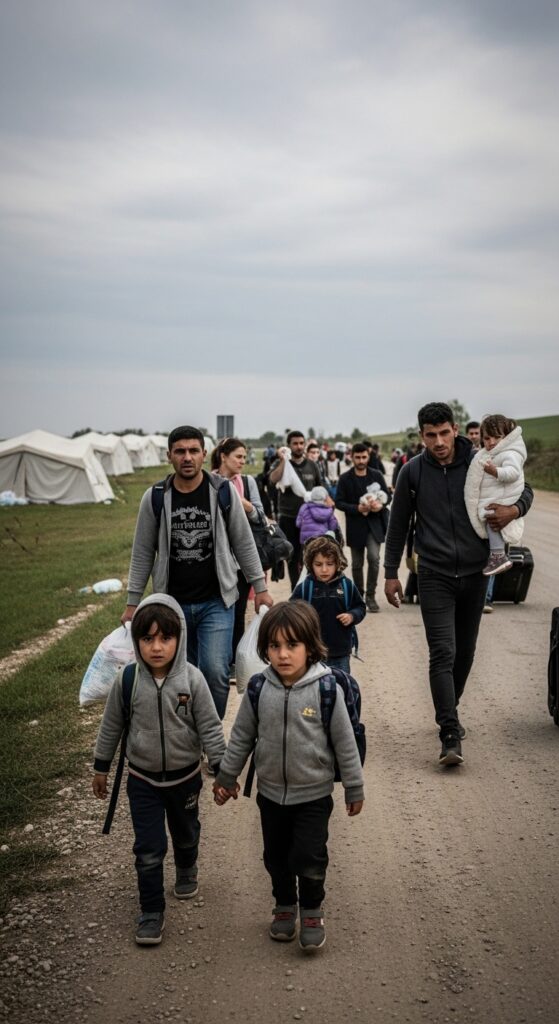
As conflict, climate pressure and economic fragility uproot communities, refugee protection is becoming a long-term test for governments.
Displacement is no longer a temporary emergency at the edge of world politics. It has become one of its central facts. Millions of people are living away from their homes because of war, persecution, insecurity, climate-related disasters or economic collapse.
The UN refugee agency’s Global Appeal 2026 describes the need to protect, assist and empower large numbers of forcibly displaced and stateless people while seeking durable solutions. Those solutions are difficult because many conflicts continue for years and safe return is often impossible.
A refugee camp may begin as an emergency shelter, but many become long-term settlements. Children grow up there. Families build routines. Informal economies emerge. Yet legal uncertainty remains. People may be unable to work formally, travel freely or plan a future.
Host countries carry heavy responsibilities. They provide land, security, schools, health care and sometimes legal protection. Many host countries are themselves under economic stress. Without international support, public services can become strained and local resentment can rise.
The politics of migration is becoming more polarized. Some governments emphasize border control and deterrence. Others focus on humanitarian obligations and labor needs. Public opinion is often divided between compassion and fear. Misinformation can make debate more volatile.
Climate change is adding complexity. International refugee law was built mainly around persecution and conflict, not slow-moving environmental loss. Yet drought, sea-level rise, storms and heat can make places harder to live in. Climate pressure often interacts with poverty and instability, making legal categories harder to apply.
Urban displacement is growing. Many refugees and internally displaced people do not live in camps but in cities, where they rent rooms, seek informal work and depend on local clinics and schools. Urban displacement is less visible than camps but can be just as precarious.
Children face particular risk. Displacement can interrupt education for years, increasing the chance of child labor, early marriage or exploitation. Schools provide more than learning; they provide stability and protection. Keeping children in education is one of the most important investments in the future of displaced communities.
Women and girls often face heightened danger during displacement, including violence, trafficking and lack of reproductive health care. Protection systems must be designed with their needs at the center, not treated as an afterthought.
Durable solutions include voluntary return, local integration and resettlement to third countries. All are politically difficult. Return requires safety and dignity. Integration requires legal rights and public support. Resettlement reaches only a small fraction of those in need.
The displacement crisis is also a test of international responsibility-sharing. Countries near conflicts often host the most people, while wealthier countries debate much smaller numbers of arrivals. A fair system would distribute support more predictably and reduce pressure on frontline states.
Displacement will remain a defining issue unless conflicts end, climate risks are reduced and development becomes more inclusive. Until then, millions will live between survival and uncertainty. The question is whether the world treats them as temporary burdens or as human beings with futures.”””
