
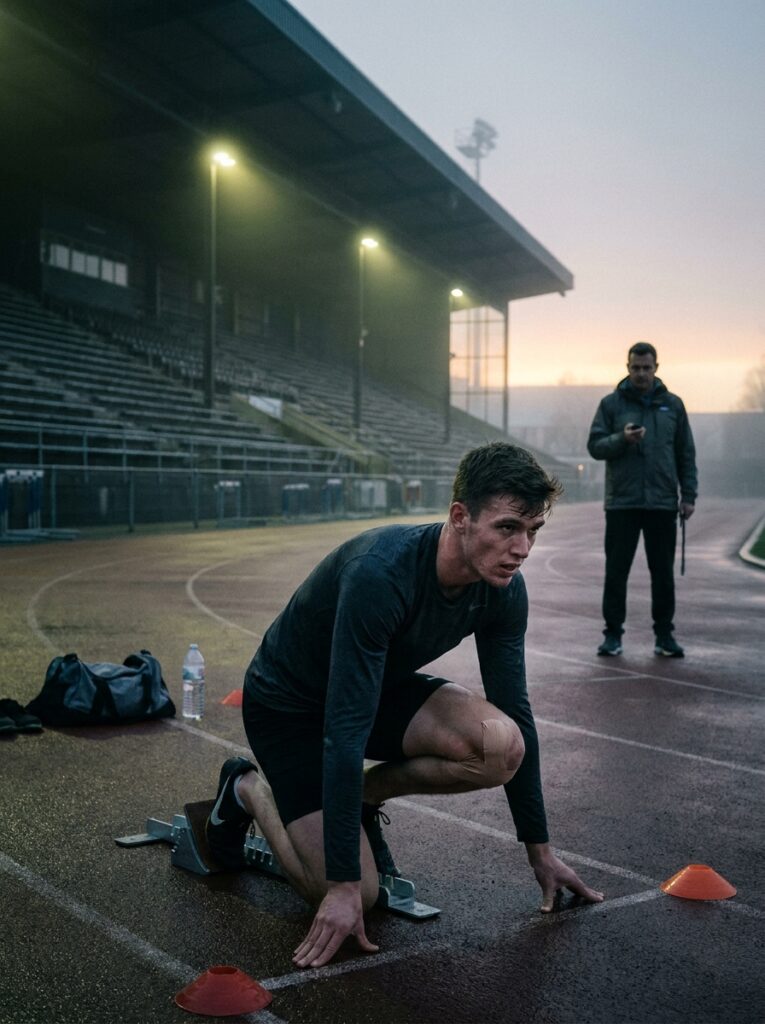
Behind medals, records and public applause lies a demanding world of training, injury, discipline and sacrifice that shapes the lives of athletes long before victory is seen.
The image of an athlete at the moment of success is simple and powerful. A runner crosses the finish line. A footballer lifts a trophy. A gymnast lands cleanly. A swimmer looks up at the clock and sees a record. Cameras capture tears, flags, cheers and the emotion of achievement. What the public rarely sees is the long, repetitive and often lonely process behind those seconds of glory.
Athletic success is built on discipline that begins when no audience is present. Training sessions happen early in the morning, late in the evening and through seasons when motivation fades. The athlete repeats movements thousands of times, not because repetition is glamorous, but because precision is earned through routine. A shot, a sprint start, a serve, a turn, a jump or a defensive movement must become reliable under pressure. Talent may open the door, but discipline keeps the athlete inside the room.
The training life is usually more complex than outsiders imagine. It includes strength work, endurance conditioning, technical drills, tactical preparation, nutrition planning, video analysis, recovery sessions, medical checks and psychological preparation. Elite athletes do not simply “play more.” They measure load, monitor sleep, adjust diet, manage fatigue and study opponents. Even young athletes increasingly live in systems where performance is tracked by coaches, trainers, scouts and sometimes sponsors or schools.
This structure can create excellence, but it also creates pressure. Athletes are often judged by results that may depend on tiny margins: a hundredth of a second, a referee’s decision, a missed penalty, a bad landing or one injury at the wrong time. Years of preparation can appear to succeed or fail in a single event. That reality demands unusual mental strength. It also exposes athletes to anxiety, fear of failure and the burden of expectations from coaches, families, fans and themselves.
Injuries are one of the hardest truths of sport. They are not interruptions to an athlete’s career; they are often part of it. Sprains, fractures, torn ligaments, stress injuries, concussions and muscle damage can change an entire season. Some injuries heal quickly. Others require surgery, months of rehabilitation or permanent adjustments in technique. The physical pain is only one part of the experience. An injured athlete may also face isolation, frustration, fear of being replaced and uncertainty about whether the body will ever feel the same again.
The psychological impact of injury is often underestimated. For many athletes, sport is not just an activity. It is identity. When training stops, the athlete may lose daily structure, social connection and a sense of purpose. Watching teammates compete while sitting in rehabilitation can be emotionally difficult. Returning too soon carries risk, but waiting can feel unbearable. A successful recovery requires more than a healed joint or muscle. It requires confidence, patience and trust in the body.
Overtraining is another hidden danger. The culture of sport often praises pushing harder, doing extra work and refusing to quit. These values can be useful, but they can become harmful when rest is treated as weakness. The body adapts during recovery, not only during effort. Without adequate rest, athletes may experience fatigue, declining performance, poor sleep, mood changes, illness or repeated injury. The best training programs are not the harshest. They are the ones that balance stress and recovery intelligently.
Discipline also extends beyond the field. Athletes often make daily choices that separate them from ordinary routines. They may avoid late nights, limit social events, follow strict meal plans and arrange their lives around practice and competition. Students who compete must manage homework, exams and travel. Professional athletes may spend long periods away from family. Young athletes may miss school events, birthdays, holidays or simple moments with friends. These sacrifices are rarely visible when the public sees only the final performance.
Family sacrifice is also part of the story. Parents may spend years driving children to training, paying for equipment, reorganizing schedules and absorbing emotional highs and lows. In less wealthy communities, the cost of sport can become a barrier. Travel teams, coaching, medical care, shoes, uniforms and tournament fees can make athletic dreams expensive. Success is often described as an individual achievement, but behind many athletes is a network of people who gave time, money and emotional support.
The pressure can be especially intense for young athletes. Early success may bring attention from schools, clubs, sponsors or national programs. That attention can motivate, but it can also narrow a young person’s identity too soon. When children are treated mainly as future champions, they may feel they cannot disappoint adults. A healthy sports environment allows young athletes to develop ambition without losing balance, education or joy. Winning matters, but it should not come at the cost of long-term health.
For professional athletes, public judgment adds another layer. Mistakes are replayed, criticized and shared online. Social media gives fans direct access to athletes, but it also exposes athletes to abuse, rumors and constant comparison. A poor performance can become a trending topic within minutes. Even success can create pressure, because one victory raises expectations for the next. The athlete is expected to be strong, composed and available, even when privately exhausted.
Mental health has become a central issue in modern sport because athletes are increasingly willing to speak about anxiety, depression, burnout and emotional strain. This openness has challenged the old idea that toughness means silence. True resilience is not the absence of struggle. It is the ability to seek support, recover and continue in a sustainable way. Coaches, teams and governing bodies are beginning to recognize that psychological care is not separate from performance. It is part of performance.
The role of coaches is crucial. A good coach can help an athlete grow through discipline, feedback and belief. A poor coaching environment can damage confidence, encourage unsafe training and make athletes afraid to report pain. The best coaches understand that athletes are not machines. They need challenge, but also communication, respect and recovery. They need standards, but also protection from the belief that their worth depends only on results.
Modern sports science has made training more informed, but it has not removed uncertainty. Data can track workload, speed, heart rate and recovery, but it cannot fully capture courage, fear, family stress or personal motivation. Technology can help prevent injury and improve preparation, but it must be used with human judgment. An athlete is more than a performance profile.
The public also has a responsibility to see athletes more fully. Spectators often celebrate sacrifice when it produces victory, but they may ignore the cost when athletes step back, rest or speak about mental health. A more mature sports culture would understand that protecting health is not a lack of ambition. It is what allows careers to last and lives to remain whole after competition ends.
Athletic success will always require effort, discipline and sacrifice. That is part of what makes sport meaningful. But the best version of sport does not ask athletes to destroy themselves for applause. It asks them to pursue excellence while respecting the body and mind that make excellence possible.
Behind every medal is a story of repetition, pain, recovery, doubt and commitment. Behind every champion is a person who has given up ordinary comforts for an extraordinary goal. The glory is real, but so is the cost. To understand athletes honestly, society must look beyond the podium and recognize the unseen work that makes the moment possible.
“””
