
For many young people, sustainability is no longer a slogan but a daily practice shaped by climate anxiety, financial pressure, digital culture and a search for meaning.
Green living used to be presented as a niche lifestyle: cloth bags, organic food, solar panels and a few committed environmental activists. Today, it has moved closer to the center of youth culture. For many young people, especially Gen Z and younger millennials, living green is not only about protecting nature. It is also about identity, affordability, mental health, personal ethics and distrust of systems they believe have failed to respond quickly enough to the climate crisis.
The trend is visible in small daily choices. Young consumers bring reusable bottles to school or work, buy secondhand clothes, repair old devices, choose public transportation, reduce food waste, join community cleanups, plant trees, avoid single-use plastics and question the environmental claims of brands. These actions may appear modest when measured individually, but together they show a generational shift in how young people define a good life. For them, convenience is still important, but it is increasingly being weighed against waste.
Climate change is the emotional background of this movement. Young people have grown up with images of wildfires, floods, heat waves, plastic pollution and disappearing wildlife. They do not see environmental damage as a distant scientific issue. They see it as part of the future they are expected to inherit. This sense of urgency gives green living a moral dimension. A reusable cup is not just a cup. A secondhand jacket is not just a bargain. A bicycle ride is not only transportation. Each can become a small expression of responsibility.
Social media has accelerated the trend. Platforms that once promoted fast fashion hauls and luxury consumption are now also filled with thrift flips, low-waste routines, plant-based recipes, refill-store tours, minimalist room makeovers and “no-buy” challenges. Young people learn from each other, not only from governments or environmental organizations. A short video can turn composting, mending clothes or carrying a lunchbox into something practical, stylish and shareable.
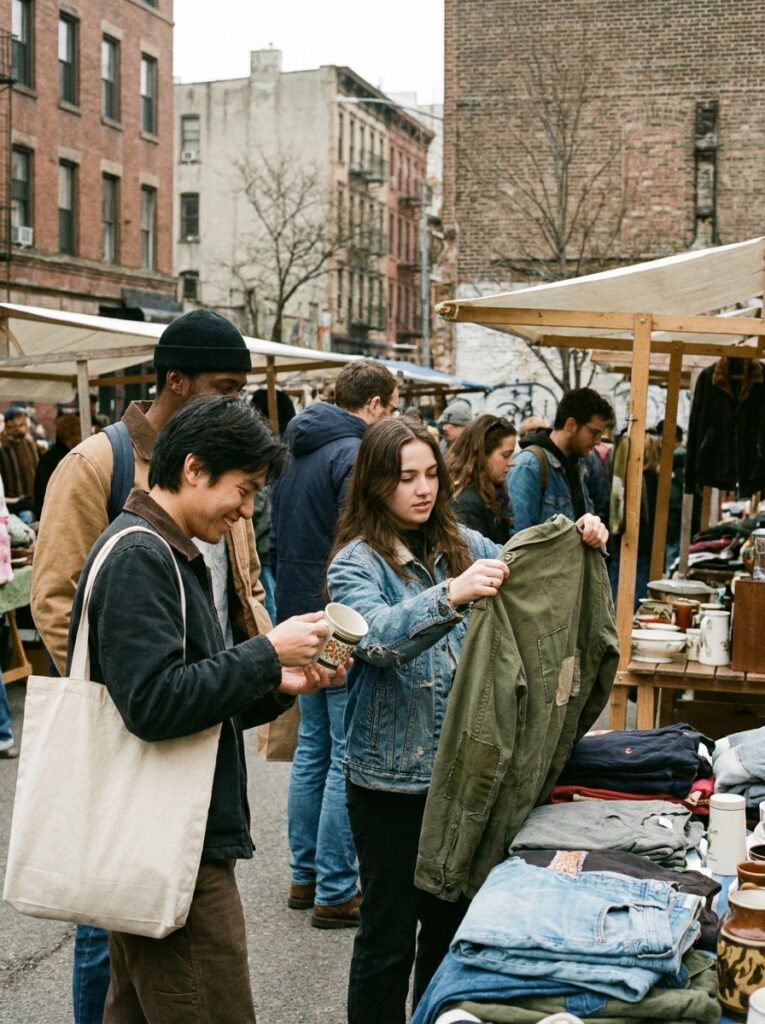
This digital visibility matters because sustainability often spreads through imitation. When green habits look difficult, expensive or joyless, few people adopt them. When they look creative and socially rewarding, they become easier to copy. Thrift shopping is a clear example. For many young people, buying used clothing is not only an environmental statement. It is also a way to find unique style, save money and reject the uniformity of mass-produced fashion. The appeal is cultural as much as ecological.
The rise of secondhand consumption also reflects economic reality. Many young adults face high housing costs, uncertain employment, student debt or pressure from inflation. Green living, when practiced realistically, can reduce expenses. Repairing, borrowing, sharing, reselling and buying used items can help stretch limited income. This is one reason the movement has broadened beyond traditional environmental circles. Sustainability becomes more persuasive when it is not presented as a luxury.
Food is another major area of change. More young people are experimenting with plant-forward diets, reducing meat consumption, supporting local farms or paying attention to packaging. Not everyone becomes vegetarian or vegan, and the trend differs widely by country, income and culture. But the broader direction is clear: food choices are increasingly linked to climate, animal welfare, health and social responsibility. A meal is no longer only about taste or price. It is also a statement about values.
Transportation choices show the same pattern. In dense cities, young people are more likely to embrace walking, cycling, public transit and ride-sharing when these options are safe and affordable. Some are less attached to car ownership than previous generations, especially where digital services make mobility flexible. But this shift depends heavily on infrastructure. A young person cannot choose a greener commute if buses are unreliable, bike lanes are dangerous or housing is too far from jobs.
This is why the green living movement cannot be understood only as personal discipline. Young people may want to live sustainably, but they still operate within systems built around consumption, fossil fuels and convenience. A student may carry a reusable bottle but still live in a city with poor recycling. A worker may want to avoid fast fashion but need affordable clothing. A family may want to buy local food but face higher prices. Individual action matters, but it is strongest when supported by policy, business and infrastructure.
Young people are increasingly aware of that tension. Many no longer believe that small lifestyle changes are enough by themselves. They are asking companies to reduce waste, governments to invest in clean energy and schools to teach climate skills. They want sustainability to be built into the choices available to them, not treated as an optional burden. This is one reason green living is expanding into activism, entrepreneurship and career planning.
Green skills are becoming part of youth ambition. Students are exploring careers in renewable energy, environmental design, circular economy, sustainable agriculture, climate finance, electric mobility and conservation. For some, green living begins at home but does not end there. It becomes a professional direction. The idea of success is changing from simply earning more to contributing to something larger. Many young people want jobs that offer both income and impact.
At the same time, the movement faces contradictions. The same generation that criticizes overconsumption may still buy from ultra-fast-fashion platforms. The same users who post about sustainability may upgrade phones frequently. The same consumers who demand ethical products may be unable or unwilling to pay more for them. These contradictions do not necessarily make the movement false. They show how difficult it is to live sustainably inside economies designed to encourage constant buying.
Greenwashing has made young people more skeptical. Brands increasingly use words such as “eco,” “natural,” “conscious” and “sustainable,” but not all claims are meaningful. Younger consumers often respond by demanding transparency: Where was the product made? Who made it? What materials were used? Can it be repaired? Is the packaging recyclable? Is the company changing its operations or only its advertising? This skepticism is becoming a form of consumer power.
The psychological side of green living is also important. Climate anxiety can motivate action, but it can also lead to exhaustion. Some young people feel that their personal sacrifices are too small compared with the scale of the crisis. Others feel judged for not doing enough. A healthy green movement must avoid turning sustainability into a competition for moral purity. The goal is not perfection. It is progress that can be sustained over time.
Community helps. Youth-led environmental clubs, urban gardens, repair workshops, campus recycling drives and neighborhood cleanups turn private concern into collective action. They also make green living less lonely. When people act together, the burden feels lighter and the results become more visible. A cleaned beach, a shared garden or a successful clothing swap gives young people proof that change can be practical, not only symbolic.
Cultural change is often slow until it is suddenly normal. Not long ago, carrying a reusable bottle, refusing plastic straws or buying secondhand clothes might have seemed unusual in some places. Today, these habits are part of mainstream youth identity in many urban communities. The same could happen with repair culture, low-waste shopping, greener diets and public transit if they become convenient, affordable and socially accepted.
The green living trend among young people is therefore not a passing aesthetic. It is a response to environmental risk, economic pressure and a desire for agency. Young people know they did not create the climate crisis, but many are unwilling to wait passively for older institutions to solve it. Through habits, purchases, careers and public pressure, they are reshaping what responsibility looks like in daily life.
Their choices will not save the planet alone. But they are changing expectations. A greener future will require laws, technology, investment and international cooperation. It will also require millions of ordinary decisions repeated every day. In that space between personal habit and public demand, young people are building a new definition of modern living: less wasteful, more conscious and increasingly unwilling to separate lifestyle from the fate of the planet.”””
