A new generation of family vehicles is transforming daily mobility, combining advanced safety systems, hybrid and electric powertrains, connected cabins and software-driven convenience.
The family car used to be defined by space. Parents wanted enough seats for children, enough cargo room for school bags and groceries, and enough comfort to survive long weekend drives. That basic mission has not disappeared. But the modern family vehicle is being rebuilt around a larger promise: protect passengers better, use less fuel, reduce stress and turn the cabin into a connected living space on wheels.
Across markets, the family car is no longer a single shape. It can be a compact crossover, a three-row SUV, a minivan, a hybrid sedan, an electric multi-purpose vehicle or a plug-in hybrid designed for commuting during the week and highway travel on weekends. What unites the new generation is not body style, but technology. Safety sensors, electrified drivetrains, digital dashboards, over-the-air updates and driver-assistance features are becoming central to what families expect when they shop for a vehicle.
Safety remains the strongest selling point. For families, it is not an abstract specification. It is the difference between a close call and a crash, between panic and control, between vulnerability and confidence. The most important change is the expansion of advanced driver-assistance systems that were once limited to luxury vehicles. Automatic emergency braking, forward collision warning, lane-keeping support, blind-spot monitoring, rear cross-traffic alerts, adaptive cruise control and pedestrian detection are now widely available across mainstream models.
These systems do not make cars self-driving, and manufacturers are careful to describe them as assistance rather than replacement for human attention. But they are changing the safety baseline. Automatic emergency braking can help reduce or avoid certain frontal crashes by applying the brakes if the driver reacts too late. Blind-spot monitoring can help prevent dangerous lane changes. Rear automatic braking and rear cross-traffic alerts can be especially useful for parents backing out of a driveway, school parking lot or supermarket space where children, bicycles and small objects may be difficult to see.
Crash protection is also evolving beyond the front seats. Safety organizations have increasingly focused on how vehicles protect rear passengers, including children and adults who sit in the second row. This matters because family cars are judged not only by how they protect the driver, but by how well they protect everyone in the cabin. Improved side-impact protection, better head restraints, stronger structures and more attention to rear-seat restraint systems are pushing automakers to treat the back seat as a primary safety zone, not an afterthought.
Seat-belt reminders are becoming more sophisticated as well. In the United States, regulators have moved to require stronger warnings for unbelted passengers, including the rear seats, reflecting the reality that rear-seat belt use has often lagged behind front-seat use. For families, this may seem like a small feature. In practice, it can shape behavior. A car that persistently reminds every passenger to buckle up reinforces a habit that saves lives.
The second defining change is efficiency. The modern family vehicle is expected to carry more, do more and consume less. That demand has helped push hybrid powertrains back into the spotlight. Hybrids offer a practical compromise for families not ready to depend fully on charging infrastructure. They can reduce fuel use in city driving, extend range, and avoid some of the planning anxiety associated with long-distance electric travel. For households with one vehicle, that flexibility matters.
Electric vehicles are also becoming more family-friendly. Early EVs were often sold as futuristic commuter cars or premium performance products. Newer models are designed with broader domestic use in mind: larger cargo areas, flatter floors, quieter cabins, improved range, faster charging and more practical interior layouts. For families who can charge at home, an EV can lower operating costs and simplify daily driving. The car leaves the driveway with a full battery each morning, and routine maintenance can be lower because electric drivetrains have fewer moving parts than internal-combustion engines.
Plug-in hybrids occupy the middle ground. They allow short daily trips on electricity while preserving a gasoline engine for longer journeys. For many families, that combination may be the most realistic transition technology. School runs, office commutes and grocery trips can be mostly electric, while holiday travel remains familiar. The challenge is that plug-in hybrids only deliver their full benefit when owners actually charge them. Without regular charging, they can become heavier, more expensive versions of conventional hybrids.
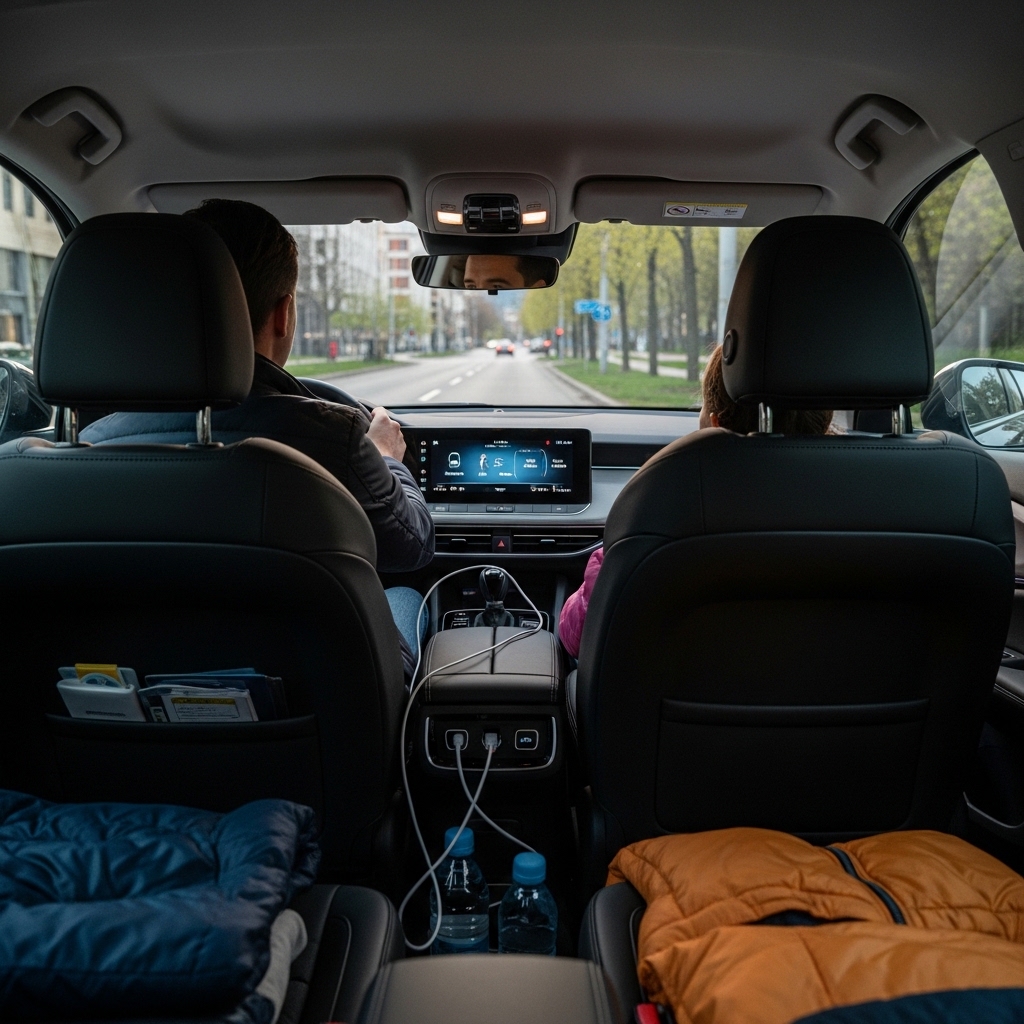
The third major change is the cabin. Family vehicles have always been judged by cupholders, storage bins and seat-folding tricks. Now they are judged by software. Parents want wireless phone integration, multiple charging ports, rear-seat entertainment options, navigation that understands charging stops, voice controls that work, and climate systems that keep each row comfortable. Children expect screens and connectivity. Drivers expect the car to behave more like a smart device.
This shift has turned infotainment from a luxury feature into a central part of ownership. A family car may now store driver profiles, remember seat positions, adjust climate preferences, update maps, recommend routes and receive software updates after purchase. In the best cases, this reduces friction. In the worst cases, it creates distraction and frustration. The winning systems will be those that keep essential functions simple. Families do not need a rolling smartphone that demands constant attention. They need technology that quietly makes life easier.
Voice assistants and artificial intelligence are beginning to enter the cabin, but their most useful roles may be practical rather than theatrical. A family car that can explain a dashboard warning, locate the nearest charging station, adjust temperature, find a child-friendly restaurant on a route or summarize maintenance needs could reduce stress. But automakers must be careful. In a safety-critical environment, convenience cannot come at the cost of distraction, privacy or overconfidence.
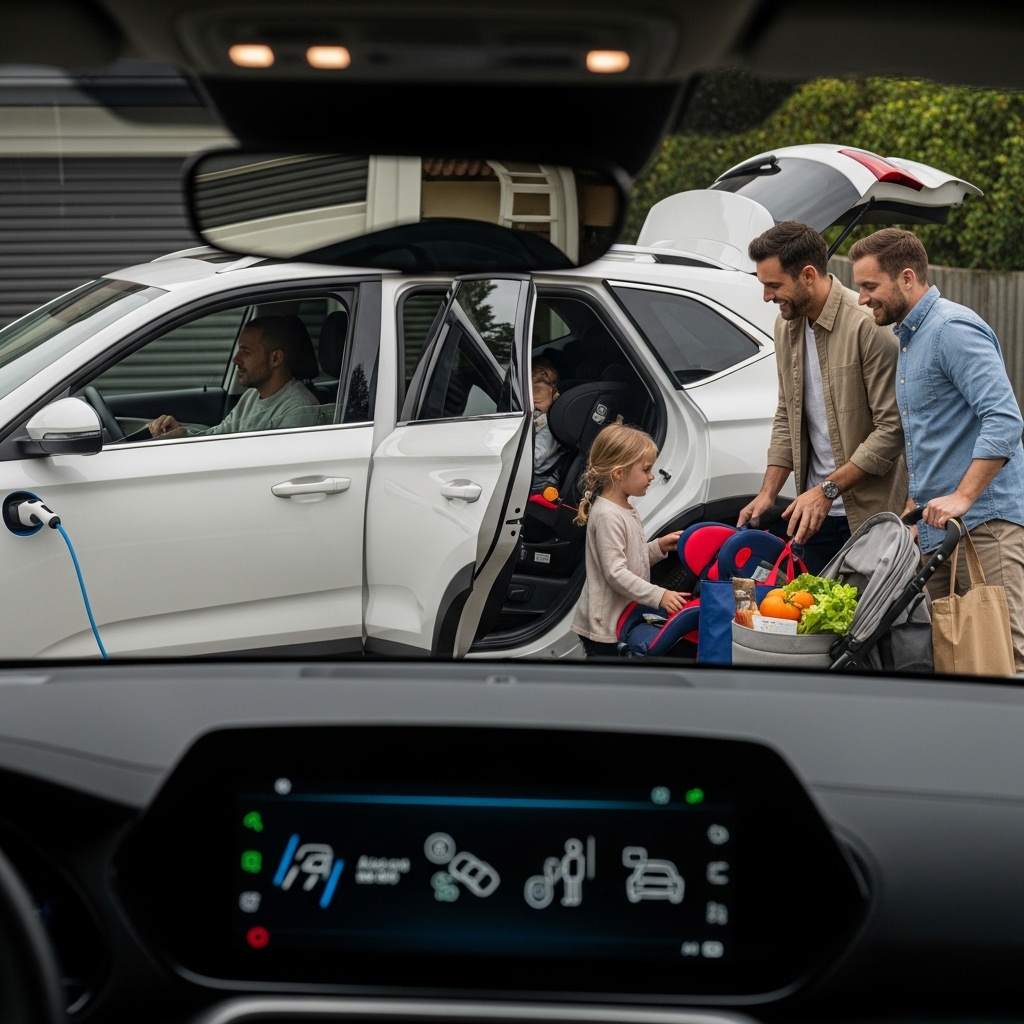
Comfort has also become more intelligent. Three-row SUVs and minivans now compete on flexible seating, easier access to child seats, sliding second rows, flat-folding third rows, panoramic cameras, quiet glass, air filtration and better ride quality. These features are not glamorous, but they matter deeply in family life. A parent loading a stroller in the rain, a grandparent climbing into the second row, or a child sleeping on a long trip will feel the difference more than they will notice a horsepower figure.
The new family car is also becoming a data-connected product. That brings benefits and risks. Connected services can help locate a vehicle, monitor charging, schedule maintenance, send crash alerts or let parents check whether a teenage driver has arrived safely. Some vehicles offer digital keys, remote climate control and app-based status updates. But families should pay attention to privacy. A car can collect location, driving behavior, contacts, voice data and usage patterns. As vehicles become more connected, buyers should ask what data is collected, who can access it and whether settings can be controlled.
Cost remains the limiting factor. Advanced safety and efficiency technologies can increase purchase prices, even when they reduce fuel or maintenance costs over time. Families must weigh sticker price against total cost of ownership: fuel, electricity, insurance, repairs, depreciation, tax incentives, battery warranties and resale value. The smartest vehicle is not always the one with the longest feature list. It is the one whose technology fits the household’s actual life.
That means buyers should begin with use cases rather than marketing claims. A city family with home charging may benefit greatly from an electric crossover. A rural family with long drives and limited charging may prefer a hybrid. A household with three children may prioritize second-row access and cargo space over acceleration. A family with elderly relatives may need low step-in height and wide-opening doors. A parent with a new teen driver may value speed alerts, driver monitoring and strong crash-test performance.
The future of family mobility will likely be mixed. Internal-combustion engines will remain in some markets for years. Hybrids will grow because they offer efficiency without requiring a full behavioral shift. EVs will expand as charging improves and prices fall. Software-defined vehicles will become more common, allowing features to improve after purchase but also raising questions about subscriptions and long-term support.
For automakers, the family car is becoming one of the most demanding products to build. It must be safe without feeling intrusive, efficient without feeling limited, digital without being distracting, spacious without being wasteful and affordable without seeming outdated. Families are not buying technology for its own sake. They are buying reassurance.
That may be the central story of the new family car. The best models do not simply add screens, sensors and batteries. They use technology to reduce the small anxieties of everyday life: the child in the blind spot, the sudden stop ahead, the rising fuel bill, the forgotten seat belt, the confusing route, the noisy cabin, the low battery, the exhausted driver.
The family car has always been a private space for ordinary life. It holds school mornings, supermarket trips, arguments, naps, vacations, medical appointments and late-night returns home. What is changing is how much intelligence is being built around those moments. The next generation of family vehicles is not just larger or faster. It is more watchful, more efficient and more connected. For families, that may be the most meaningful kind of progress.