
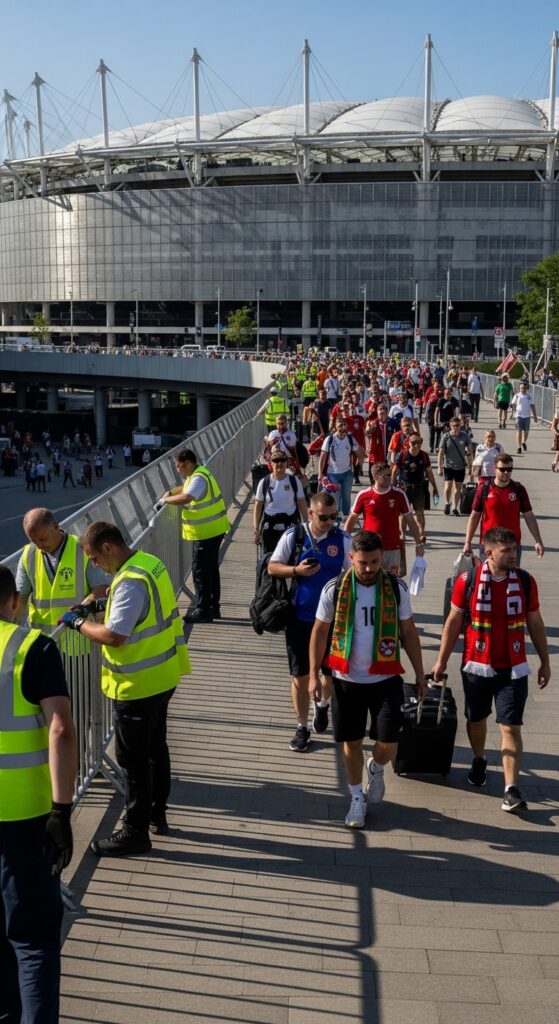
The 2026 tournament in North America will test FIFA’s expanded format, host-city logistics and the sport’s ability to remain accessible to supporters.
Football’s biggest event is about to become bigger than ever. The 2026 FIFA World Cup will be staged across the United States, Canada and Mexico from June 11 to July 19, bringing 48 teams into a tournament of 104 matches across 16 host cities.
The expansion marks a historic shift for the world’s most watched sporting competition. For decades, the modern World Cup operated with 32 teams. The 2026 edition widens the field, opening the door to more nations, more matches and more commercial opportunity. It also creates new logistical, sporting and financial questions.
For countries that rarely reach the tournament, expansion brings hope. A larger field gives more players, supporters and federations the chance to participate in the global game’s central stage. For FIFA, it deepens the tournament’s reach across regions and increases broadcast, sponsorship and ticketing potential.
But the scale is enormous. Matches will be spread across three countries and multiple time zones, from Mexico City and Guadalajara to Toronto and Vancouver, from New York/New Jersey to Los Angeles, Dallas, Miami, Houston, Seattle and other U.S. cities. Teams and fans will face long travel distances. Organizers must manage airports, security, training facilities, hotels, fan zones and extreme summer weather in some locations.
The tournament is also arriving at a time when football is wrestling with affordability. Ticket prices, travel costs and accommodation can make attendance difficult for ordinary supporters. The World Cup has always mixed global celebration with commercial power, but 2026 may intensify the debate over who gets to experience football’s biggest event in person.
On the pitch, the expanded format changes competitive dynamics. More nations will have a chance, but teams will need to manage squad rotation, travel fatigue and pressure across a longer tournament. Coaches will rely heavily on sports science, recovery and tactical flexibility. Depth may matter as much as star power.
The host nations will use the event to promote football in North America. The United States has built a large youth and professional soccer market, but the sport still competes with American football, basketball, baseball and hockey. Canada’s men’s football profile has grown, while Mexico brings one of the world’s most passionate fan cultures. Together, the three hosts offer scale, infrastructure and commercial reach.
The tournament will also test football’s relationship with television and streaming. Fans expect matches to be available across devices, with highlights, analysis and social media clips moving instantly. The World Cup remains one of the few events that can still command live global attention, but younger audiences may experience it through short video as much as full-match broadcasts.
Security will be a major concern. Large international gatherings require coordination among local, federal and international agencies. Crowd management, cyber threats, ticket fraud and transport safety will all be part of the operational challenge.
Climate and heat will also shape planning. Summer matches in several host cities may require hydration strategies, shaded fan areas and careful scheduling. Player welfare will be closely watched, especially as club calendars are already crowded.
The 2026 World Cup promises more inclusion, more spectacle and more revenue. It also risks becoming more expensive and complex. Its success will depend not only on goals, drama and stars, but on whether fans feel that the world’s game still belongs to them.”””
