
As competitions expand and audiences fragment across platforms, sport is becoming a larger business while facing deeper questions about access, welfare and trust.
Sport has always carried more meaning than the final score. It is identity, politics, entertainment, health, memory and business. In 2026, it is also one of the most dynamic global industries, shaped by expanding tournaments, rising media competition, private investment, women’s sport, artificial intelligence and growing concern over athlete welfare.
The global sports industry is entering what Deloitte’s 2026 Sports Industry Outlook described as a period of expansion and transformation. Leagues, teams, federations, investors and broadcasters are no longer operating in a simple model based on tickets and television. They are competing for attention across streaming platforms, social media, live events, gaming, betting markets and global fan communities.
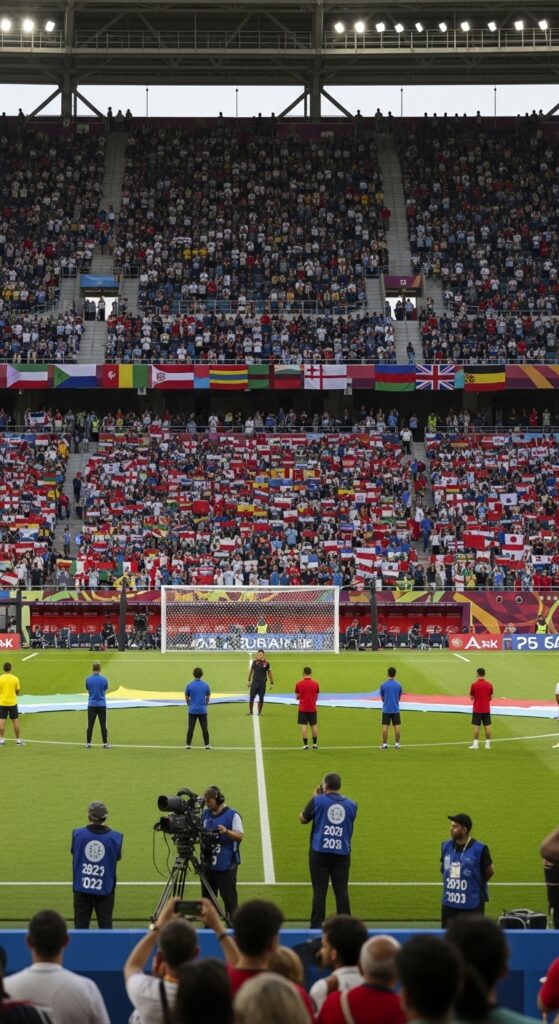
The calendar reflects the scale of ambition. The 2026 FIFA World Cup, hosted across the United States, Canada and Mexico, is the largest in the tournament’s history, with 48 teams, 104 matches and 16 host cities. The Olympic Winter Games returned to Europe in February with Milano Cortina 2026, bringing nearly 2,900 athletes from more than 90 National Olympic Committees to compete across ice and snow.
These events show sport’s ability to gather global attention in an age when audiences are otherwise fragmented. A major tournament can still create shared moments across continents. But the growth also brings pressure. Cities must manage security, transport, housing, heat, public spending and local disruption. Fans must navigate expensive tickets, travel costs and changing broadcast access.
Money is transforming ownership and competition. Private equity, sovereign wealth funds, technology billionaires and global investment groups are increasingly involved in teams, leagues and infrastructure. Their arrival can bring capital, professional management and international ambition. It can also raise concerns over sporting integrity, local identity and whether fans are treated as communities or customers.
Women’s sport is one of the clearest growth stories. Deloitte has projected that global revenue in elite women’s sports will reach at least $3 billion in 2026, a dramatic rise from earlier years. Soccer and basketball are expected to lead that expansion, supported by new leagues, broadcast deals, sponsorship and stronger attendance. The question is no longer whether women’s sport has commercial value. It is whether institutions can build durable foundations rather than treat growth as a trend.
Technology is changing performance and viewing. Athletes train with wearable sensors, data analysis and recovery tools. Coaches use video, artificial intelligence and predictive models. Broadcasters add augmented graphics, alternate feeds and personalized highlights. Fans follow matches through clips, fantasy games and live statistics as much as through full broadcasts.
But sport’s human limits are becoming harder to ignore. Congested calendars increase injury risk. Young athletes face pressure from social media and professional scouting. Mental health has become part of elite performance discussions. The same systems that create global stars can also expose them to abuse, overwork and constant scrutiny.
Integrity remains essential. Betting scandals, doping cases, match manipulation and governance failures can damage trust quickly. As sports become more valuable, the incentive to influence outcomes grows. Leagues and federations must invest not only in spectacle, but in rules, enforcement and transparency.
Sport also remains unequal. Wealthy leagues attract global attention and money, while smaller sports struggle for survival outside Olympic cycles. Young athletes in poorer communities may lack facilities, coaching and safe pathways. Fans may be priced out of events that once felt local.
The future of sport will depend on balance. Growth can bring opportunity, but only if it protects competition, athletes and supporters. A sport that becomes too expensive, too crowded or too disconnected from its communities risks weakening the passion that made it valuable.
The business of sport is expanding. The test is whether the meaning of sport can expand with it.”””
