
As streaming platforms chase the emotional lives behind competition, family-centered sports reality shows are turning parents, partners and children into characters in the modern sports economy.
The most gripping scene in a sports show no longer has to happen on the field.
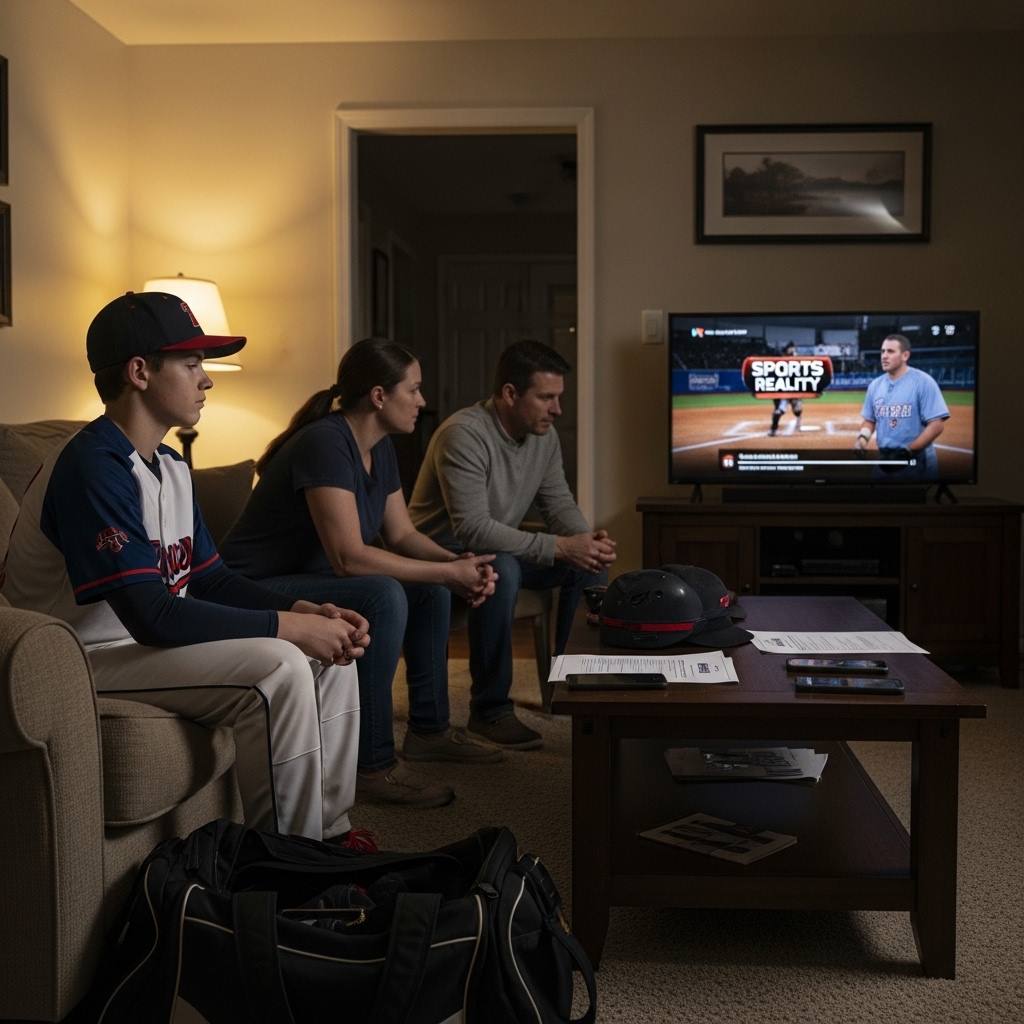
It can unfold in a kitchen, where a parent questions a teenager’s training schedule. It can happen in a car ride after a bad game, when silence says more than a coach’s speech. It can erupt in a living room, as relatives debate money, fame, injuries, scholarships, social media and the cost of ambition. In the new wave of sports-adjacent reality television, the whistle may start the game, but family drama often drives the episode.
The rise of family-centered sports reality shows reflects a larger shift in entertainment. Sports are no longer consumed only as competition. They are consumed as biography, lifestyle, aspiration and conflict. Streaming platforms have learned that audiences want more than scores and highlights. They want access: locker rooms, homes, training facilities, family conversations, private doubts and public pressure. The athlete is still the center of gravity, but the orbit now includes parents, partners, siblings, agents, children, influencers and business managers.
That is why the sports family reality format is becoming so attractive. It combines two powerful genres: the emotional intimacy of family reality television and the built-in stakes of athletic competition. The result is a hybrid in which every tournament, contract negotiation or injury becomes a family event, and every domestic argument carries career consequences.
Paramount+ has moved directly into that territory with “Team Moms,” a reality series executive-produced by Kim Kardashian and set around a high-pressure youth baseball program in Scottsdale, Arizona. The show is expected to follow teenage players chasing Division I scholarships, NIL opportunities and possible professional futures, while also focusing on the parents whose ambition, anxiety and involvement shape the children’s athletic lives. Its premise draws a clear line from the tradition of shows such as “Dance Moms” and “Toddlers & Tiaras,” but places the drama inside a sports economy increasingly shaped by scholarships, rankings, branding and early specialization.
The timing is significant. Youth sports have become a multibillion-dollar ecosystem in which families pay for travel teams, private coaching, camps, equipment, scouting events and exposure tournaments. For some parents, sports are no longer merely an activity. They are a possible route to college admission, social status, financial opportunity or family identity. That pressure creates natural television tension, but it also raises uncomfortable questions about childhood, competition and exploitation.
A camera can make those questions sharper. When a parent cries after a lost game or argues with another family about playing time, viewers may see entertainment. The child may experience something more permanent: public documentation of a vulnerable moment. When a teenager’s performance is framed as a family investment, the boundary between support and pressure becomes harder to defend.
The same dynamic is visible at the professional level. The modern athlete is often treated not only as a competitor but as a media property. Fans follow players on Instagram and TikTok, listen to their podcasts, buy their fashion collaborations and watch documentaries about their homes and families. A championship may create the headline, but the content machine feeds on everything around it: the relationship, the comeback, the parent who sacrificed, the spouse who managed chaos, the sibling rivalry, the child growing up near fame.
Streaming companies understand this. Netflix has built a substantial sports documentary and docuseries portfolio, covering athletes, teams and sports cultures across football, basketball, golf, tennis, racing, cheerleading and more. Its sports category is not only about explaining games to existing fans. It is about converting non-fans through character. Hulu’s continuing investment in celebrity-family reality, including “The Kardashians,” shows how durable family drama remains as a format when supported by fame, business stakes and carefully managed intimacy. Sports reality sits at the intersection of both strategies.
The appeal is obvious. Sports provide structure. Families provide emotion. Each episode can move between competition and confession, game footage and private reaction, public success and private cost. A missed shot becomes a parenting debate. A transfer decision becomes a family crisis. A contract becomes a test of loyalty. A social media post becomes a plot point. The field supplies the scoreboard; the family supplies the stakes.
For viewers, this can be compelling because it humanizes athletes. The polished athlete seen during broadcasts can become more relatable when shown dealing with pressure, fear, family expectations or exhaustion. A parent’s sacrifice can explain the scale of a career. A partner’s perspective can reveal the hidden labor behind elite performance. A child’s view can challenge the myth that fame is only glamorous. At its best, the format complicates the sports hero narrative and shows that winning is rarely an individual act.
But the genre carries risks. Reality television depends on conflict, and sports families already live under pressure. Producers may say they are capturing real life, but editing turns life into story. Scenes are selected, music is added, arguments are shaped and personalities are simplified. A supportive parent can become “the intense one.” A cautious child can become “not hungry enough.” A family disagreement can become a season-long feud. Once those labels reach the audience, they can be difficult to escape.
The concern is especially serious when minors are involved. Teenage athletes may not fully understand what long-term exposure means. A bad performance, an emotional breakdown or a family argument can circulate beyond the show itself, becoming social media clips, reaction videos and memes. The pursuit of authenticity can collide with a child’s right to grow up without permanent public judgment.
There is also the risk of normalizing extreme pressure. If a series presents early-morning training, relentless travel, parental confrontation and scholarship obsession as the standard path to success, it may reinforce the idea that childhood sports must be professionalized. Many families already feel they are falling behind if they do not pay for elite programs or chase exposure. Reality television can intensify that fear by making exceptional pressure look ordinary.
At the same time, the popularity of these shows reveals something real about sports culture. Families are already central to athletic development. Parents drive children to practice, pay fees, manage schedules, communicate with coaches and absorb emotional fallout. Partners and spouses of professional athletes often handle relocation, childcare, public scrutiny and unstable routines. Siblings may live in the shadow of one rising star. The home is part of the athletic system, whether cameras are there or not.
The question is whether television can show that system responsibly.
A more thoughtful sports family reality show would avoid treating children as products and parents as caricatures. It would show the financial burden of youth sports, not only the glamour of elite competition. It would include the voices of coaches, educators, psychologists and medical professionals. It would acknowledge burnout, injury, academic pressure and the many athletes who do not receive scholarships or professional contracts. It would remember that most sports careers end long before adulthood, while family relationships continue.
The best version of the genre could make viewers more informed. It could reveal how early specialization affects children, how NIL has changed family decision-making, how social media alters recruitment, how money shapes access to elite programs and how parents struggle to separate love from ambition. It could show the emotional cost of a system that asks families to gamble time, money and identity on uncertain athletic futures.
The worst version would simply turn pressure into spectacle.
That tension is why sports family reality television feels so current. It captures the contradictions of modern sports: empowerment and commercialization, opportunity and exploitation, intimacy and branding. Athletes are encouraged to tell their stories, but stories become content. Families want to support dreams, but support can become performance. Viewers want access, but access can damage the people being watched.
The drama outside the field can be more intense than the game because it has no final buzzer. A team can lose and play again next week. A family may carry the consequences for years. A coach can bench a player for one inning; a parent’s words after the game can shape a child’s confidence for life. A scoreboard records runs, goals or points. It does not record fear, resentment, sacrifice or love.
That is what makes the genre powerful and dangerous.
Sports have always been family stories. Behind every athlete is usually someone who woke up early, paid a bill, packed a bag, offered comfort or demanded more. Reality television is now bringing those people into frame. The audience will decide whether it is watching inspiration, warning or both.
In the streaming era, the game is no longer enough. The camera wants the car ride home, the dinner-table argument and the private tears after the trophy ceremony. The challenge for producers, platforms and families is to remember that behind every dramatic episode is a real household, and behind every young athlete is a child before there is a brand.