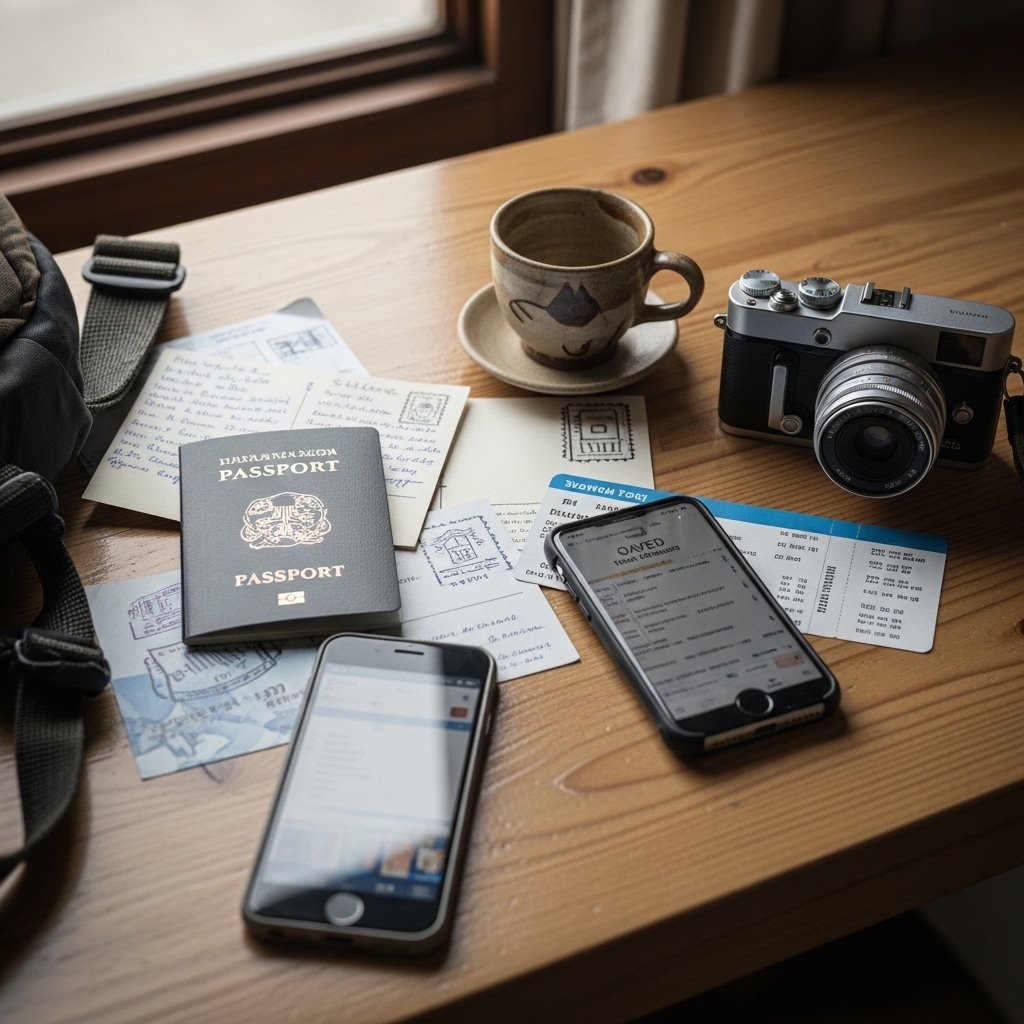
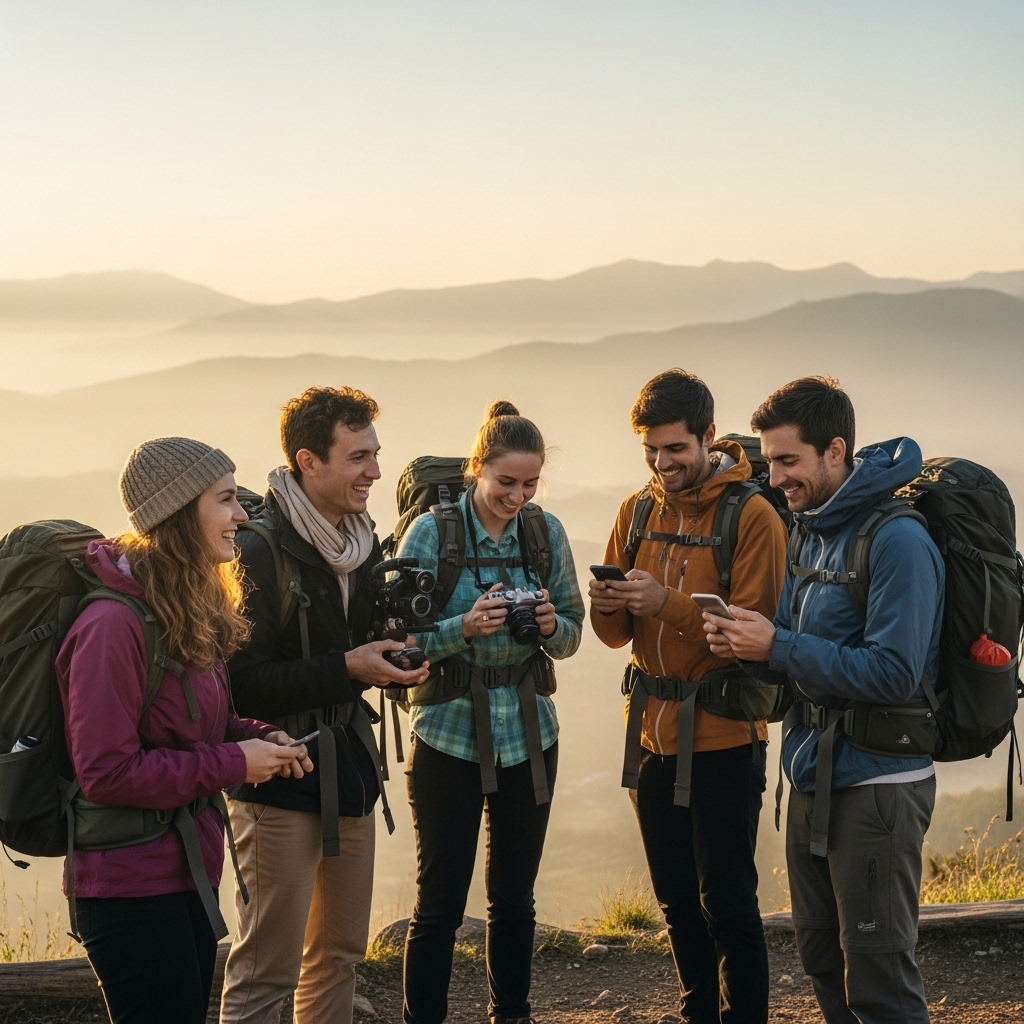
For Gen Z and millennials, travel is becoming less about status objects and more about identity, connection, personal growth and stories worth remembering.
The new luxury for many young travelers is not a handbag locked behind glass or a watch bought to signal arrival. It is a sunrise hike with strangers who become friends, a night train across a border, a cooking class in a family kitchen, a music festival in another country, a diving certificate, a pottery workshop, a street-food tour, a silent retreat or a road trip planned around a single unforgettable view.
Across markets, younger consumers are increasingly treating travel as a form of self-definition. They still care about style, comfort and aesthetics, but the object of desire is shifting. A generation raised online, shaped by economic uncertainty and surrounded by endless advertising is asking a blunt question: if money is limited, what will still matter five years from now? For many, the answer is not another branded item. It is a memory.
This does not mean young people have abandoned luxury. Fashion, beauty, technology and premium hospitality remain powerful. But the emotional center of spending has moved. A luxury logo can still communicate status, yet an experience can communicate identity more deeply. A trip says what someone values: adventure, taste, freedom, wellness, culture, friendship, environmental awareness or personal transformation. In a social-media age, experiences are also more narratable than objects. A bag can be photographed once; a journey can become a week of stories.
The shift is visible in travel research and consumer behavior. American Express’s 2025 Global Travel Trends Report found younger generations leading several travel behaviors, including high interest in technology-assisted planning and experience-led trips. The report said 80 percent of surveyed millennials and Gen Z respondents liked the convenience of using travel planning apps or social media during the travel journey. It also found that younger travelers were strongly drawn to trips built around entertainment, sports, food and unique local experiences.
Industry analysts describe this as part of a larger experience economy, but the phrase can sound colder than the reality. What is happening is emotional. Young adults are not only buying trips; they are buying proof that life is still expansive. After pandemic restrictions, remote work, housing pressure, inflation and digital fatigue, travel offers something physical and immediate. It gives people a way to feel time again.
The rise of experiential travel also reflects skepticism toward traditional luxury goods. Bain & Company has warned that the personal luxury goods market has faced slower momentum and pressure from younger consumers who are reassessing the value equation of high-priced luxury items. McKinsey has similarly described a more difficult environment for luxury in 2025, with growth engines weakening after years of price increases and post-pandemic demand. For young consumers, especially those priced out of homes and long-term financial security, the promise of luxury ownership can feel less convincing than the promise of a life actively lived.
Travel brands have adapted quickly. Hotels now sell more than rooms. They sell neighborhood walks, chef-led dinners, sound baths, surf lessons, farm visits and local craft sessions. Airlines promote stopovers and destination partnerships. Tour companies package small-group adventures for solo travelers who want community without giving up independence. Hostels have evolved into design-conscious social hubs. Even cruises and rail journeys are being reimagined as content-rich, experience-heavy products for younger guests who once dismissed them as old-fashioned.
Social media is both fuel and filter. TikTok, Instagram and YouTube have turned hidden cafés, mountain villages, beaches, night markets and boutique stays into global wish-list items. A traveler may discover a destination through a 20-second video, build an itinerary from saved posts, book through an app and document the trip in real time. This can make travel feel more accessible, but it also compresses places into aesthetics. The risk is that destinations become backdrops and local culture becomes content.
Yet it would be too simple to dismiss experiential travel as performative. Many young travelers are looking for authenticity precisely because online life feels artificial. They want to learn, taste, participate and belong. They want to meet locals, not only photograph landmarks. They want to join a class, not only visit a museum. They want to come home with a skill, a story or a friendship. In the best cases, experiential travel pushes tourists away from passive consumption and toward more respectful engagement.
Food has become one of the clearest gateways. A cooking lesson in Chiang Mai, a mezcal tasting in Oaxaca, a market breakfast in Istanbul or a pasta-making class in Bologna can feel more meaningful than a luxury shopping stop because it offers sensory memory. Taste, smell and conversation are harder to replicate online. They create the kind of detail people remember long after the trip ends.
Adventure and wellness travel are growing for similar reasons. Younger travelers are booking treks, cycling routes, diving trips, yoga retreats, running holidays and cold-weather escapes because these experiences promise more than leisure. They offer challenge, reset and self-improvement. A difficult hike becomes a personal milestone. A retreat becomes a boundary against burnout. A surf camp becomes both sport and social life.
There is also a practical economic logic. Many young people cannot easily afford property, and some are delaying marriage, children or major durable purchases. Travel becomes a way to convert disposable income into meaning. It is temporary, but not necessarily frivolous. A memory can become part of someone’s identity, while a product may lose novelty quickly. This is why the phrase “choosing memories over things” resonates so strongly, even when the choice is not absolute.
The trend is also changing souvenirs. Instead of mass-produced luxury purchases, travelers increasingly look for objects tied to place: handmade ceramics, local textiles, small-batch food, independent fashion or art bought directly from makers. The object still matters, but its value comes from the story of where and how it was found. In that sense, experiential travel has not eliminated material desire; it has made material desire more personal.
Destinations are responding with more curated programming. Cities promote music scenes, night markets and creative districts. Rural regions offer farm stays and nature immersion. Museums design interactive installations. Tourism boards highlight local guides and community-based travel. The most competitive destinations are no longer asking only, “What can visitors see?” They are asking, “What can visitors feel, do and remember?”
But the boom carries risks. Overtourism can damage the very places travelers seek for authenticity. Viral destinations can be overwhelmed by visitors chasing the same view. Local residents may face rising prices, crowding and cultural disruption. The demand for “hidden gems” often exposes them. If experiential travel is to become more than a fashionable slogan, it must confront sustainability, labor conditions and respect for host communities.
There is also an inequality problem. Experience-based travel can be marketed as meaningful and democratic, but many curated experiences are expensive. Retreats, boutique tours and adventure packages may exclude young people without high incomes or flexible work. The language of authenticity can sometimes disguise premium pricing. A generation choosing memories over luxury goods is still navigating a world where even memories are increasingly commodified.
The most durable version of this trend will likely be less about extravagance and more about intention. A meaningful trip does not need to be far away or expensive. It can be a weekend train journey, a local food trail, a volunteer project, a language exchange, a national park visit or a stay with friends in another city. What matters is not the price tag, but the depth of attention.
For the travel industry, the lesson is clear: young travelers want more than logistics. They want emotional design. They want trips that feel personal, flexible, social, photogenic, ethical and memorable. They expect technology to make planning easier, but they do not want technology to replace the human core of the journey.
For luxury brands, the message is more uncomfortable. Status is not disappearing, but it is being redefined. The old markers of success still exist, yet younger consumers increasingly measure a rich life by what they have felt, seen, learned and shared. A logo can announce wealth. A memory can become character.
That is why experiential travel has become one of the defining consumer shifts of the moment. It is not just about vacations. It is about a generation trying to spend its limited time and money on proof that life is larger than the screen, the office and the shopping cart.
In the end, young travelers are not rejecting aspiration. They are changing its shape. The dream is no longer only to own something rare. It is to live something unforgettable.