The league enters 2026 with expansion teams, a record national schedule and a media strategy designed to turn women’s basketball from appointment viewing into year-round mainstream sports programming.
The WNBA’s 30th season is arriving not merely as an anniversary, but as a test of scale.
After three decades of building a professional women’s basketball league through uneven television windows, shifting ownership priorities and periodic questions about commercial viability, the WNBA is entering 2026 with the kind of media footprint long associated with major American sports properties. Its regular season will be spread across national broadcast networks, cable channels, streaming platforms and direct-to-consumer services in a way that reflects both the league’s recent surge and the changing economics of live sports.
The numbers tell a striking story. The league has announced a record 216 nationally distributed games and tentpole events across the 2026 regular season, with coverage on ABC, ESPN, NBC, Peacock, NBCSN, Prime Video, CBS, Paramount+, ION, USA Network, NBA TV and WNBA League Pass. Each of the league’s 15 teams will play 44 regular-season games, creating a record 330-game calendar. For a league that spent much of its history fighting for consistent visibility, the 2026 schedule represents a fundamental shift: the WNBA is no longer asking whether audiences will find it. It is building a media map to meet them everywhere.
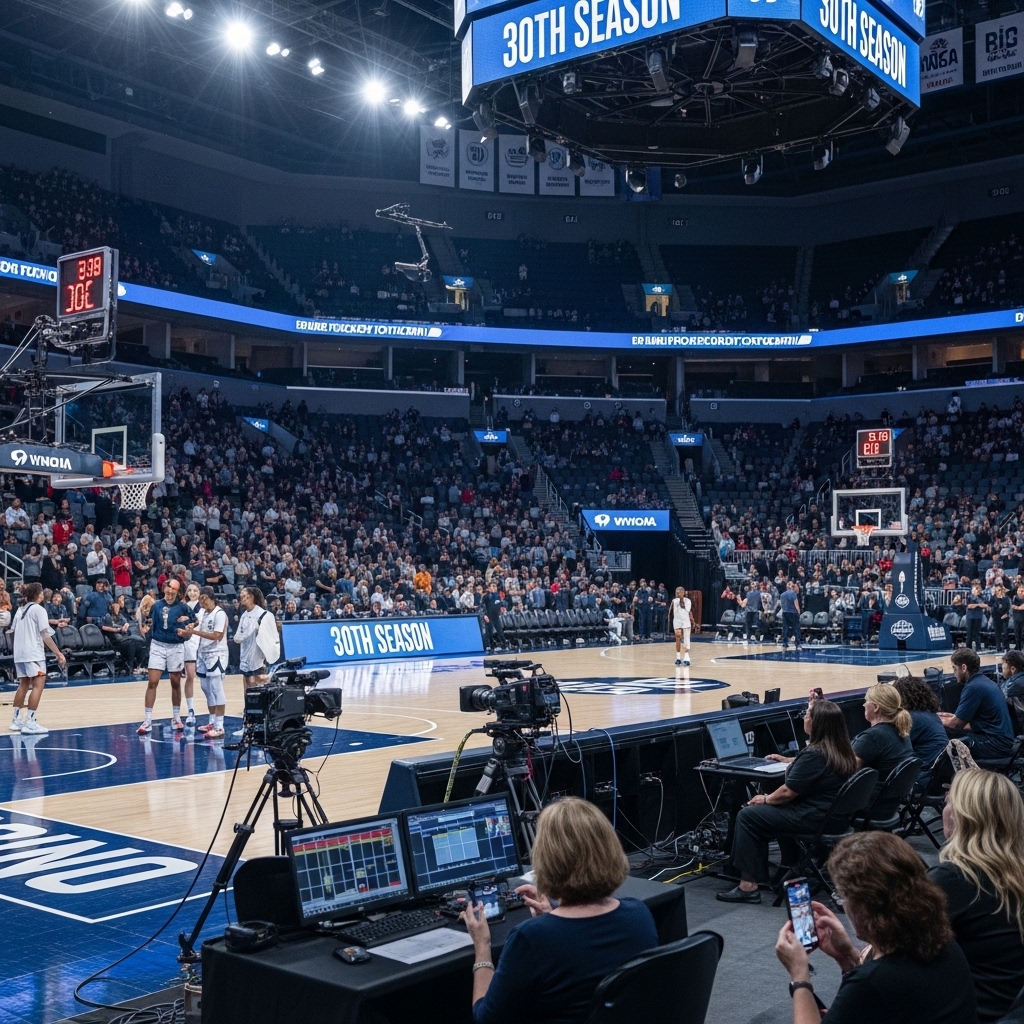
The timing is symbolic. The 2026 campaign is the WNBA’s 30th season, a milestone that connects the league’s 1997 launch to a new era of multiplatform sports consumption. NBC, which broadcast the first WNBA game in 1997, returns as a national partner. Disney remains central through ABC and ESPN. Amazon Prime Video, already a major player in streaming sports, expands its WNBA presence. CBS and Paramount+ continue to provide broadcast and streaming reach, while ION’s weekly Friday night package gives the league a dependable appointment-viewing slot. USA Network adds volume, and League Pass remains the digital home for fans who want deeper access beyond national windows.
This is the WNBA’s most ambitious attempt yet to turn momentum into infrastructure.
The league’s new media-rights agreements with Disney, Amazon and NBCUniversal, announced in 2024 and beginning with the 2026 season, run through 2036. They guarantee more than 125 regular-season and playoff games annually across those partners alone, with the Finals rotating among Disney, Prime Video and NBCUniversal during the term. That long runway matters. Media deals do not simply distribute games; they shape production quality, advertising markets, franchise valuations, player visibility, sponsorship strategy and the way young fans form habits.
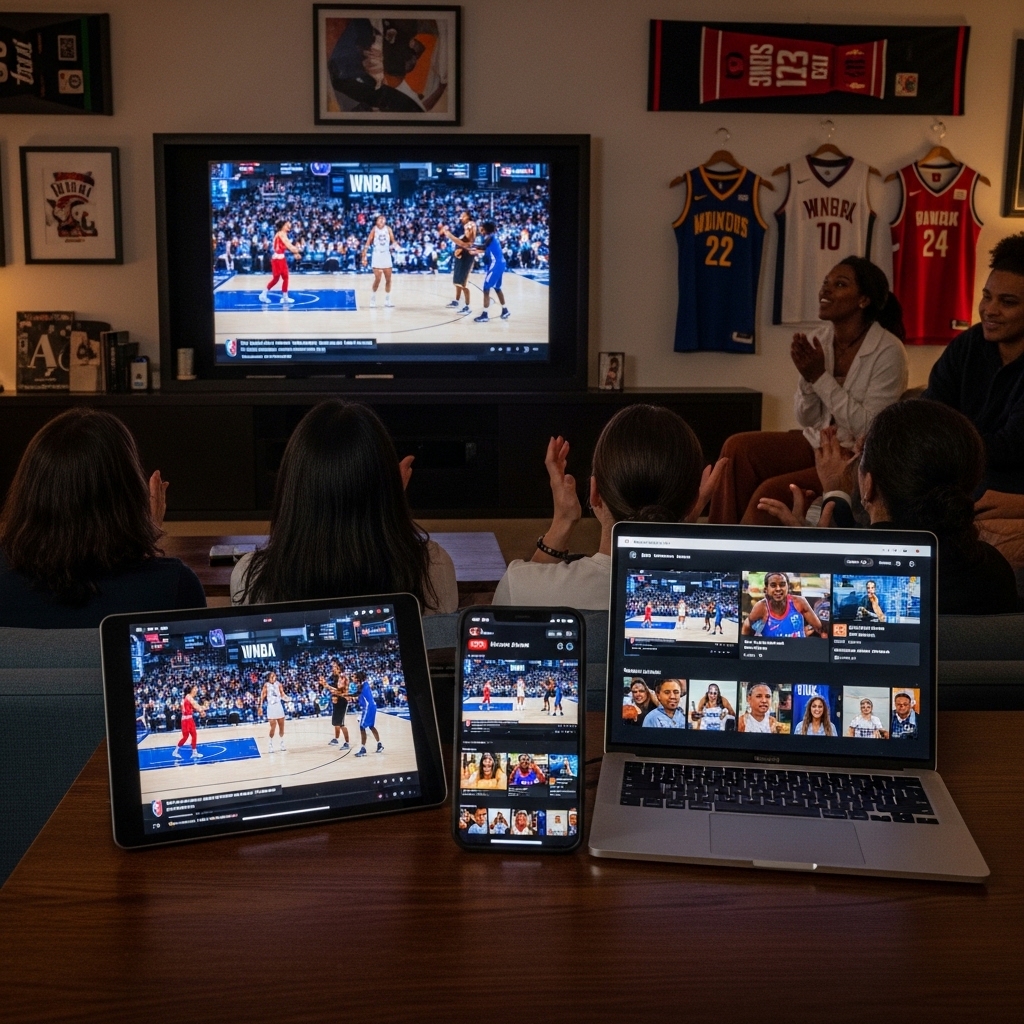
For the WNBA, the jump is both commercial and cultural. In previous eras, fans often had to search across inconsistent listings, regional restrictions or scattered streaming options to follow teams. In 2026, the league is presenting itself as a national product with multiple entry points. A casual viewer might find a Sunday game on ABC or NBC. A younger cord-cutting fan might watch through Prime Video, Peacock or Paramount+. A dedicated follower might rely on League Pass. A family may see ION’s Friday doubleheaders as a weekly routine. That distribution strategy mirrors the broader sports industry, where leagues increasingly combine legacy broadcast reach with subscription-based digital loyalty.
The stakes are especially high because the WNBA’s audience has broadened rapidly. Star power has become one of the league’s strongest media engines. Caitlin Clark, A’ja Wilson, Breanna Stewart, Sabrina Ionescu, Angel Reese, Paige Bueckers, JuJu Watkins and a new wave of college-to-pro talent have helped pull women’s basketball into mainstream conversation. The league’s challenge is to convert attention around individual stars into durable interest across teams, rivalries and playoff races.
The 2026 season offers several tools to do that. The Indiana Fever remain a national television magnet. The defending champion Las Vegas Aces continue to provide a dynasty-level storyline. The New York Liberty, Phoenix Mercury, Minnesota Lynx, Seattle Storm and other established franchises bring recognizable brands and veteran stars. Expansion adds another layer. The Toronto Tempo and Portland Fire enter the league, following the Golden State Valkyries’ 2025 arrival and pushing the WNBA into new markets at a moment when demand appears stronger than at any point in its history.
Toronto’s arrival is particularly important. It gives the WNBA its first Canadian franchise, extending the league’s footprint beyond the United States and strengthening its claim to be a North American sports property with international growth potential. Portland’s return connects the league to a city with a deep basketball culture and a strong record of supporting women’s sports. Expansion does more than add games. It creates local media markets, new sponsorship pipelines, new merchandise demand and fresh fan identities.
The broadcast architecture reflects that ambition. Disney will present 30 games and tentpole events across ABC and ESPN in the league’s 30th season, including the All-Star Game on ABC. NBC’s return includes Sunday broadcasts and a streaming presence through Peacock, which will carry every WNBA Finals game while those games also air on NBC or USA Network. Prime Video will stream 30 regular-season games and the Commissioner’s Cup championship, while also serving as a distribution destination for WNBA League Pass through Prime Video Channels in selected markets. CBS will carry 20 broadcasts, all streaming on Paramount+, including a slate of primetime games. ION will continue its Friday night doubleheader strategy with 50 games, the most of any regular-season partner. USA Network will carry 48 games, creating one of the largest volume packages in the schedule.
That is a major change from the scarcity model that defined much of women’s sports coverage. Scarcity once forced leagues to treat every national window as a precious exception. Abundance changes behavior. It allows broadcasters to create pregame shows, recurring studio crews, weekly themes, shoulder programming and promotional campaigns. It lets fans develop routines. It gives advertisers more inventory. It provides players with more consistent exposure, not only during playoffs or rivalry games but throughout the season.
Streaming is central to the strategy because the WNBA’s growth has coincided with a younger, digitally fluent fan base. Many of the league’s newer followers encounter highlights first on social platforms before watching full games. Streaming platforms can convert that attention into subscriptions, alerts, personalized recommendations and international reach. Prime Video’s global distribution capacity is especially significant for a league with international players and a growing overseas audience. Peacock and Paramount+ give traditional broadcasters digital extensions. League Pass preserves the direct relationship between the league and its most committed fans.
The preseason strategy also points to a broader funnel. The WNBA is making every 2026 preseason game available for free through the WNBA app with WNBA ID, while ION will nationally broadcast selected preseason games. That may sound like a small detail, but it is an important growth tactic. Free preseason streaming allows fans to sample rookies, expansion teams and new rosters before the regular season begins. It also encourages account creation, giving the league a direct consumer database that can support marketing, ticket sales, merchandise and future digital products.
Still, greater visibility brings greater pressure. A larger media footprint raises expectations for production standards, officiating transparency, player availability, travel quality and competitive balance. More national windows mean more scrutiny. Every scheduling decision becomes a statement about which teams and players the league believes can draw audiences. Heavy attention on a small number of stars may help ratings but risks narrowing the public’s understanding of the league. The WNBA must balance star-driven programming with the long-term need to build all 15 franchises.
There are also practical challenges for fans. A wide distribution network can expand access, but it can also fragment it. Viewers may need multiple subscriptions or platforms to follow every national game. Local blackout rules on League Pass can still frustrate fans. International access may vary by market. The league’s success will depend not only on the number of games available, but on how easy it is for people to know where to watch them.
For players, the media boom strengthens leverage. More broadcast windows increase personal brand value, endorsement opportunities and public recognition. They also intensify conversations about salaries, working conditions and the economic structure of the league. The WNBA’s growth is occurring at a time when women athletes are more willing to challenge old assumptions about pay, travel, facilities and investment. Television and streaming revenue will inevitably become part of that debate.
The broader sports industry is watching closely. Women’s sports have become one of the most attractive growth sectors in live entertainment because they combine passionate fan communities with underdeveloped commercial inventory. Soccer, volleyball, gymnastics, tennis and college basketball have all shown the power of better distribution. The WNBA now has a chance to prove that expanded media access can sustain regular-season attention, not just spike during moments of novelty.
The 30th season, then, is not simply a celebration of survival. It is a declaration of arrival. The league that began in 1997 with a promise to give the world’s best women basketball players a professional home is now entering a media environment built for scale. Its games will be on traditional television, cable, streaming services, league platforms and mobile apps. Its stars will move across broadcast booths, social feeds and global highlight reels. Its newest teams will begin forming identities in front of national audiences from their first season.
The central question of 2026 is whether visibility can become permanence.
If the WNBA’s expanded television and streaming plan succeeds, the season will be remembered as more than a milestone year. It will mark the moment the league crossed from growth story to mainstream sports property, from sporadic exposure to regular presence, from a product fans had to search for to one that meets them across the modern media landscape.
Thirty seasons after its debut, the WNBA is no longer waiting for a bigger stage. It is building one.