The ride-hailing company’s larger stake, expanded vehicle commitment and Lucid’s simultaneous leadership and funding changes suggest the electric-vehicle maker is being reshaped more directly around autonomous mobility and fleet services. :contentReference[oaicite:0]{index=0}
Uber has raised its ownership stake in Lucid to about 11.5% while expanding its robotaxi plans with the electric-vehicle maker to at least 35,000 vehicles, a sharp increase from the earlier target of 20,000, in a set of moves that signal a deeper strategic alignment between the two companies around autonomous ride-hailing. :contentReference[oaicite:1]{index=1}
The developments matter not only because they bring fresh capital and leadership change to Lucid, but because they show how quickly the competitive map in autonomous mobility is shifting. What began as a partnership among Uber, Lucid and self-driving technology company Nuro is increasingly looking like something larger: an attempt to build a serious alternative to rival robotaxi efforts by linking a global ride-hailing platform, a premium EV maker and an autonomous driving stack under one commercial model. :contentReference[oaicite:2]{index=2}
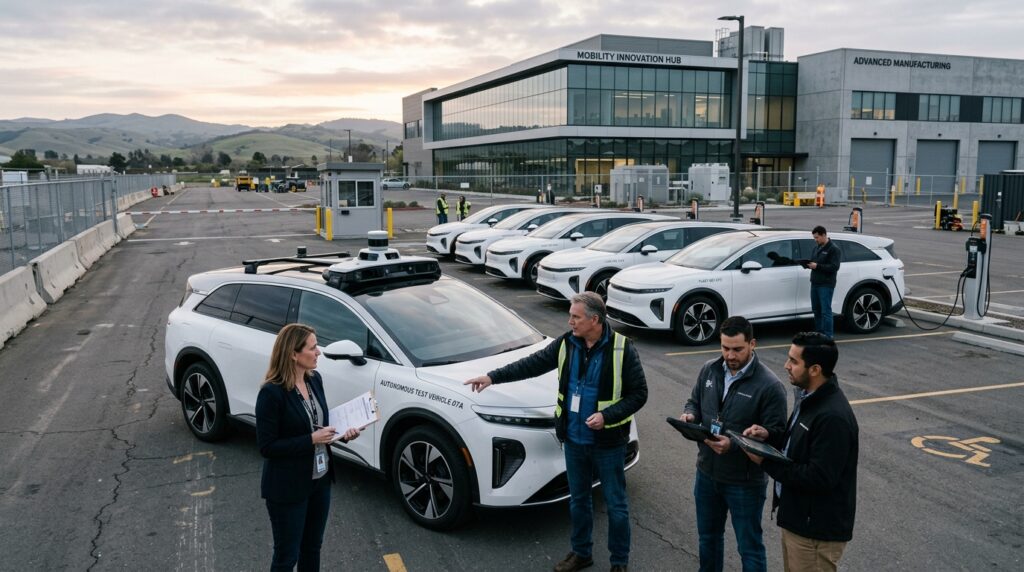
Lucid said on April 14 that Uber would increase its purchase commitment to at least 35,000 Lucid vehicles designed exclusively for Uber’s future global robotaxi service. The new target covers both the Lucid Gravity SUV and the company’s forthcoming midsize platform, widening the industrial basis of the partnership beyond a single halo vehicle. Uber’s extra investment is part of a broader package that Lucid said was also supported by new funding from Ayar Third Investment Company, an affiliate of Saudi Arabia’s Public Investment Fund, or PIF. :contentReference[oaicite:3]{index=3}
That package is one reason the story has drawn such close attention from investors and industry observers. Lucid said the combined new investments from Uber and the PIF affiliate totaled $750 million, and a separate Lucid securities filing said the company was also moving ahead with a $300 million underwritten public stock offering, bringing the total raise associated with the announcements to about $1.05 billion. :contentReference[oaicite:4]{index=4}
For a company that has spent much of its public life being judged by its ability to scale production and narrow losses in a brutal EV market, the timing is revealing. Rather than framing its future solely around selling luxury electric cars to individual buyers, Lucid is now leaning harder into a business model that includes recurring revenue, platform partnerships and fleet deployment. The robotaxi agreement with Uber is central to that repositioning. :contentReference[oaicite:5]{index=5}
The ownership angle sharpened that impression. Barron’s reported that Uber disclosed a current Lucid stake of 11.5%, representing roughly 37.75 million shares, up from about 4% at the end of 2025. That is a meaningful jump, and it turns Uber from a strategic customer and partner into a far more consequential shareholder with visible exposure to Lucid’s execution. :contentReference[oaicite:6]{index=6}
That does not necessarily mean Uber wants to control Lucid. The company’s public posture remains one of partnership rather than takeover. But a stake above 10% changes the optics. It suggests Uber is no longer simply placing a tactical bet on a supplier. It is tying more of its autonomous future to Lucid’s ability to build and deliver vehicles at scale, while Lucid is tying more of its strategic narrative to Uber’s platform and route to demand. :contentReference[oaicite:7]{index=7}
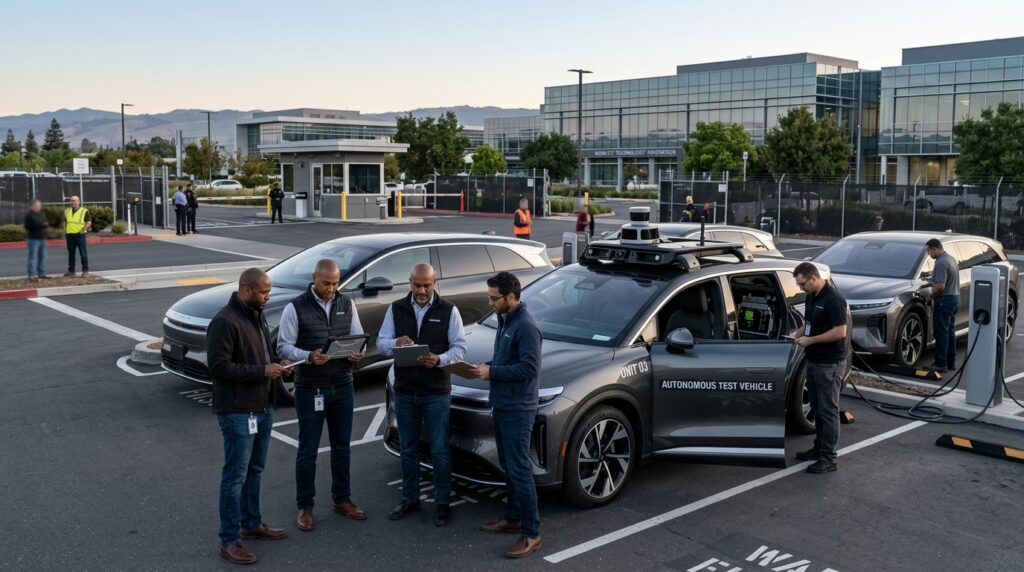
The structure of the alliance helps explain why. Under the arrangement first unveiled in July 2025, Lucid supplies the vehicles, Uber provides the ride-hailing network, and Nuro provides the autonomous driving system known as the Nuro Driver. Uber said at the time that it aimed to deploy 20,000 or more Lucid vehicles equipped with Nuro’s technology over six years, with the vehicles owned and operated either by Uber or by third-party fleet partners and offered to riders exclusively through the Uber platform. In January 2026, the companies said on-road testing would begin this year, and that a global robotaxi built on the Lucid Gravity platform had been unveiled at CES. :contentReference[oaicite:8]{index=8}
By raising the vehicle target to 35,000, the partners are signaling confidence not just in the underlying technology but in the economics and market opportunity of the service. Robotaxis remain expensive and operationally complex, and the sector has seen repeated cycles of optimism and retrenchment. Yet Uber appears to be making a calculated choice: rather than building its own full-stack autonomous vehicle company, it is deepening a partnership model that lets it stay at the center of consumer demand while relying on specialized partners for the vehicle and autonomy layers. :contentReference[oaicite:9]{index=9}
That is a familiar strategic pattern for Uber. The company has increasingly positioned itself less as a maker of hardware and more as the demand aggregator and marketplace through which autonomous supply can reach passengers. That approach lowers capital intensity relative to trying to own every layer itself, but it depends on strong alliances. A bigger bet on Lucid makes sense in that light. Lucid offers high-end EV engineering, long-range performance and a software-defined vehicle architecture that the companies have presented as well suited for autonomous fleet deployment. :contentReference[oaicite:10]{index=10}
For Lucid, the logic is different but just as urgent. The company has struggled to convince investors that premium consumer EV sales alone can justify its heavy investment requirements. Fresh capital helps, but it is the strategic direction behind that capital that may matter more. Lucid has been telling investors that future growth will come not only from selling more vehicles, but also from launching its midsize platform and building new recurring revenue streams. A robotaxi relationship with Uber fits that broader effort to define Lucid as a technology platform company, not merely a luxury carmaker. :contentReference[oaicite:11]{index=11}
The leadership change reinforces the sense of a strategic reset. Lucid announced earlier this month that Silvio Napoli would become its next chief executive officer and join the board. Napoli, a veteran industrial executive, is taking over after a long search following the departure of founding CEO Peter Rawlinson from the top job in 2025; interim CEO Marc Winterhoff is set to become chief operating officer once Napoli assumes the role. Lucid said Napoli was chosen to accelerate growth, profitability and value creation. :contentReference[oaicite:12]{index=12}
The wording matters. A company that once sold itself largely on engineering ambition is now emphasizing industrial discipline and profitable scale. That is not unusual in the EV sector after years of investor fatigue and tighter capital markets, but in Lucid’s case the shift is especially pronounced. Pairing a new CEO with new funding and a larger Uber robotaxi commitment creates the impression of a company being reoriented around execution and commercial partnerships rather than pure product narrative. :contentReference[oaicite:13]{index=13}
There is also a wider industry context. The robotaxi race is becoming more crowded and more serious. Tesla has continued to push its own autonomous ride-hailing ambitions, while established and emerging players alike are testing different combinations of proprietary technology, fleet ownership and geographic rollout. In that landscape, Uber’s strength is not that it owns the most autonomous technology. It is that it already owns one of the world’s largest ride-hailing demand networks. By pairing that network with partners, it can potentially scale faster once the technology is ready and regulators permit broader deployment. :contentReference[oaicite:14]{index=14}
Still, the path ahead is far from guaranteed. Expanding a partnership announcement is easier than deploying tens of thousands of autonomous vehicles in real urban service. The companies will still need to clear technical, regulatory, manufacturing and operational hurdles. Lucid must prove it can build vehicles at the required scale and cost. Nuro must prove the autonomous stack can perform safely and reliably. Uber must prove there is a workable operating model for routing, fleet management, service quality and economics across markets. :contentReference[oaicite:15]{index=15}
Yet the latest moves suggest all three are trying to answer those questions earlier rather than later. The increase from 20,000 to 35,000 vehicles is not incremental in symbolic terms. It implies a broader ambition and a longer runway for the partnership. Uber’s larger stake adds further alignment. Lucid’s new CEO and capital injection give the automaker more room to adapt itself to that mission. Together, the pieces point to a company no longer pitching robotaxis as an adjacent opportunity, but as one of the pillars of its next phase. :contentReference[oaicite:16]{index=16}
That is why this is more than just another EV financing story or another autonomous-driving headline. It is a sign that the boundaries between automaker, platform and mobility service are becoming harder to separate. Uber is investing more deeply in the vehicles that could populate its autonomous future. Lucid is moving closer to becoming a fleet and technology partner for mobility services rather than only a premium consumer brand. And the robotaxi race, once easy to dismiss as speculative, is starting to look more like a strategic contest over who will control the next layer of urban transportation.