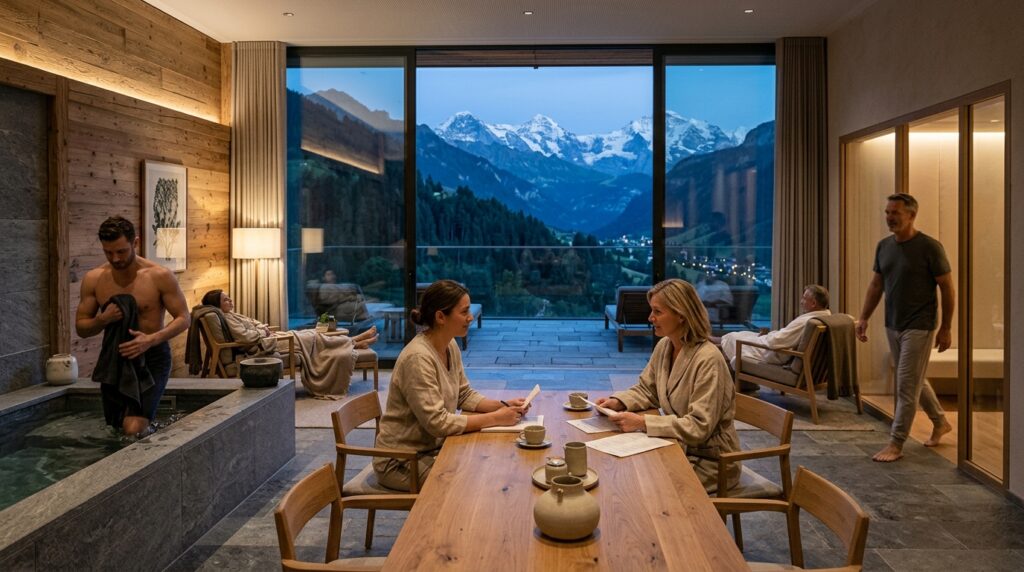
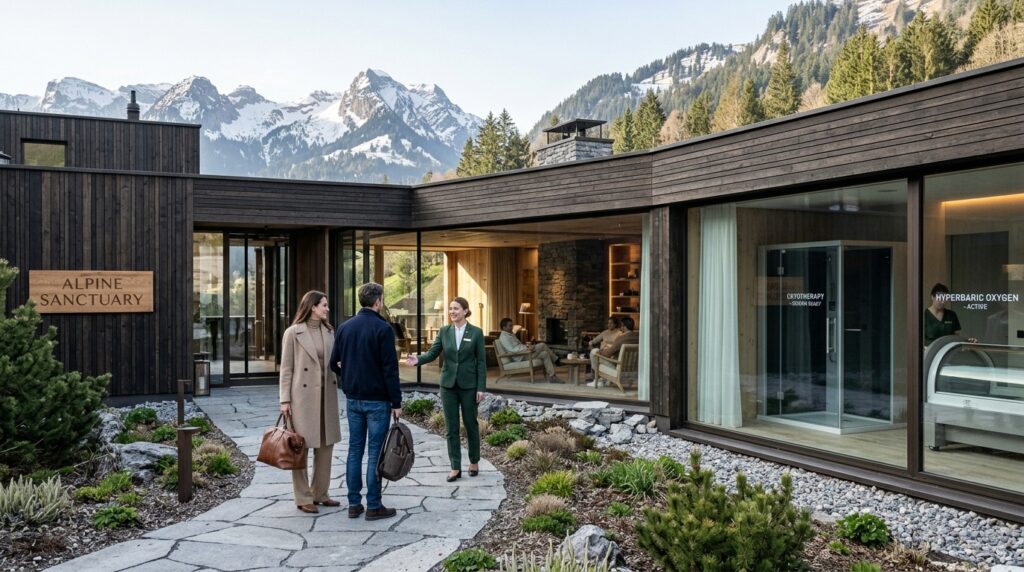
A new generation of Swiss boutique stays is blending cryotherapy, hyperbaric oxygen and longevity-focused programming with local craft, sustainable building materials and alpine identity, turning wellness travel into one of the clearest luxury tourism stories of the year.
Switzerland is emerging as one of the clearest symbols of where lifestyle travel is heading in 2026: away from generic luxury and toward health-centered stays that promise both high performance and a deeper sense of place.
The country’s newest boutique wellness hotels are not simply expanding traditional spa menus. They are reworking the idea of the luxury escape itself, combining advanced treatments such as cryotherapy and hyperbaric oxygen therapy with architecture rooted in local materials, regional craftsmanship and a quieter, more deliberate relationship with landscape. In the process, they are helping define a broader shift in global travel, where the modern affluent guest increasingly wants a holiday to feel restorative, intelligent and culturally grounded at the same time.
That shift is becoming more visible in Switzerland than in many rival destinations because the country already possesses several of the ingredients this new market values most: mountain air, climatic appeal, long-standing spa traditions, high-end hospitality and a strong reputation for quality, order and discretion. What is new is the way those elements are now being packaged. Instead of relying solely on grand palace hotels or old-world thermal prestige, a fresh group of smaller or more design-conscious properties is reframing Swiss wellness around longevity, performance recovery, sleep, nervous system reset and low-noise luxury.
One of the clearest examples is Huus Quell in Appenzell, which opened in October 2025 and has quickly become a reference point in discussions about Switzerland’s new boutique wellness wave. The property was described by Vogue as one of the country’s first carbon-zero hotels, built from locally harvested “moon wood,” and designed around a blend of Alpine healing traditions and high-tech longevity practices. Its program includes whole-body cryotherapy at minus 110 degrees Celsius, hyperbaric oxygen therapy and an infrared treatment cabin positioned as part of a broader recovery and vitality philosophy. That mix captures the new logic of the market: traditional landscapes are no longer enough on their own, but neither is technology detached from local identity.
In Gstaad, a destination long associated with old-school winter luxury, the change is taking a different form. Ultima Promenade Gstaad, which debuted in December 2025, offers a dedicated wellness floor with a sauna, hammam and indoor pool as part of a more private, immersive style of alpine stay. Nearby, The Mansard has combined Alpine architecture, local materials and mountain-facing rooms with a wellness floor and “Refresh Rooms” designed to help guests reset before check-in or after check-out. That sounds like a small operational detail, but it reflects a larger redefinition of wellness itself. Increasingly, the concept is not limited to massages or beauty treatments. It now extends to the entire choreography of travel, from arrival stress and sleep disruption to post-flight recovery and sensory calm. :contentReference[oaicite:1]{index=1}
This matters because the wellness economy has entered a more demanding phase. In the first wave of wellness travel, many hotels could compete simply by adding yoga, a spa and healthy food to a luxury backdrop. By 2026, that is no longer enough to stand out. Travelers, especially in the premium segment, are more literate about health claims, more selective about what feels meaningful and more interested in personalization. The industry’s language has shifted accordingly. Terms like longevity, deep rest, cool-climate travel, nervous system reset and recovery now appear more often than generic promises of pampering.
That broader movement is visible across travel reporting and industry analysis this year. National Geographic has described 2026 wellness travel as moving toward more elemental and landscape-driven experiences, from cold-water immersion to nature-based resets. The Global Wellness Institute, in its 2026 trends, has highlighted themes such as cocooning wellness, deep rest, cool-climate travel and a growing insistence that longevity travel must have credibility rather than just marketing gloss. Condé Nast Traveler has similarly framed 2026 as a year when wellness becomes more flexible, social and embedded in the overall vacation experience rather than feeling like a clinical add-on. In that context, Switzerland appears unusually well positioned. Its alpine geography, infrastructure and hospitality culture allow it to present advanced wellness not as a futuristic departure from place, but as a natural evolution of it. :contentReference[oaicite:2]{index=2}
The Swiss twist is especially important. What distinguishes many of these properties is not merely the presence of biohacking-style treatments, but the way they are being combined with craftsmanship, material authenticity and a sense of regional continuity. Vogue’s reporting on Huus Quell emphasized moon wood, biodynamic timber and a philosophy shaped by Appenzell’s agricultural rhythms and healing traditions. The Mansard, meanwhile, incorporates larch wood cladding, parquet flooring and historical local photography into a contemporary chalet aesthetic. These details are not decorative footnotes. They are central to the commercial proposition. In a luxury market saturated with interchangeable marble, glass and spa minimalism, rootedness has become a premium product.
That is a notable change in consumer psychology. High-end travelers still want comfort, privacy and technical excellence, but many now also want a story that feels specific to the destination. They want the treatment menu to make sense in the place where it is offered. They want architecture that appears to belong to the landscape. They want sustainability to be visible in materials and operations, not only declared in marketing language. And they increasingly want a hotel to help them feel better in ways that go beyond indulgence. This is where Switzerland’s boutique wellness boom becomes more than a local hotel trend. It becomes a signal about the future of lifestyle travel itself.
There is also a strong economic logic behind the shift. Wellness-oriented guests tend to stay longer, spend more on specialized programming and return when they feel measurable benefit. Hotels, for their part, are attracted by the ability to move beyond pure seasonality. A ski destination built around wellness, recovery and longevity can appeal outside the traditional winter peak. An Alpine retreat that offers sleep optimization, oxygen therapy or stress recovery has more year-round commercial relevance than one selling scenery alone. In a luxury industry increasingly focused on margin, that matters.
Switzerland’s existing wellness infrastructure gives this newer wave added credibility. The country is not inventing health travel from scratch. Switzerland Tourism continues to promote a deep bench of spa and wellness hotels, including properties that combine hospitality with medical wellness, thermal water traditions and preventive health services. That established ecosystem creates a useful bridge between classic Swiss health travel and the more design-driven boutique model now attracting editorial attention. In other words, the trend is not replacing Switzerland’s wellness identity. It is modernizing and segmenting it. :contentReference[oaicite:3]{index=3}
Still, the boom comes with questions. One is whether the line between meaningful wellness and luxury performance theater will hold. Treatments such as cryotherapy and hyperbaric oxygen attract attention partly because they feel advanced and measurable, but not every traveler wants a holiday to resemble a clinic. The most successful properties are likely to be those that balance science, atmosphere and hospitality without allowing technology to overwhelm the emotional appeal of the stay. Another question is accessibility. Much of this new Swiss wellness universe sits firmly in the premium or ultra-premium bracket, which means its influence on travel culture may far exceed its accessibility to the average traveler.
Even so, its symbolic importance is substantial. Luxury hospitality often acts as a preview of broader behavioral change. What begins in the high end can filter outward into mainstream travel design, from sleep-focused rooms and recovery programming to healthier food positioning, lower-stimulation interiors and more integrated arrival-and-departure wellness services. Seen that way, the Swiss boutique wellness surge is less about a handful of glamorous hotels and more about what they reveal: that travel in 2026 is being reimagined less as escape for its own sake and more as a form of personal maintenance, identity expression and health investment.
That helps explain why Switzerland is drawing such close attention this spring. The country offers a rare combination of climatic desirability, long-standing trust, natural beauty and the ability to translate wellness into a language of precision and refinement. The new properties now rising across Appenzell, Gstaad and other corners of the country are not selling a break from life so much as a better version of living. For a growing share of the global luxury market, that may be the most persuasive travel proposition of all.
If 2026 is indeed the year when lifestyle travel tilts decisively toward health-centered stays, Switzerland’s boutique wellness hotel boom may be remembered as one of the clearest early signals. The treatments are more advanced, the design more rooted, the sustainability more visible and the guest promise more ambitious. Not just relaxation, but restoration. Not just luxury, but longevity. Not just Switzerland as scenery, but Switzerland as a model for where modern wellness travel is headed next.