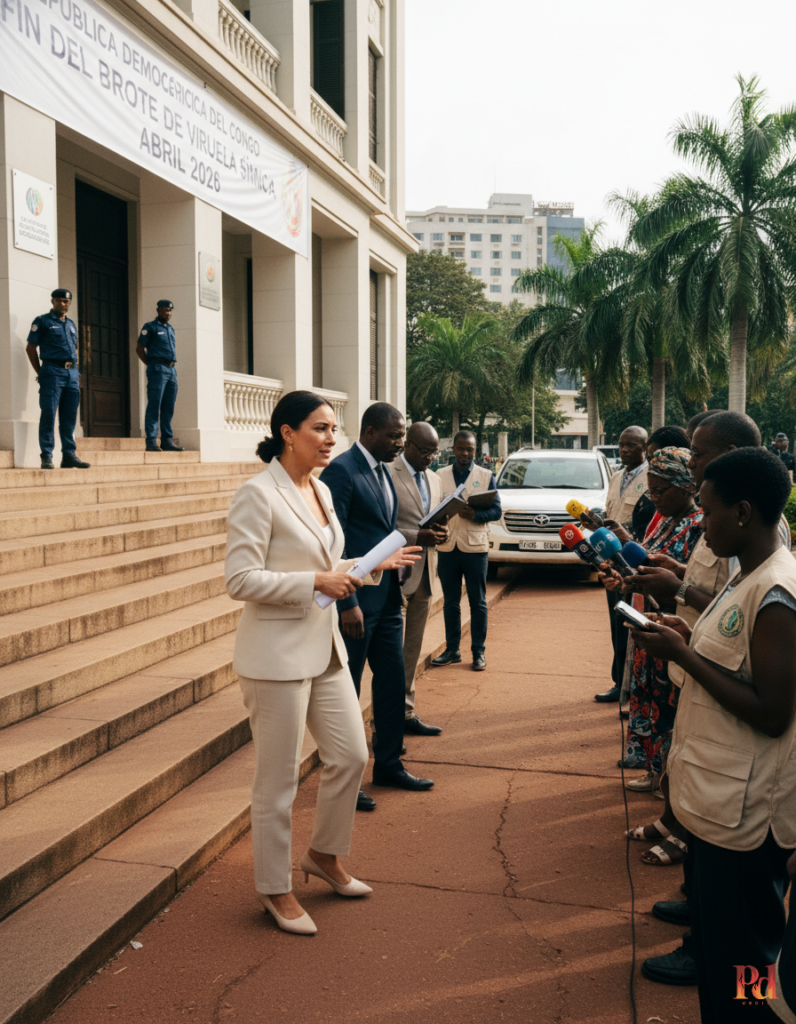
After one of Africa’s most consequential disease emergencies in recent years, Democratic Republic of Congo’s decision to declare its mpox outbreak over marks both a hard-won national milestone and a test of whether fragile health gains can be sustained beyond the end of an emergency.
The Democratic Republic of the Congo has declared an end to the mpox outbreak that dominated its public health agenda for roughly two years, closing a chapter that reshaped disease surveillance, emergency response and regional health coordination across central Africa.
The announcement is more than a bureaucratic milestone. It is the formal end of an outbreak that placed Congo at the center of one of the world’s most closely watched infectious-disease crises, strained a health system already burdened by conflict and underinvestment, and became a defining public health story for Africa well beyond its borders.
For officials in Kinshasa, the declaration reflects a practical judgment that the outbreak is no longer a national emergency. For health specialists, it represents something broader: evidence that a long and difficult response can produce measurable results even in one of the world’s most challenging operating environments.
That is why the development matters far beyond the immediate numbers. Public health emergencies are often measured in case totals, fatalities and vaccine deliveries, but they are also judged by whether a country can move from crisis management to durable control. Congo’s decision suggests that, after a prolonged period of fear, disruption and intense international scrutiny, it has reached that threshold.
The scale of the outbreak helps explain the significance of the moment. Congo bore the heaviest burden of the regional mpox resurgence, with the epidemic becoming a symbol of how quickly an endemic threat can intensify when surveillance is uneven, laboratory capacity is limited and routine care is under pressure. What had once been seen primarily as a localized zoonotic disease evolved into a much wider emergency, one that demanded national mobilization and international support.
The outbreak also unfolded in a changed global context. Mpox had already become better known internationally after the multi-country outbreaks of 2022, when transmission patterns drew attention far beyond Africa. But the Congo-centered resurgence carried a different warning. It reminded health authorities that even after the disease moved into the global spotlight, the places with the deepest endemic exposure and the weakest health infrastructure remained the most vulnerable.
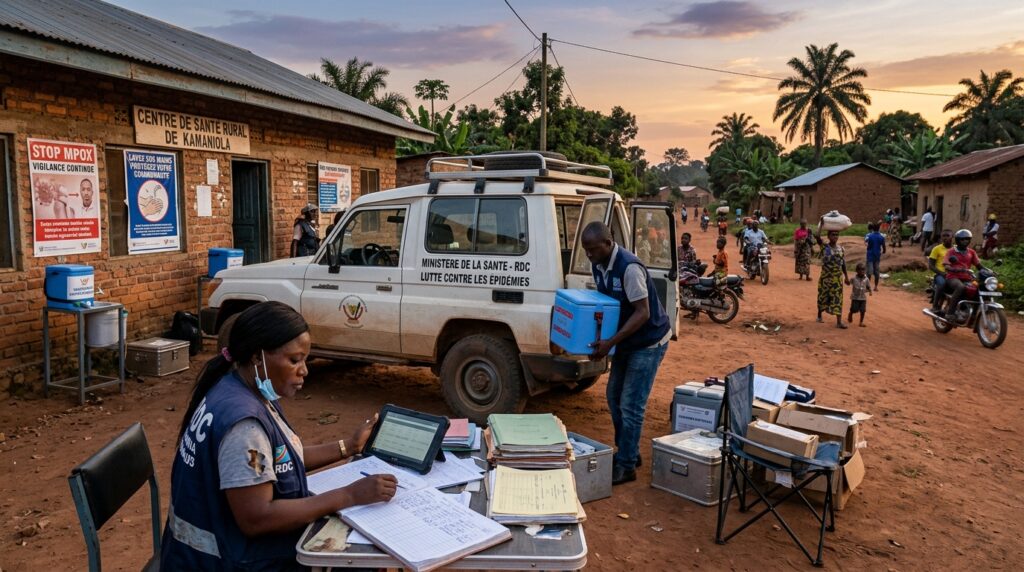
That imbalance shaped the response. Congo’s health authorities, aided by international agencies and regional public health bodies, had to build a containment effort while confronting the realities that often define outbreak control in the country: difficult access, insecurity in eastern provinces, funding constraints, patchy diagnostics and a population facing multiple overlapping risks. In that environment, the end of an outbreak is rarely the result of a single breakthrough. It is usually the outcome of sustained work that is far less visible than the emergency headlines that first drew attention.
The declaration therefore carries both relief and caution. Relief, because it closes an extraordinary outbreak that claimed thousands of lives and put communities under prolonged stress. Caution, because the conditions that allow infectious diseases to spread do not disappear simply because an emergency status is lifted. Public health officials know that the period after an outbreak can be nearly as important as the emergency itself. Surveillance must continue, laboratories must remain functional, community trust must be maintained and clinicians must keep recognizing symptoms early enough to stop renewed transmission.
That is especially true for mpox, a disease with a complicated profile in Africa. It has long been associated with animal-to-human spillover in endemic areas, but recent outbreaks have underscored that transmission can take multiple paths, including sustained human-to-human spread in certain circumstances. That means the end of this outbreak does not imply the end of mpox as a recurring health concern. Instead, it marks the point at which the disease is expected to move out of acute emergency status and back into a more controlled, but still closely monitored, public health framework.
Congo’s announcement is also politically important. During any prolonged outbreak, governments are judged not only on epidemiological outcomes but on credibility. Declaring an emergency too late can damage trust. Declaring it over too early can do the same. By waiting until months had passed without new confirmed infections, authorities appear to be signaling that the decision was based on epidemiological calm rather than political convenience.
The timing matters for Africa more broadly. The continent’s public health institutions have spent recent years trying to demonstrate that outbreak response in Africa should not be treated as a peripheral issue until it becomes an international crisis. Congo’s mpox emergency became one of the clearest examples of why regional surveillance, financing and vaccine equity remain central questions for global health, not secondary ones. The outbreak exposed familiar weaknesses, but it also showed that African institutions are increasingly central actors in managing the response rather than passive recipients of outside intervention.
For the wider international community, the end of the outbreak will likely be read in two ways. The first is as a genuine success: a major health emergency has receded after sustained effort. The second is as a warning against complacency. Global attention to outbreaks often rises sharply during the emergency phase and then falls away once the headline threat appears to pass. That cycle can be costly. If investment fades too quickly, the same vulnerabilities that fueled the outbreak in the first place can remain in place, creating conditions for resurgence.
The Congo case is particularly instructive because it demonstrates how infectious-disease control is inseparable from broader state capacity. Containing an outbreak requires more than medicine. It requires transport, logistics, communications, trained personnel, functioning laboratories and enough public confidence for communities to report symptoms and cooperate with containment measures. In fragile settings, every one of those elements can become a bottleneck. That is why an outbreak brought under control in Congo carries weight as an institutional achievement as well as an epidemiological one.
It also raises a quieter but important question about what counts as success in modern outbreak response. Total eradication is rare. Zero risk is unrealistic. In practice, success often means reducing transmission to the point where extraordinary measures are no longer needed and where the disease can be managed through regular surveillance and targeted interventions. By that standard, Congo’s decision suggests not perfection, but regained control.
For families and communities affected by mpox, however, the significance is likely to feel more personal than strategic. An emergency declaration can shape daily life in ways statistics do not capture: the fear surrounding rashes and fevers, the pressure on clinics, the stigma attached to suspected infection, the uncertainty created by quarantine or isolation, and the repeated disruption of already fragile livelihoods. The official end of an outbreak does not erase those experiences, but it can begin to close a period in which illness dominated public and private life alike.
The broader lesson may be that outbreak preparedness is not tested only by how systems respond when cases are rising, but by whether they can preserve capacity after the crisis appears to subside. Congo’s next challenge is to convert emergency response into routine resilience. That means keeping mpox in surveillance systems, maintaining diagnostic readiness and ensuring that the world’s attention does not disappear simply because the immediate emergency has ended.
For now, though, the announcement stands as one of the most consequential public health moments in Africa this April. A country that spent two years at the center of an international mpox emergency is formally stepping out of that phase. The declaration does not mean the risks of infectious disease have vanished, or that Congo’s health system is free of strain. It means something more grounded, and perhaps more important: a major outbreak that once seemed defining has been pushed back far enough for the emergency to end.
In outbreak response, that is never a trivial milestone. In Congo’s case, it is a hard-earned one.