Matt Richards won a stacked men’s 200m freestyle final at the GB Swimming Championships in London, while Adam Peaty’s return gathered further momentum as the breaststroke great secured qualification for this summer’s European Championships.
British swimming closed out one of its most closely watched domestic meets in recent years with two storylines that could shape the country’s season ahead: Matt Richards winning a star-studded men’s 200 metres freestyle final, and Adam Peaty underlining that his comeback remains one of the defining narratives of the European campaign.
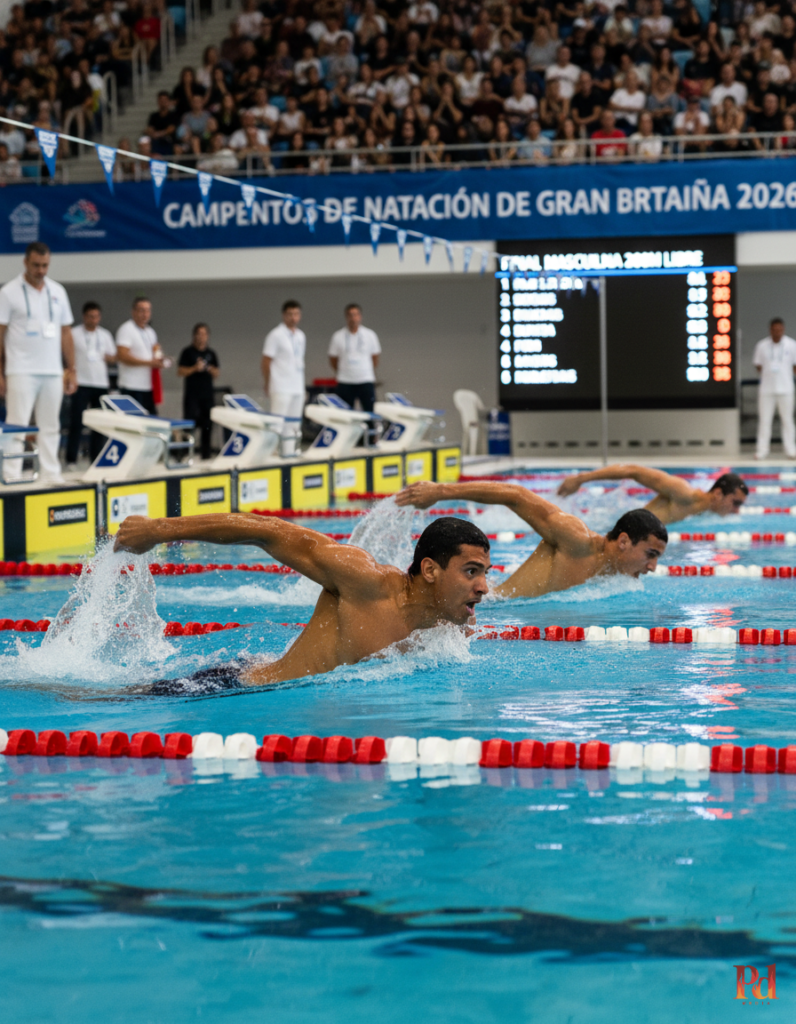
At the Aquatics GB Swimming Championships in London, Richards delivered the headline performance of the final night by taking the men’s 200m freestyle title in 1:44.77, a time achieved in a race loaded with Olympic pedigree. The Welsh swimmer surged through the closing stages to overhaul a field that included fellow Olympic champions Duncan Scott and James Guy, both central figures in Britain’s golden relay era.
It was a fitting end to a meet that served not only as a national championship but also as a major selection event for the European Championships and the Glasgow 2026 Commonwealth Games. In that context, the drama inside the London Aquatics Centre carried significance beyond medals. It offered one of the clearest snapshots yet of where British swimming stands as it tries to translate Olympic reputation into another productive international cycle.
Richards’ victory resonated because of the quality of the opposition as much as the winning time itself. Scott, one of Britain’s most decorated swimmers, turned for home in front before settling for bronze. Guy, a veteran of multiple Olympic and world championship teams, finished second. Jack McMillan took fourth, enough to complete the European relay quartet and reinforce Britain’s enduring depth in one of its marquee events.
The 200m freestyle has long been more than an individual race for Britain. It is the backbone of a relay program that has repeatedly delivered on the biggest stages. That tradition raised the stakes in London, where the event drew unusual anticipation for a domestic final. Richards, Scott and Guy are not merely national rivals. They are athletes whose careers have been intertwined through relay success, Olympic campaigns and a constant recalibration of hierarchy inside one of the strongest middle-distance freestyle groups in the world.
Richards’ ability to come through such a field will be read as an important signal. He has already established himself internationally, but winning domestically in a race framed by so much experience and expectation adds another layer. The performance suggested composure, closing speed and confidence at a point in the season when selectors and rivals alike are looking for clues about who may carry British hopes in the months ahead.
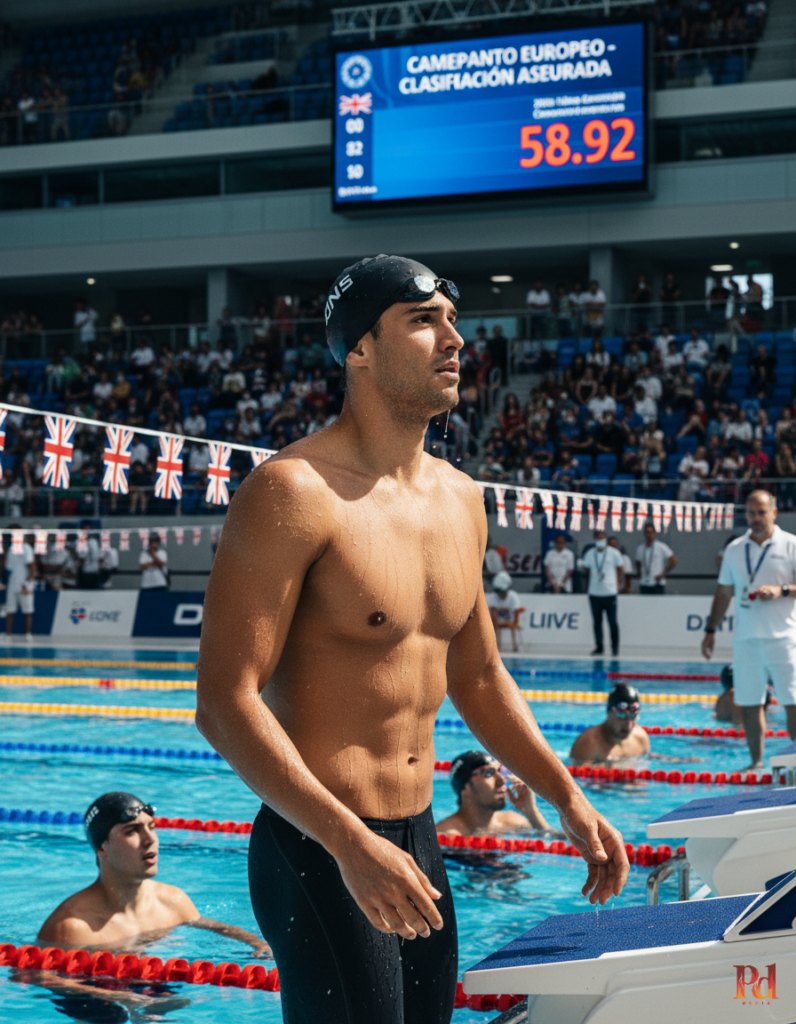
If Richards supplied the grandstand finish, Peaty remained the competition’s most magnetic figure. The 31-year-old opened the championships by winning the men’s 100m breaststroke in 58.97 seconds, securing a place on the British team for the upcoming European Aquatics Championships in Paris. For a swimmer whose career has already transformed the event, that performance was significant less because it threatened his own world record and more because it showed he remains firmly in contention at elite level after a turbulent period.
Peaty’s result came in a race that also highlighted the next generation pressing behind him. Filip Nowacki, the reigning junior world champion, finished second in 59.39 and also qualified for Europeans, while Max Morgan, still only 18, took third in 59.56. The scene was emblematic of British breaststroke in 2026: an all-time great back at the center of attention, but no longer racing in isolation.
That tension between legacy and renewal has made Peaty’s return especially compelling. For years he dominated the 100m breaststroke with such authority that the race often felt like a contest for silver behind him. Now, the stakes are different. He is still the standard by reputation, but he is also having to reassert himself in real time, against younger swimmers eager to accelerate the transition to a post-Peaty era. His victory in London did not end that discussion. It sharpened it.
Yet the broader significance of Peaty’s swim lies in what it means for British and European swimming more generally. A fully competitive Peaty changes the tone of any championship. He remains one of the sport’s most recognizable figures and one of the few swimmers whose presence can shift expectations far beyond his own event. His place on the team for Paris restores a layer of star power to the European meet and gives Britain a proven championship racer at a moment when experience still carries immense value.
The championships also showed that Britain’s strength is not confined to a few established names. Across the six-day competition, the meet produced a steady stream of selection performances and statement swims. Angharad Evans broke her own British record in the women’s 100m breaststroke, clocking 1:04.96 to become the tenth-fastest woman in history in the event. Ollie Morgan continued his backstroke form, while Eva Okaro and Keanna Macinnes strengthened their cases as part of an emerging generation that is beginning to push from the edges toward the center of the national team picture.
That matters because British swimming’s challenge after an Olympic cycle is always twofold. It must preserve excellence in its signature events while regenerating enough depth to avoid stagnation. Meets such as this one are where that balance becomes visible. Veterans seek to remain indispensable. Younger swimmers try to turn promise into selection. Coaches and selectors must decide whether to back established championship instincts or prioritize momentum and long-term upside.
London offered evidence that Britain may have enough of both. The men’s 200m freestyle remains crowded with proven medal-winning talent. Breaststroke, once defined almost entirely by Peaty, now appears healthier in competitive terms because younger swimmers are forcing the pace. Elsewhere, the women’s side continues to develop athletes capable of making a broader European impact.
There is also a wider European context to consider. This was not simply a national meet of domestic interest. It became one of the week’s focal points in European swimming because of the names involved and because Britain still occupies an outsized place in the continent’s competitive landscape. When Richards wins a 200m final featuring multiple Olympic champions, that result reverberates beyond the host nation. When Peaty secures another major-team berth, the entire breaststroke conversation shifts with him.
For Britain, the immediate practical question is what these performances mean for the summer. Richards’ win reinforces his position at the center of British freestyle plans, both individually and in relay calculations. Peaty’s qualification restores certainty to one of the team’s highest-profile events. The broader takeaway is that selection now looks less like an administrative process and more like the product of genuine internal competition.
That is often the healthiest sign for a national program. Dominance built on thin depth can disappear quickly. Britain, by contrast, appears to be moving into the next phase of the cycle with a blend of household names and rising challengers, many of them capable of raising standards simply by forcing one another to race harder at home.
None of that guarantees medals in Paris or later in the season in Glasgow. Domestic form is only one part of the equation, and the international field will be unforgiving. But the championships in London did what a major national meet is supposed to do: sharpen narratives, clarify selection, and reveal which athletes are prepared to carry pressure rather than merely talk about it.
By the end of the week, two images stood out. One was Richards charging home in the final 50 metres of the men’s 200m freestyle, holding off a field that embodied the recent history of British swimming. The other was Peaty, still unmistakably Peaty, booking another place on a major team and reminding the sport that his story is not yet finished.
Together they made the Aquatics GB Swimming Championships one of the most compelling swimming events in Europe over the past week, and they ensured that British swimming leaves London with renewed intrigue, proven class and no shortage of momentum.